
 E-Paper



Railways to serve local cuisine on Vande Bharat trains
For instance, if the Katra-Srinagar Vande Bharat has Dogri cuisine, the Srinagar-Katra Vande Bharat will have Kashmiri cuisine.

 Prefer HTon Google


Indian Railways will reportedly now serve local cuisine to passengers on all Vande Bharat trains, with six routes selected for a pilot project regarding the same.
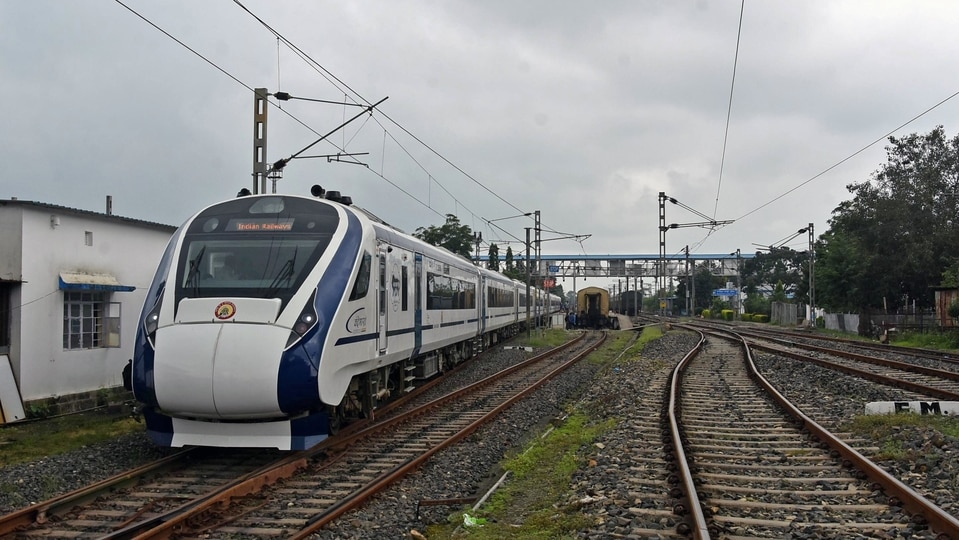
Food will be one of the main components of “52 reforms in 52 weeks,” as announced by Union railways minister Ashwini Vaishnaw at the New Year. These are the pilot projects that will culminate in full-fledged food reforms across the Indian Railways network, PTI news agency cited officials as saying.
The local cuisines are already being served on six pairs of Vande Bharat trains (up and down). These are Nagpur-Secunderabad, Sabarmati-Veraval, Shri Mata Vaishno Devi Katra-Srinagar, Srinagar-Shri Mata Vaishno Devi Katra, Kasaragod-Thiruvananthapuram, and Mangaluru-Thiruvananthapuram.
All the food items introduced under the initiative so far are vegetarian.
Some of the local cuisine menu
Mangaluru-Thiruvananthapuram route: Idiyappam, Parippu Vada, Chettinad Vegetable Gravy, Soyabean Fry with Pachakka
Katra-Srinagar route: Kashmiri Pulao, Rajma, Chhole-Kulche, Kashmiri Roth Cake, Chana Dal Burfi.
Nagpur-Secunderabad route: Upma, Palakura Pappu, Paneer Kolhapuri, Dry Bendakaya Vepudu.
The local cuisine will vary depending on where the train departs from. For instance, if the Katra-Srinagar Vande Bharat has Dogri cuisine, the Srinagar-Katra Vande Bharat will have Kashmiri cuisine.
The initiative aims to promote local cuisines on the national carrier, starting with the Vande Bharat trains.
The first Vande Bharat sleeper train, which is scheduled to be inaugurated this week on the Howrah-Guwahati route by Prime Minister Narendra Modi, will also feature this initiative. According to sources quoted by the Indian Express, the train starting from Howrah will serve Bengali food. This menu includes Pulao, Chaner Dalna, Bhaja Moong Dal, Suti Bhaja, Phulka and Sandesh. In another option, Green Peas Pulao, Mix Dal, Dhokar Dalna, Aloo Jhuri Bhaja, Phulka and Ras ka Dum will be served.
For the train starting from Guwahati, the options will be Joha Rice, Mati Mohar Dali, Assamese Matar Paneer, Aloo Long Beans Bhaji, Phulka, Narikel Burfi, Jeera Pulao, Masoor Dal, Labra, Aloo Bhindi Bhaja, Phulka and Lal Mohan.
Departure from existing policy
The new initiative is a departure from the existing policy for trains, where catering charges are built into passenger fares for Rajdhani, Shatabdi, and Duronto, as well as Vande Bharat, where the menu is decided by the IRCTC from a list of fixed food items.
Union railway minister Ashwini Vaishnaw said that serving local cuisines would encourage local vendors to participate and create employment opportunities.
“This year is the Railways’ year of reforms. We will have 52 reforms in 52 weeks for systemic improvements in efficiency, governance, and service delivery. Food is one of them. The effort is to improve food quality, catering and onboard services. The local cuisines will help people become aware about India’s great food diversity,” the report quoted Vaishnaw as saying.
Officials said the move would also serve as a bridge, exposing people across the country to cultures distant from their own.


