The Union ministry of housing and urban affairs (MoHUA) will not commit to preparing a unified long-term urban strategy for India’s cities through 2047, especially in light of the government’s Viksit Bharat 2047 goals, a parliamentary standing committee report tabled in Parliament on Tuesday said.
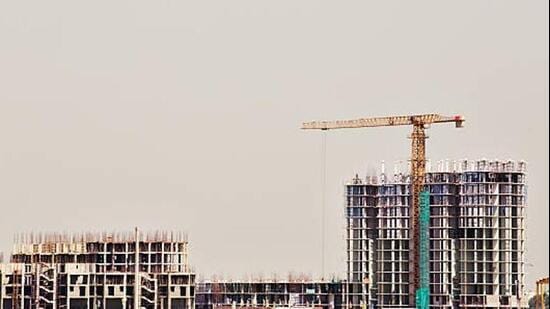
In the action-taken report on the recommendations made by the Standing Committee on Housing and Urban Affairs regarding the ministry’s budgetary exercise, the ministry instead cited AMRUT 2.0, Swachh Bharat Mission (Urban) 2.0, PMAY-U 2.0, metro rail projects and PM e-Bus Sewa as initiatives addressing infrastructure, service delivery, climate resilience and urban governance.
It also said that, with “urban development” being a state subject, the Centre plays a “catalytic role” through centrally sponsored schemes, sectoral missions, policy frameworks and financial support.
Also Read: Over 141,000 houses sanctioned under PMAY-Urban 2.0; total approvals cross one million
The committee had sought to ascertain whether the ministry had prepared a long-term strategy covering infrastructure creation, governance reforms, climate resilience, economic growth and social inclusion across metropolitan, Tier-II and Tier-III cities, with the previous such exercise done only in 2011, when the High Powered Expert Committee had assessed urban infrastructure requirements up to 2031.
‘Substantial investment‘
{{/usCountry}}‘Substantial investment‘
{{/usCountry}}In its response, MoHUA said, “India’s long-term urban transition requires substantial investment and strategic planning,” and cited a World Bank estimate that India would need about $840 billion in urban infrastructure investment over 15 years to 2036, or an average of $55 billion a year. It also pointed to the ₹1 lakh crore Urban Challenge Fund and existing City Action Plans, State Annual Action Plans and convergence frameworks as tools for integrated planning.
However, the committee said the ministry’s interventions were “largely scheme-driven and sector-specific” and that no updated national-level assessment had been undertaken to estimate infrastructure demand, financing gaps and institutional requirements beyond 2030 in a holistic manner. It recommended constituting a new High-Level Expert Committee to assess urban infrastructure requirements, financing needs, governance reforms and capacity-building requirements up to 2047.
Budget utilisation
On budget utilisation, the committee flagged the nearly 40% reduction in the ministry’s 2025-26 Budget
Estimate, from ₹96,777 crore to ₹57,203.78 crore at the Revised Estimate stage, along with uneven scheme performance and unspent balances. MoHUA, however, said it had utilised 99.78% of its final Revised Estimate, spending ₹57,075.19 crore against ₹57,203.78 crore, and said it was taking steps to improve the accuracy of its Budget and Revised Estimate assessments.
On PMAY-U, the committee flagged the gap between houses sanctioned and completed and called for a review and suitable enhancement of central assistance. MoHUA said the scheme is demand-driven, with beneficiary selection and project formulation and execution undertaken by states, Union territories and public or private entities.
Also Read: Over 53k PMAY-U houses for urban poor remain unfinished in Punjab
The committee flagged delays in grounding projects and uneven utilisation under AMRUT 2.0 as the mission enters its final phase. MoHUA said 8,736 projects worth ₹1,95,422.52 crore had been approved under State Water Action Plans as of May 5, 2026, but contracts had been awarded for 7,402 projects worth ₹1,45,666.71 crore.
The ministry said it was providing states and Union territories with technical support and handholding, while regularly reviewing progress through meetings, video conferences, workshops and site visits.
With schemes such as Industrial Housing and National Urban Digital Mission remaining a non-starter, MoHUA cited delays in approval and said the same is responsible for slow implementation of the flagship 1 lakh crore Urban Challenge Fund.