Interstate migration in India doubled between 2001 and 2011 compared to the previous decade, with Pune and Surat emerging as the most affected cities in the Asian region, says a WEF report.
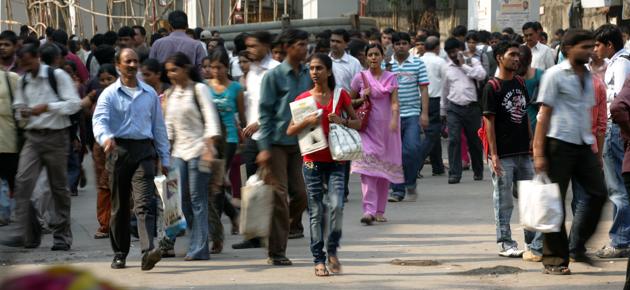
According to the World Economic Forum’s report on ‘Migration and Cities’, India is home to one-fourth of the 100 fastest-growing cities in the world while Mumbai, Delhi and Kolkata are among the 10 most populous urban areas worldwide.
The report further said in the Asian region, Pune and Surat have been named among the most affected cities, besides Guangzhou and Davao City.
According to the United Nations, there are three times more internal migrants than international migrants in the world.
In India, interstate migration doubled between 2001 and 2011 compared to the previous decade, growing 4.5% annually, WEF said, adding annual interstate migration in the country averaged about 5-6 million migrants a year.
“Migrants are drawn to cities in search of economic, social and creative opportunities,” said Alice Charles, Lead, Cities, World Economic Forum.
Citing examples, the report said, Bihar, a state with one of the highest outflows of domestic migrants, has a per-capita income roughly equivalent to Somalia’s (around USD 520) and a birth rate of 3.4 children per woman, on the other hand, Kerala, a destination for in-migrants, has a per-capita income four times that of Bihar’s (about USD 2,350) and a birth rate of 1.6 children per woman, on par with Denmark.
{{/usCountry}}Citing examples, the report said, Bihar, a state with one of the highest outflows of domestic migrants, has a per-capita income roughly equivalent to Somalia’s (around USD 520) and a birth rate of 3.4 children per woman, on the other hand, Kerala, a destination for in-migrants, has a per-capita income four times that of Bihar’s (about USD 2,350) and a birth rate of 1.6 children per woman, on par with Denmark.
{{/usCountry}}Moreover, cities like Faridabad, Ludhiana and Surat total over 55% of in-migrants, whereas the rate in Agra and Allahabad is below 15%, demonstrating the significant variation among Indian cities regarding in-migration.
Regionwise, the report highlighted 22 of the most affected cities around the world, including from North America (Montreal, Ottawa, Calgary, New York, Boston), Latin America (Sao Paulo, Medellin).
The report further noted that in Middle East and North Africa (Dubai, Amman, Ramallah) were the most affected cities, in sub-Saharan Africa (Cape Town, Dakar), Asia (Pune, Surat, Guangzhou, Davao City), Europe (Berlin, Athens, Paris, Amsterdam, Rotterdam) and Oceania (Auckland).
The report looked at the solutions implemented or initiated to meet the needs of the migrant population, particularly in the delivery of vital urban infrastructure and services like housing, education, health, employment, integration and social cohesion, and safety and security.
“Partnerships between cities will have greater prominence in the years to come, with possibilities of migrant redistribution and responding to labour market needs with immigrants,” said Gregory Hodkinson, chairman, Arup Group Ltd; Chair of the World Economic Forum Future of Urban Development and Services Initiative.