
 E-Paper



Issue public apology to husband: SC to IPS officer who filed 15 cases in divorce battle
Husband spent 109 days in jail and his father 103 days owing to the allegations; SC says public apology necessary as a form of moral restitution for the divorce

 Prefer HTon Google


The Supreme Court on Tuesday directed an Indian Police Service (IPS) officer to issue an unconditional public apology, both in print and on social media, to her former husband and his family, after they endured months of incarceration due to multiple criminal cases filed by her during a protracted matrimonial dispute.
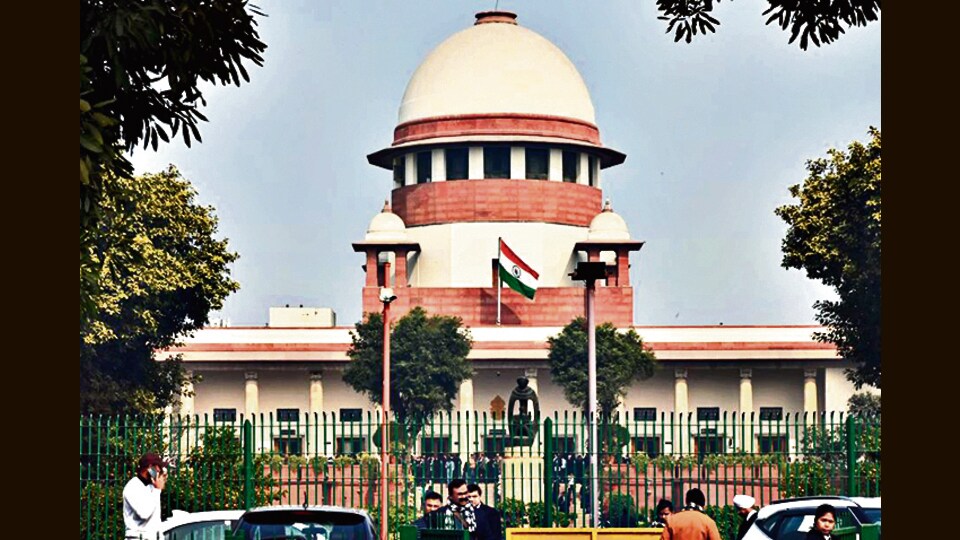
Noting that the husband had spent 109 days in jail and his father 103 days owing to the allegations, a bench led by Chief Justice of India Bhushan R Gavai and Justice AG Masih said: “What they have suffered cannot be resituated or compensated in any manner.” The court said a public apology was necessary as a form of moral restitution for the “physical and mental trauma” caused.
Also read | Facing trial in stalking case, former Haryana BJP chief Barala’s son Vikas is now assistant advocate general
The officer and her parents were ordered to publish a detailed apology in one national English and one Hindi newspaper, and to circulate it across social media platforms including Facebook, Instagram and YouTube within three days. The format of the apology was prescribed by the court and is not to be altered in any manner.
Also read | Secretly recorded calls admissible in marital disputes: SC
The 2022-batch IPS officer had instituted 15 separate cases and proceedings, including those invoking serious charges of cruelty, attempt to murder and rape, among others. Additionally, there were separate proceedings under the Domestic Violence Act. The family also battled it out in family courts over divorce, maintenance and custody of their girl child.
Supreme Court uses special powers
Both the husband and the woman had filed for divorce after they separated in 2018, and both sides had moved the Supreme Court seeking transfer of various cases to their respective jurisdictions. The top court was hearing these transfer petitions when it chose to invoke its special powers under Article 142 of the Constitution to settle the long-standing legal battle.
The court not only ordered the apology but mandated a specific form and wording, which includes the woman expressing regret on behalf of herself and her parents for the pain caused to her former in-laws. It reads in part: “I sincerely apologise on my and on behalf of my parents for any of my words, action or stories which may have hurt or caused annoyance to the feelings of members of (husband’s) family... While the legal proceedings have now concluded...I understand that the emotional scars may take time to heal. I sincerely hope that this apology can be a step towards finding some peace and closure...”
The apology also extends a hand of reconciliation, inviting the man’s family to meet the girl child born out of the wedlock, and ends with prayers for peace and gratitude from the officer, who identifies as a practicing Buddhist.
Also read | Husband or in-laws keeping child after marital dispute is not cruelty: Delhi HC
The court further restrained the IPS officer from misusing her official position or influence through her colleagues or superiors to initiate any fresh action against her former husband or his family members.
At the same time, it cautioned the husband’s family that they must not weaponise the apology in any forum or proceeding to prejudice the officer. “Any breach of the said condition shall be considered as contempt of this Hon’ble Court,” the order added.
The court then formally dissolved the marriage, originally solemnised in 2015, under Article 142, holding that the couple had been living separately since 2018 and that any hope of reconciliation had vanished due to the bitterness generated by years of litigation. The court also ordered that all 30 criminal and civil cases between the couple and their families stand quashed.
Also read | Woman claims father, brother forced her to file fake cases during divorce, regrets her decision
The couple’s minor daughter will remain in the custody of the mother, with supervised visitation rights granted to the father and his family. In a final settlement of all financial disputes, the court recorded that the woman had voluntarily waived all rights to alimony, maintenance, or any claim over the present or future assets of the husband and his family.
In the same judgment, the Supreme Court also endorsed a 2022 order of the Allahabad High Court passed in one of the cases between the couple, that laid down safeguards to curb the misuse of Section 498A of the Indian Penal Code, which criminalises cruelty in matrimonial relationships. The top court approved the requirement for a family welfare committee to be constituted in each district to examine complaints before any coercive action is taken and upheld the stipulation that no arrest should be made for a period of two months after the registration of an FIR under Section 498A.



