
 E-Paper



Jaishankar on PM Modi’s 10-hour train ride to Ukraine: ‘Could have done with Vande Bharat’
Prime Minister Narendra Modi's visit to Ukraine involved a 10-hour train ride from Poland.

 Prefer HTon Google


External Affairs Minister S. Jaishankar humorously reflected on Prime Minister Narendra Modi's recent 10-hour train journey to Ukraine, saying he could have done that ‘with a Vande Bharat’.
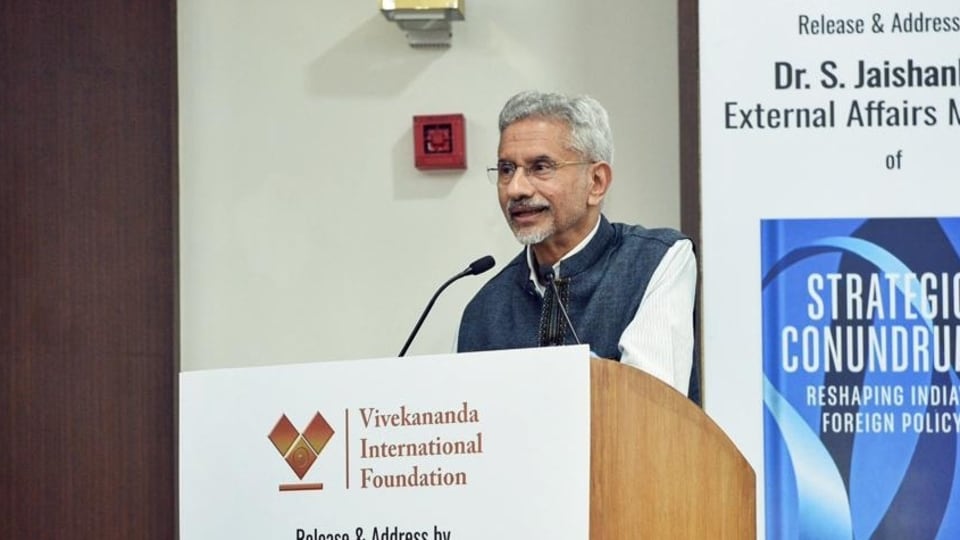
Responding to a question at the ET World Leaders Forum about PM Modi's train ride, Jaishankar quipped, “I could have done with a Vande Bharat.”
He added, “It was 10 hours each way, and I think, given the situation, obviously, you got what you got, but 10 hours is 10 hours.”
When asked about the last time an Indian prime minister took a train ride, Jaishankar recalled Modi's ride on Japan's Shinkansen bullet train, pointing to the rarity of such events.
"I remember Prime Minister Narendra Modi going on a Shinkansen bullet train in Japan, I often cannot remember any other train ride at least for a long time," the minister said.
The Vande Bharat Express is a high-speed train service in India, developed as part of the government's efforts to modernise the country's rail infrastructure. It is a fully air-conditioned, semi-high-speed train that can reach speeds of up to 180 km/h, though it typically operates at around 130-160 km/h (81-99 mph) on most routes due to track conditions. The first Vande Bharat Express was launched on February 15, 2019, on the New Delhi-Varanasi route. Since then, several more routes have been introduced, connecting major cities across India.
Modi visited Ukraine last week, becoming the first Indian premier to do so since the establishment of diplomatic ties in 1992. The visit was seen as part of India's delicate balancing act amid the ongoing conflict between Ukraine and Russia, especially after Modi's recent visit to Russia for a summit with President Vladimir Putin.
Also Read | PM Modi, Joe Biden discuss Ukraine conflict, Bangladesh unrest
Modi's journey to Ukraine
Prime Minister Modi's journey to Kyiv involved a 10-hour train ride from Poland amid the challenges of travelling in a war-torn region.
Upon his arrival, Modi was warmly received by members of the Indian community and held talks with Ukrainian President Volodymyr Zelenskyy in Kyiv.
The prime minister's visit included a poignant stop at the National Museum of History in Kyiv, where he paid tribute to children who have lost their lives in the conflict.
Zelenskyy warmly hugged and shook hands with Modi at the exposition.
Amid widespread speculation about India’s role in peace efforts, Modi said he came with a “message of peace” from 1.4 billion Indians and the countries of the Global South, and a solution can only emerge through talks between Russia and Ukraine. He also conveyed India’s support for Ukraine’s sovereignty and territorial integrity.
“The path to a solution emerges from dialogue and diplomacy and, without wasting time, we should move in that direction. The two sides should sit together and search for ways to get out of this hour of crisis,” Modi said in televised opening remarks at his meeting with Zelenskyy.


