
 E-Paper



Jaishankar draws 'red lines' versus Lutnick's 'open market' demand for US-India trade deal
Jaishankar said “whatever happens" India and US will have a trade understanding; “but has to be (one) where our bottom lines, our red lines are respected"

 Prefer HTon Google


India's foreign minister S Jaishankar's curt drawing of “red lines” on trade talks with the US — meaning Delhi is not open to negotiation on certain points — came as the American administration under Donald Trump continues to push for wider access to the Indian market.
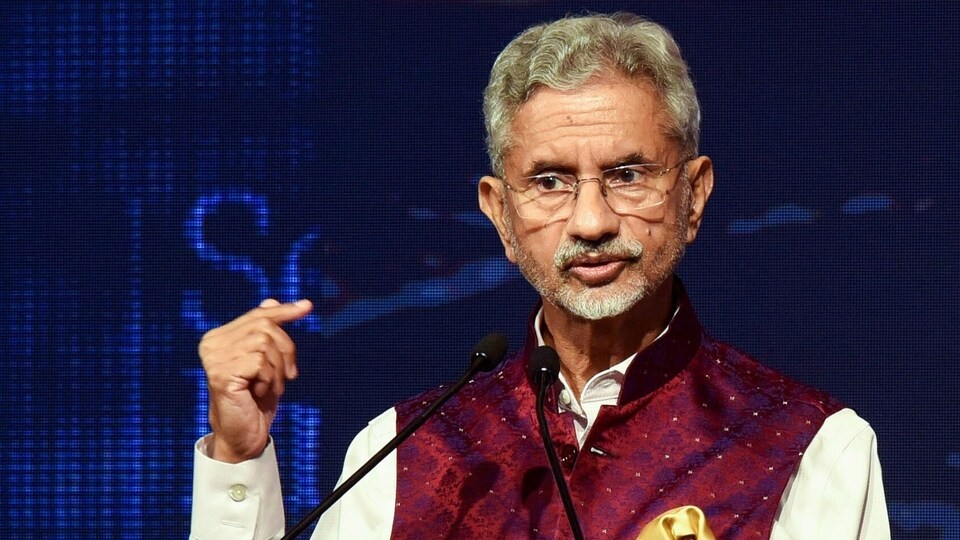
Jaishankar said on Sunday, October 5, that “whatever happens" India and the US will have to have a trade understanding, “but it has to be an understanding where our bottom lines, our red lines are respected".
The “red lines” have to do with granting the US or others easier access to Indian agriculture and dairy sectors, something Delhi is not fine with. PM Narendra Modi has said he “will protect the farmers at any cost” against any flooding of the market with American goods.
Jaishankar said, “In any agreement, there are things you can negotiate and there are things you can't. I think we are pretty clear about that. We have to find that landing ground and that's been the conversation which has been going on since March.”
He was speaking during a discussion on foreign policy at the Kautilya Economic Enclave in New Delhi.
On ‘very unfair’ tariffs
“We have today issues with the United States. A big part of it is the fact that we have not arrived at a landing ground for our trade discussions, and the inability so far to reach there has led to a certain tariff being levied on India,” Jaishankar said, referring to the 25% reciprocal tariff, plus a 25% so-called penalty for buying Russian oil.
Some aspects of the bilateral relationship are continuing as “business as usual”, Jaishankar noted.
On the “penalty” tariff, he said it's “very unfair”. He highlighted, not taking names, that countries with a “far more antagonistic relationship with Russia” are also buying Russian energy but have not faced similar punitive levies from the US. Trump has pointed towards European countries as such buyers.
India-US trade talks resumed recently following a thaw in the relationship after a shows of bonhomie between PM Narendra Modi and President Trump, but there's no clarity on whether the two sides will be able to reach the first tranche of a deal within this fall season, as was envisaged when the two leaders met in February.
What US commerce secy said
Jaishankar's comments come exactly a week after the US commerce secretary, Howard Lutnick, pointedly said last Sunday: “If you want to sell to the US consumer, right, you've got to play ball with the President of the United States.”
Having made a series of aggressive, even unsavoury, comments about India when talks were stalled for a couple of months, Lutnick listed India among countries that need to “open their markets” — tagging a condition with the insistence that Delhi must stop buying oil from Moscow.
Trump's many faces
Donald Trump has been giving mixed signals too: from calling India and China funders of Russia's war in Ukraine at the UN, to terming PM Modi a good friend, while also cozying up to Pakistan, and repeatedly making a claim on the ceasefire that followed Operation Sindoor.
Pakistan has pushed his bid for a Nobel Peace Prize on the back of this and other such claims.
India has underlined its sovereignty in the truce call, which has allegedly been a factor behind Trump's aggression on tariffs.
Jaishankar on Sunday further underlined that, given the inward-looking policies of the US, the challenge for India is not only in defending its interests but also rising in such turbulent times.
“The answer for a more difficult world is not just outside, a large part of that answer is inside,” he said, alluding apparently to a push for made-in-India or “swadeshi” goods and services, something PM Modi has been touting with extra vigour when relations with the US keep getting trickier on trade.


