E-Paper



Arundhati Roy’s ‘Azadi' among 25 books banned by J&K for ‘promoting culture of victimhood'
AG Noorani’s ‘The Kashmir Dispute 1947–2012’; political scientist Sumantra Bose’s ‘Kashmir at the Crossroads’ and ‘Contested Lands’ are among the banned books

 Prefer HTon Google


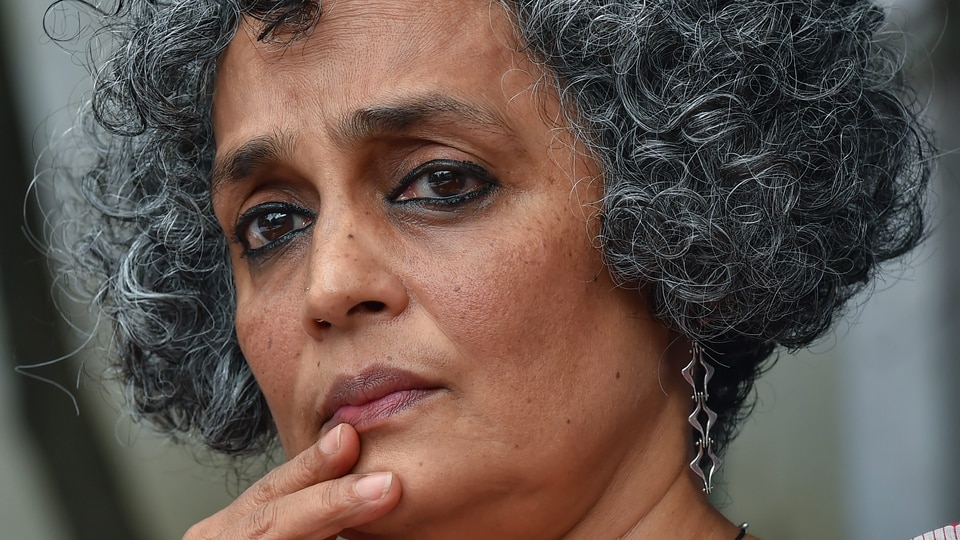
The Jammu and Kashmir government has ordered a ban on 25 books including those for allegedly propagating “false narrative and secessionism”. Writer-activist Arundhati Roy’s ‘Azadi’; constitutional expert AG Noorani’s ‘The Kashmir Dispute 1947–2012’; political scientist Sumantra Bose’s ‘Kashmir at the Crossroads’ and ‘Contested Lands’ are among the 25 banned books.
A notification of the Home Department in Jammu and Kashmir issued on Tuesday (August 5), signed by principal secretary Chandraker Bharti, argued that such literature “often disguised as historical or political commentary” plays a key role “behind youth participation violence and terrorism.”
“This literature would deeply impact the psyche of youth by promoting culture of grievance, victimhood and terrorist heroism. Some of the means by which this literature has contributed to the radicalization of youth in J&K include distortion of historical facts, glorification of terrorists, vilification of security forces, religious radicalization, promotion of alienation, pathway to violence and terrorism,” the notification reads.
The books are by various publishing houses, including Routledge, Stanford University Press, Oxford University Press, and are now “forfeited” under Section 98 of Bhartiya Nagarik Suraksha Sanhita (BNSS) 2023. The government said that these books have been “found to excite secessionism and endangering sovereignty and integrity of India”, thereby, attracting the provisions of sections 152, 196 & 197 of Bhartiya Nyaya Sanhita 2023.
While section 98 of BNSS 2023 gives power to the government to declare certain publications forfeited, sections 152, 196, and 197 of the BNS 2023 deal with assault without grave provocation, obstruction of public servants, and failure to assist them when legally bound, respectively.
This has come at a time when the Supreme Court is scheduled to hear on Friday, August 8, an application seeking directions to the central government to restore the statehood of the Union territory of Jammu and Kashmir.
Incidentally, on August 5, 2019, the Centre scrapped Jammu and Kashmir’s special status and bifurcated the state into two UTs, the other being Ladakh.