
 E-Paper



Karachi-bound ship held in Gujarat over cargo that can be used in missile launch
According to people familiar with the matter, the ship, intercepted on February 3, is undergoing a detailed inspection at Kandla Port in Gujarat.

 Prefer HTon Google


The spectre of nuclear proliferation between China and its all-weather ally Pakistan was revived this month when Indian Customs officials detained a ship -- bearing a Hong Kong flag and bound for Port Qasim in Karachi -- for wrongly declaring an autoclave, which can be used in the launch process of ballistic missiles, as an industrial dryer.
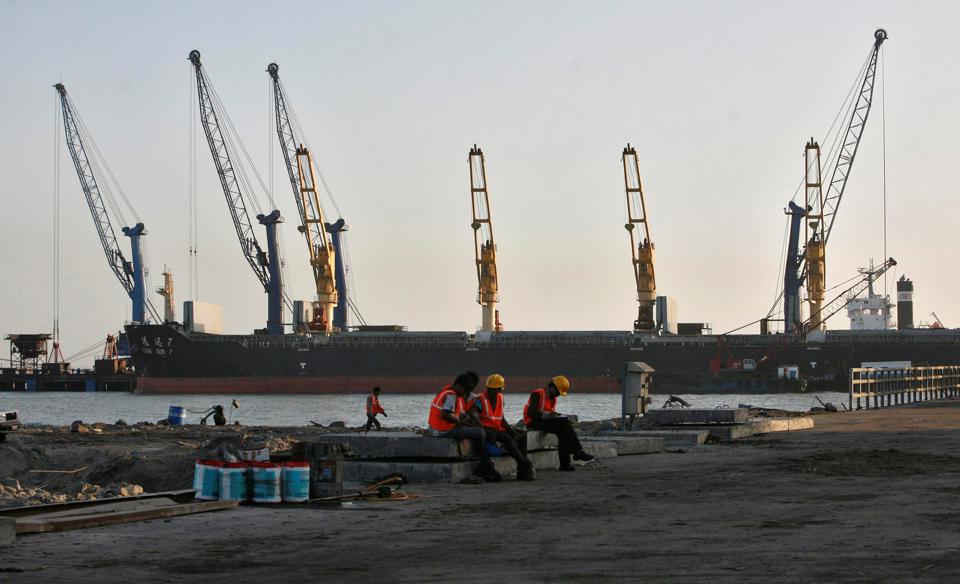
According to people familiar with the matter, the ship, intercepted on February 3, is undergoing a detailed inspection at Kandla Port in Gujarat. They added that the Defence Research and Development Organisation (DRDO), which has been examining the ship, is sending a second team of nuclear scientists this week to check the large autoclave on board.
The ship, which left Jiangyin port on the Yangtze river in China’s Jiangsu province, dropped anchor at Kandla, and was bound for Port Qasim. The detention of the vessel has been brought to the notice of the highest levels of national security establishment and the intelligence agencies.
Though national security officials and the external affairs ministry declined to share details of the ship, HT has learnt that it is named Da Cui Yun and carries a Hong Kong flag. The vessel was intercepted on the basis of intelligence tip-off, and one DRDO team has already inspected the 18x4-metre autoclave on board. The autoclave – a pressure chamber to carry out various industrial and scientific processes -- has been prima facie certified as a “dual-use” item, which means it can be used for civilian and military purposes.
A second high-level DRDO team of missile scientists will go to Kandla port on Monday to further examine the cargo, according to an official who asked not to be named. If this team upholds the findings of the first team, Customs will seize the cargo, and charge the vessel and its owners for violations of Special Chemicals, Organisms, Materials, Equipment and Technologies (Scomet) export regulations.
According to marinetraffic.com, which maps the movement of all listed ships, the Port Mohammed Bin Qasim-bound Da Cui Yun left Jiangyin Port on January 17, 2020, and has been moored at Kandla since February 3, 2020. The 28,341-tonne dead weight vessel measures 166.5x27.4 metres and was built in 2011 in the home port of Hong Kong. Port Qasim is in Karachi, Sindh, where the Space and Upper Atmosphere Research Commission (Suparco), responsible for Pakistan ballistic missile programme, is based.
Indian security officials are concerned because the nuclear nexus between Pakistan and China dates back to 1989, when Islamabad signed a deal with Beijing to purchase 34 solid-fuel M-11 ballistic missiles. The M-11s, which can deliver a 500kg payload over 300km, are at the core of Pakistan’s ballistic missile capability with all its other delivery platforms a derivative of the Chinese weapon. Around the same period, Pakistan purchased 12 to 25 liquid-fuel No-Dong ballistic missiles from North Korea despite not being a signatory to any proliferation regime. The No-Dong system can deliver a 700-1,000kg payload over 1,000-1,300km.
Experts said the autoclave episode revives memory of North Korean ship Ku Wol San, which was seized at Kandla at the height of the 1999 Kargil war. The Pakistan-bound ship had wrongly declared missile components, metal casings and Scud missile manuals as water-purification equipment. The story was first reported by HT at that time.
In the case of Da Cui Yun, DRDO investigators have so far found that the industrial autoclave is used for manufacturing composite lining for the solid-fuel ballistic missiles. The ballistic missile is propelled by a solid-fuel-based booster in its critical Phase I. For this, the solid fuel is placed in a steel alloy casing, which needs a composite material liner to withstand the high pressure and high temperatures during the launch process. An autoclave is used to manufacture sheets of silica under controlled temperature and pressure, so that they can be used as liners.


