
 E-Paper



Keeping up with UP: Does Owaisi threaten Akhilesh Yadav’s hold over Muslim voters
AIMIM leader Asaduddin Owaisi has called for an alliance with the Opposition bloc ahead of the 2027 Uttar Pradesh polls

 Prefer HTon Google


In June 1995, governor Motilal Vora swore in Bahujan Samaj Party (BSP) leader Mayawati as the Uttar Pradesh chief minister in the middle of the night. The Bharatiya Janata Party (BJP) supported her from the outside after the BSP broke its formidable alliance with the Samajwadi Party (SP), which had ruled the state under Mulayam Singh Yadav’s leadership since 1993.
A day after Mayawati became the state’s first Dalit chief minister, Yadav said the Congress, which was in power at the Centre and had appointed Vora as governor two years ago, had made the biggest political blunder. He warned that Dalits would never return to the Congress, which they had supported until then.
Dalits found a saviour in Mayawati, and a significant section of the community remains loyal to the BSP despite a major erosion in its support base.
Three decades later, Yadav’s son, Akhilesh Yadav, faces a similar situation related to the Muslim vote. Will he avoid making the mistake that cost Congress the Dalit vote?
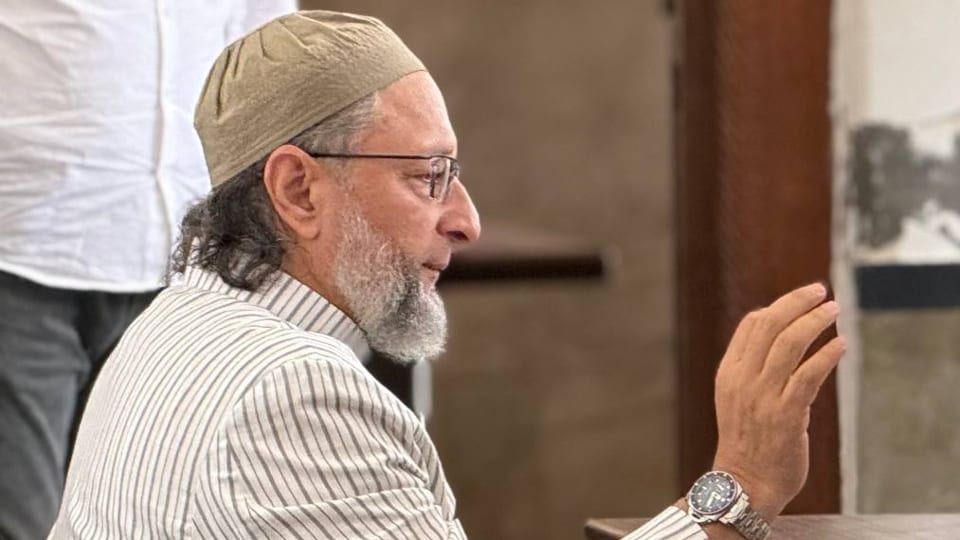
All India Majlis-e-Ittehadul Muslimeen (AIMIM) leader Asaduddin Owaisi has called for an alliance with the Opposition bloc ahead of the 2027 Uttar Pradesh polls. He said today is the time to talk, and not to cry later once the elections are over. Owaisi emphasised that the AIMIM does not want the BJP to return to power.
Akhilesh Yadav has ignored Owaisi’s call, even as the AIMIM leader’s rallies have attracted large crowds in Muslim-dominated areas. AIMIM got barely 0.49% of the votes polled in the 2022 election. It contested 94 seats in alliance with smaller parties and lost deposits on all of them. Some votes AIMIM secured mattered in close contests. Still, the Opposition alliance finds him and his politics more of a liability.
In neighbouring Bihar, the AIMIM won five assembly seats in the 243-member House in the 2025 assembly polls. The BJP had a secular ally in Nitish Kumar, whom the Muslims trusted. Thus, their votes were divided between Kumar’s Janata Dal (United) and Tejashwi Yadav’s Rashtriya Janata Dal (RJD).
In Uttar Pradesh, the BJP has no secular partners. Chief minister Yogi Adityanath’s anti-Muslim belligerence will consolidate the Muslim vote in favour of the Akhilesh Yadav-led Opposition alliance.
Voters in Uttar Pradesh, especially Muslims, either vote for the fighter or the winner and do not waste votes on fringe parties. They may be drawn to Owaisi’s oratory but would not vote for him as he cannot get non-Muslim votes. The BSP, with a base of 9% vote, is still a better option, despite the growing perception that a vote for Mayawati will be a vote for the BJP. Muslims are now overcautious after Nitish Kumar was replaced as the Bihar chief minister.
The BJP has formed the government twice in Uttar Pradesh since 2017 without Muslim support. Apparently, the game plan is to break the SP’s hold over Muslim voters (nearly 20% of the electorate) since the 1990s.
Akhilesh Yadav has retained the Muslim support. If Owaisi gains ground by joining the Opposition alliance, Muslims may find a Mayawati of their own community.
There is also a Muslim leadership vacuum in the state after Azam Khan’s incarceration. SP parliamentarian Iqra Hasan is emerging as a popular leader. The Congress also lacks a Muslim leader of stature in the state. In a scenario like this, they look up to Akhilesh Yadav as their leader in the state and Rahul Gandhi at the national level.
A majority of Muslims will stick to the SP-Congress alliance just as Brahmins and Jatavs would remain with the BJP and the BSP, despite their rising frustrations. Muslims understand Akhilesh Yadav’s constraints. He has had to walk a tightrope in an atmosphere where Muslim bashing is the norm.
Muslims want both the Congress and the SP to remain together. Owaisi’s popularity is greater among the younger voters and is often seasonal. They love his fiery speeches and go ecstatic when he says, “Some day, a Muslim will become the Prime Minister of India.” Kanshi Ram often spoke about a Dalit Prime Minister. But he managed to form a coalition of castes, something Owaisi has failed to do so far.


