The Delhi high court on Tuesday rejected a plea filed by chief minister Arvind Kejriwal challenging his arrest by the Enforcement Directorate (ED) in connection with a money laundering case related to the now-scrapped Delhi excise policy. The court said that Kejriwal's arrest was not in contravention of law and remand can't be termed "illegal".
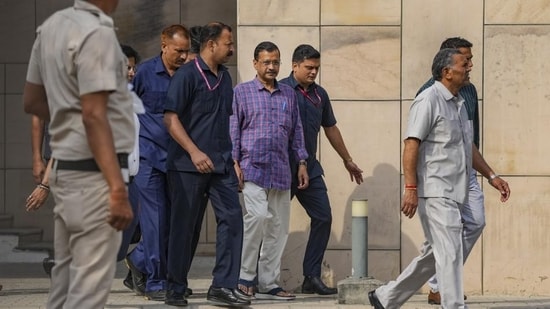
According to the court's ruling, the material collected by the ED indicates Kejriwal's alleged involvement in the formulation of the excise policy and his purported demands for kickbacks, both in his personal capacity and as the national convenor of the Aam Aadmi Party (AAP).
Delhi CM to move Supreme Court against HC order. Follow LIVE updates
The court also rubbished any doubts raised regarding the manner of recording the statement of an approver.
“To doubt and aspersions regarding the manner of recording the statement of approver, amounts to casting aspersions on the judge and the court,” Justice Swarana Kanta Sharma said, adding that the law of approver is more than 100 years old.
“It is not a one-year-old law to suggest as if it was enacted to falsely implicate the petitioner,” she said.
{{/usCountry}}“It is not a one-year-old law to suggest as if it was enacted to falsely implicate the petitioner,” she said.
{{/usCountry}}During the hearing, senior advocate Abhishek Manu Singhvi, appearing for Arvind Kejriwal, had pointed to the earlier statements of accused-turned-approvers saying criminal law was being ‘turned on its head’.
“First, in several statements, there will be nothing against me – Raghav Magunta, Sarath Reddy and Magunta Reddy,” Singhvi had said, referring to three approvers in the case.
"Step 2, some of them are arrested. Step 3, the first time they give statements against me. Step 4, they are given bail without any objection. Then they get pardoned and approvership."
“Step 5 is unique, one of them is a candidate from the ruling party in the current elections. That is Magunta Reddy and the second one is shown to have purchased (electoral) bonds, that is Sarath Reddy.”
“It is a completely biased approach. It is not the way criminal law can be applied.”
The court clarified that such matters would be addressed at the appropriate stage of the trial.
“Who gives tickets for contesting election or who purchases electoral bonds is not the concern of the court,” Justice Sharma said.
“Kejriwal will have the right to cross-examine the witnesses. The said person will have to answer it at that stage. This court cannot step into the shoes of a trial court and conduct mini-trial in writ jurisdiction,” she added.
Singhvi had submitted that this case reeks of timing issues. Kejriwal was arrested on March 21 by the Enforcement Directorate in relation to the excise policy case. On April 1, the trial court sent Arvind Kejriwal to judicial custody till April 15, 2024, days before the country votes for the Lok Sabha elections.
“The timing issue ensures that the petitioner doesn't participate in the democratic process and that his party is destroyed. The timing reeks of democracy issue, level playing field issue. You are clearly doing an arrest without any enquiry, statement etc. It's unique that there's no Sec 50 here.”
Justice Sharma said the timing of the arrest did not suggest any malice on the part of the ED.
“Petitioner has been arrested in a money laundering case and the court has to examine his arrest and remand as per law irrespective of the timing of elections,” Justice Sharma said.