Kerala’s move to challenge the Citizenship (Amendment) Act (CAA) in the Supreme Court on Tuesday has again drawn attention to the question whether a state government can do so in case of a central law.
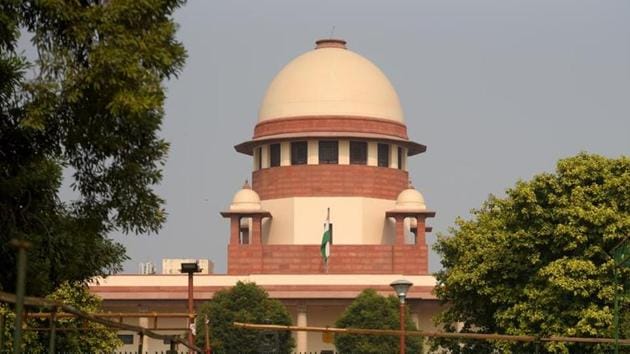
In its petition filed under Constitution’s Article 131, Kerala has called the CAA discriminatory. While Article 131 says the Supreme Court has exclusive jurisdiction to decide disputes between the Centre and the state governments, but whether a state can challenge the validity of a central law under this provision has not been settled yet.
It is pending consideration before the Supreme Court in a case dating back to 2000. In this case, Jharkhand had challenged a provision in the Bihar Re-organisation Act, 2000, related to the apportionment of pension liability between the two states. The case was filed after Jharkhand was carved out of Bihar in 2000.
Bihar has objected to the challenge by relying on a 2011 decision of a two-judge bench of the top court related to Madhya Pradesh’s challenge to the validity of certain provisions of Madhya Pradesh Reorganisation Act. The court, in that case, had ruled that a state cannot challenge a central law under Article 131. Bihar has cited the judgment and argued against Jharkhand’s challenge.
The Supreme Court delivered its judgment in the Bihar versus Jharkhand case in November 2014, saying it cannot agree with the view taken of the two-judge bench. It ruled that Article 131 is worded in such a manner that the Supreme Court can decide disputes on questions of fact and law under Article 131. Consequently, it opined that a challenge to a central law can be made under Article 131. “Therefore, we find it difficult to accept the statement of law enunciated by this Court in State of Madhya Pradesh v. Union of India... We are unable to agree with the proposition that this Court cannot examine the constitutionality of a statute in the exercise of its exclusive original jurisdiction under Article 131”, the judgment said.
{{/usCountry}}The Supreme Court delivered its judgment in the Bihar versus Jharkhand case in November 2014, saying it cannot agree with the view taken of the two-judge bench. It ruled that Article 131 is worded in such a manner that the Supreme Court can decide disputes on questions of fact and law under Article 131. Consequently, it opined that a challenge to a central law can be made under Article 131. “Therefore, we find it difficult to accept the statement of law enunciated by this Court in State of Madhya Pradesh v. Union of India... We are unable to agree with the proposition that this Court cannot examine the constitutionality of a statute in the exercise of its exclusive original jurisdiction under Article 131”, the judgment said.
{{/usCountry}}Since the judgment in Madhya Pradesh versus the Union of India was also given by a two-judge bench, the bench which heard the dispute between Jharkhand and Bihar, referred the matter to a larger bench. The larger bench is yet to be constituted and the matter is still pending before the SC.
Kerala has in its petition cited the November 2014 judgment to argue that a state government can challenge a central law. Since the judgment acknowledged that it is in conflict with the earlier decision in the case of Madhya Pradesh and referred the matter to a larger bench, reliance on it might not be helpful.
“Relying on the judgment in the State of Jharkhand versus the State of Bihar could be an ineffective submission. The maintainability of such a petition under Article 131 will now have to be decided by the larger bench. This might delay the entire thing,’’ said Supreme Court advocate Chitranshul Sinha.
The Supreme Court rejected West Bengal’s 2017 petition against the Aadhaar Act filed under Constitution’s Article 32, which empowers individuals and organisations to move court against government actions and laws, which may violate fundamental rights.