Nearly nine months after the Modi government asked the Law Commission of India to draft a legislation aimed at ensuring uniformity in granting bail to undertrials, it has reconsidered its decision.
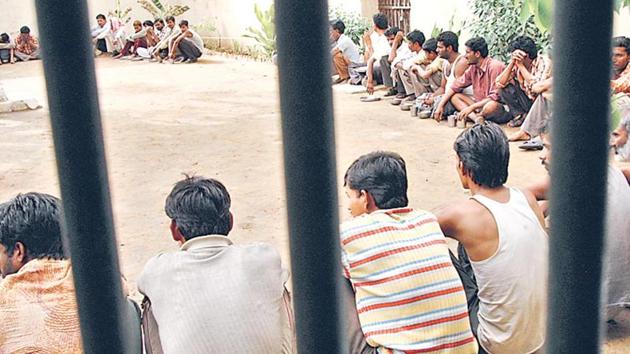
Instead, the law ministry has now asked the commission to only suggest amendments to the Criminal Procedure Code (CrPC). “We have received a letter from the law ministry, and will start working on suggesting amendments to the CrPC,” commission chairman Justice BS Chauhan told HT, noting that “drafting a new legislation was entirely different from suggesting amendments”.
“This will obviously take time,” said Justice Chauhan, refusing to commit to a time frame.
Sources said the Law Commission was planning to finalise the draft bail legislation in a few months. The process will now have to be started afresh, taking at least one more year and jeopardising the chances of the amended CrPC being passed during the tenure of the present government.
The government’s move was criticised by Congress spokesperson and senior advocate Manish Tewari. “Given the authoritarian nature of the government, it is obvious that they are trying to undermine the efforts of the Law Commission although a substantial amount of work on the new legislation seems to have already been completed,” he said.
{{/usCountry}}The government’s move was criticised by Congress spokesperson and senior advocate Manish Tewari. “Given the authoritarian nature of the government, it is obvious that they are trying to undermine the efforts of the Law Commission although a substantial amount of work on the new legislation seems to have already been completed,” he said.
{{/usCountry}}Unlike western democracies on which the Indian judicial system is modelled, bail has become a matter of judicial discretion and not a right of the accused. This puts poor undertrials who cannot hire expensive lawyers at a disadvantage. Sadanand Gowda, who was the law minister at the time, had written to the commission in April that the new bail act should “ensure uniformity and predictability” – bridging the gap between the poor and the rich in securing the right to bail.
While the United Kingdom implemented the Bail Act in 1976, the United States adopted a similar legislation in 1966.
During the Congress-led UPA regime, the law ministry under Veerappa Moily had launched a joint initiative with the 24 high courts in the country to secure the release of 5,62,000 undertrials on bail between January 26, 2010, and May 31, 2011 – drastically reducing the number of people languishing in jail. The government, however, could not introduce a legislation or legislative amendment to reform the bail process.