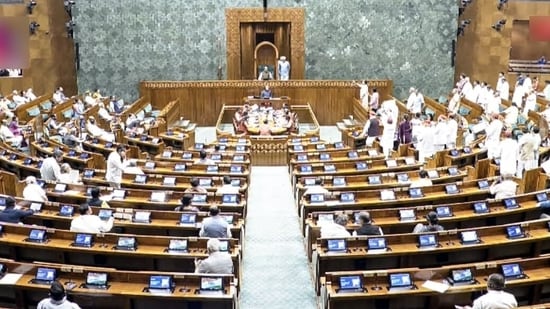
The Union government on Friday recast its constitutional amendment to guarantee a uniform 50% increase in Lok Sabha seats for every state and Union territory (UT), seeking to address the concerns of southern states that a population-based redistribution could diminish their political influence and demonstrating a significant rethink of its delimitation strategy after suffering an unprecedented defeat in Parliament in April.
The Constitution (132nd Amendment) Bill, 2026 and the Delimitation (Second) Bill, 2026, replace the legislative framework that failed to
Deep Dive
How does the 132nd Constitution Amendment Bill differ from the defeated 131st Bill?
The 132nd Bill writes a uniform 50% increase in seats for every state and Union territory into the proposed framework, preserving their relative shares. The 131st Bill was defeated after concerns that population-based redistribution could reduce some states’ representation, and it did not include a statutory guarantee of the uniform increase.
How would the 132nd Amendment Bill change seat allocation during delimitation?
It proposes increasing each state and Union territory’s existing Lok Sabha seats by 50%, rather than redistributing their relative shares according to population growth. Constituency boundaries would still be redrawn using the latest published census figures.
When would women’s reservation take effect under the 132nd Amendment Bill?
The bill seeks to provide 33% reservation for women in Parliament and state assemblies after the first delimitation exercise conducted following the proposed amendment’s commencement. This replaces the earlier link to a delimitation exercise following the first census conducted after the 106th Amendment commenced.
The change addresses one of the principal criticisms of the earlier exercise, when Opposition parties argued that the government’s assurances of a uniform increase in representation were not reflected in the actual legislative provisions. More importantly, it seeks to allay fears in states such as Tamil Nadu and Kerala that rewarding population growth through delimitation would disproportionately benefit northern states and penalise those that have made greater progress in population stabilisation.
Under the new constitutional amendment, the maximum strength of the Lok Sabha will rise to 815 members from states and 35 from Union territories, while the maximum strength of state legislative assemblies will increase to 650. The proposed 50% expansion will apply to the existing allocation of seats in each state and Union Territory, thereby preserving their relative share in the Lok Sabha rather than redistributing representation according to population differences.
The government has also sought to remove the uncertainty over when women’s reservation would become operational. The 106th Constitution Amendment Act, 2023, which provided for one-third reservation for women, linked its implementation to a delimitation exercise following the first census conducted after its commencement. The new amendment replaces that requirement with a provision for reservation to take effect after the first delimitation exercise undertaken following the commencement of the proposed amendment.
The April exercise had sought to dismantle the existing freeze on the allocation of seats among states and return to a population-based redistribution, while raising the Lok Sabha’s ceiling from 550 to 850. The government had argued that expanding the House would accommodate women’s reservation without reducing the existing number of seats. But the absence of a statutory guarantee of a uniform increase left southern states apprehensive about losing their relative representation.
Also Read: How Centre's delimitation plan could change India's electoral map: A look at state-wise numbers
The Constitution (131st Amendment) Bill secured 298 votes in favour and 230 against on April 17, falling 54 votes short of the 352 required among the 528 members present and voting. It was the first time since the NDA came to power in 2014 that a constitutional amendment introduced by the government had been defeated in the Lok Sabha. The accompanying delimitation and Union Territories bills were consequently not proceeded with.
In its explanation for withdrawing the earlier legislation, the government acknowledged that concerns had been expressed over the possible impact of delimitation on the representation of different states, particularly because of variations in population growth. It said the revised framework was intended to provide a more balanced arrangement while preserving the representative character of Parliament.
The new formula seems to be an attempt to bridge that political divide. While the delimitation exercise will still redraw constituencies using the latest published census figures available when the new law commences, the allocation of seats among states will receive a uniform 50% increase. With the 2027 census still underway, the 2011 census figures are likely to remain the latest published data when the exercise begins, although the actual position will depend on the date of commencement.
The distinction is important. The exercise proposed will use census data to redraw territorial constituencies, but the relative allocation of parliamentary seats among states will not be altered by differential population growth.
The Delimitation (Second) Bill provides for a three-member commission comprising a serving or retired Supreme Court judge as chairperson, the Chief Election Commissioner or an Election Commissioner nominated by him, and the state election commissioner of the state concerned. The Centre will appoint the chairperson and specify the commission’s tenure, which can be extended on its request.
The commission will also associate 10 legislators from each state -- five Lok Sabha members and five state assembly members, nominated by the respective presiding officers. However, these associate members will have no voting rights and cannot sign the commission’s decisions.
The commission will determine the allocation of seats, constituencies reserved for Scheduled Castes and Scheduled Tribes, and nearly one-third of seats to be reserved for women, including women belonging to these communities. Its proposals will be published, objections and suggestions invited, and public hearings held before final orders are issued. Once published in the Gazette of India, its final orders will have the force of law and cannot be challenged in court under the proposed legislation.
The revised framework also extends the existing freeze on the allocation and readjustment of seats until 2051. This provides a longer constitutional horizon for the new arrangement, instead of making the exercise contingent on the publication of the first census after 2026.
But the expansion of the Lok Sabha also carries implications beyond delimitation. The Rajya Sabha’s maximum strength of 250 remains unchanged, altering the relative balance between the two Houses. A larger Lok Sabha would also increase the potential size of the Union council of ministers under the constitutional ceiling of 15% of its membership, while raising questions about the time and opportunities available to individual MPs to participate in parliamentary proceedings.
The political significance of the revised formula will therefore extend beyond the immediate question of women’s representation. It will reshape the numerical strength of Parliament, the relative influence of the two Houses and the manner in which states are represented in national decision-making.