An individual’s liberty cannot hinge on the “inadequacy” or brevity of a court’s reasoning while granting bail, the Supreme Court underscored on Friday, as it refused to interfere with the Uttarakhand high court’s decision releasing Abdul Malik, the alleged mastermind of the February 2024 Haldwani riots.
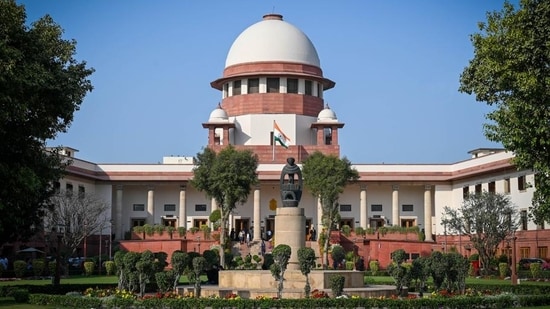
A bench of Chief Justice of India Surya Kant and justices Joymalya Bagchi and V Mohana dismissed the Uttarakhand government’s special leave petition challenging the April 16 order of the Uttarakhand high court granting bail to Malik, observing that the top court would ordinarily be reluctant to interfere with a bail order unless it glaringly reflected non-application of mind.
Also read: Delhi riots: Tahir Hussain, 4 others get life terms in IB staffer's murder case
“Liberty does not depend on inadequacy of a court order. It depends on the prosecution’s case,” remarked the bench, adding that “not every bail order requires long and lengthy orders” so long as there is some application of mind and the order is not passed mechanically.
The state government had assailed the high court’s order primarily on the ground that it was a cryptic, non-speaking order granting bail to the principal accused in one of Uttarakhand’s most serious incidents of communal violence.
{{/usCountry}}The state government had assailed the high court’s order primarily on the ground that it was a cryptic, non-speaking order granting bail to the principal accused in one of Uttarakhand’s most serious incidents of communal violence.
{{/usCountry}}Senior additional advocate general Gaurav Bhatia, appearing for the state, argued that the law now required reasoned bail orders and that granting bail “in such a cursory manner without any justification” would have serious repercussions. He submitted that Malik’s house had been used to hatch the conspiracy behind the violence and that the accused could not be enlarged on bail merely because a co-accused had secured similar relief.
Also read: PM Modi forgives students amid abusive video row: 'Let's guide the misguided'
The Supreme Court, however, declined to accept the submission, observing that while a bail order must indicate application of mind, it need not contain elaborate reasoning in every case. “We are dealing with a matter where bail has been granted and not otherwise…Bail is bail, why should we ordinarily interfere?” the bench observed.
The bench also reminded the state that allegations regarding the conspiracy would have to be established during trial. “That you need to prove through evidence during the trial,” it told Bhatia, noting that Malik had already spent more than two years in custody.
When Bhatia argued that the grant of bail had demoralised the police because the accused was allegedly responsible for burning down a police station, the bench responded that the state ought to have expedited the trial instead.
Also read: 1 dead, another injured in terror attack in J&K's Kulgam
“If you think demoralisation of police is the reason you are here, you should have secured his conviction in the last two years,” retorted the bench. It noted that only one prosecution witness had been examined so far and questioned why the state expected the Supreme Court to curtail an individual’s liberty despite the slow pace of the trial.
“You have examined just one witness so far and you expect us to interfere with the liberty of a person?” asked the bench, adding that if the trial court was not proceeding expeditiously, the prosecution ought to have approached the apex court for appropriate directions.
The hearing also saw the bench question the invocation of the Unlawful Activities (Prevention) Act (UAPA). “How is UAPA attracted? Someone throwing a bomb will attract UAPA? Why was it invoked?... If a mob goes and burns down a police station, can it invoke UAPA?” it asked.
When Bhatia contended that disturbance of public order attracted UAPA, the court drew a distinction between offences affecting public order and terrorist acts under the special law. “That would attract NSA and other laws, but how UAPA? Public order and UAPA are different,” said the court before dismissing the state’s petition.
The case originates from the large-scale violence that erupted in Banbhoolpura, Haldwani, on February 8, 2024, during an anti-encroachment drive to demolish an allegedly illegal madrasa and clear encroachments. According to the prosecution, a violent mob attacked officials carrying out the demolition, resorting to stone-pelting, arson, firing and petrol bombs, besides torching a police station and police vehicles. Five people were killed and nearly 100 others injured in the clashes, after which curfew was imposed in the area.
The police have alleged that Malik was the principal conspirator behind the violence, claiming he had constructed the disputed structure and incited resistance against the demolition drive. He was arrested in New Delhi on February 24, 2024, after a manhunt. Three FIRs were registered under provisions of the UAPA, the Indian Penal Code, the Arms Act and the Prevention of Damage to Public Property Act.
The high court, in its April 16 order, had noted that Malik claimed he was not present in Uttarakhand on the day of the violence and was instead in Noida and Delhi. It also recorded the defence submission that there was no direct evidence of the alleged conspiracy, that the charge sheet had already been filed, and that the possibility of tampering with evidence was minimal.
Significantly, the state had fairly conceded before the high court that, according to the investigation, Malik was not present at the spot during the violence, although it maintained that he and his son Abdul Moied were the main conspirators. The high court also took note of the fact that Moied had already been granted bail by a coordinate bench before concluding that Malik too was entitled to be released on bail at that stage.