
 E-Paper



Malabar uprising sites to be made a tourist circuit
Kerala tourism minister Muhammed Riyas said that the circuit related to the Malabar rebellion will be developed in Malappuram, attracting a lot of tourists and history students.


The Kerala government on Sunday said the state tourism department is going to develop a circuit connecting all important historical sites related to the Malabar rebellion in 1921, marking the centenary of the uprising, even as Bharatiya Janata Party (BJP) and right-wing leaders voiced their opposition to celebrating the event as a ‘freedom struggle’ and termed the riots ‘genocide’ against the Hindus.
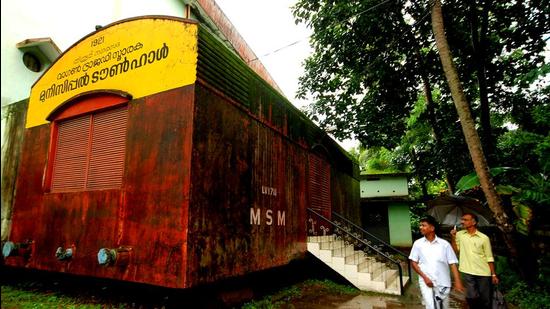
State tourism minister Muhammed Riyas said that the circuit will be developed in Malappuram, attracting a lot of tourists and history students. Riyas also said that the term ‘tragedy’ for the 1921 Wagon Tragedy is incorrect as it was a deliberate massacre carried out by the British regime.
Around 64 prisoners were taken into custody following the Malabar rebellion, an uprising movement against the British Empire that resulted in riots and thousands of casualties, and were on their way to Coimbatore for judicial trial on November 10, 1921, when they died inside the railway goods wagon due to suffocation. A memorial for the Wagon Tragedy exists inside the Tirur railway station (Malappuram) in Kerala.
“Tragedy means a disaster. But it was a deliberate massacre by herding hapless people in a closed windowless wagon and many were choked to death. British called it a tragedy and still we are using this term,” he said.
The Malabar rebellion, also called the Moplah uprising, is a controversial issue in history. While a section of historians and left parties say it was a peasant uprising against British colonialism in South India, many right-wing groups and a section of historians contend that it was a communal riot where Hindus were targeted. The issue is still hotly debated in the southern state – whether it was a rebellion against colonial forces and landlords or a mindless action by fanatics.
Last month, a controversy sparked after the Indian Council of Historical Research (ICHR) removed Malabar rebellion leader Variyamkunnath Kunjahmed Haji from the ‘Dictionary of Martyrs of India Freedom Struggle.’ Haji was captured and executed by the British in 1921. The issue flared up further after Kerala assembly speaker M B Rajesh compared Haji with Bhagat Singh, a young martyr from Punjab and a freedom fighter executed by the British in 1931.
Uttar Pradesh chief minister Yogi Adityanath, while addressing a programme organised by RSS mouthpiece “Panchajanya” on Saturday, said the “Malabar riots were planned genocide of Hindus by jihad elements.”
Yogi said it is important to understand history through the right lens. “Some people say Hindu landlords in Kerala were exploiting Muslim labourers and they gifted a peasant uprising stamp to it. But the fact is that thousands of Hindus were killed after they refused to convert. For the left and pseudo-secularists, it is still a peasant uprising. But it was genocide,” he said, adding that attempts to make it a part of the freedom movement should be opposed vehemently.
Addressing a seminar in Kozhikode last month, RSS leader Ram Madhav also alleged that riot was one of the first manifestations of Taliban mindset in India, and left parties were trying to whitewash it by celebrating it as a labour uprising. But Kerala chief minister Pinarayi Vijayan last month reiterated that the state government will observe it as part of the freedom struggle. “People who betrayed the freedom struggle (Sangh Parivar) have no right to raise accusing fingers at others,” he said. Tourism minister Riyas refused to divulge further into the BJP and RSS leaders’ comments, saying that he rejected their contention.
The Hindu Aikya Vedi, a right-wing group, said it will oppose the government’s move to develop a tourism circuit to glorify the riot.
“It is another example of appeasement politics. We will oppose it tooth and nail”, said Vedi president R V Babu.


