
 E-Paper



Minor non-disclosure of assets can’t void election, Supreme Court rules
It said courts must distinguish between concealment of criminal antecedents and failure to disclose some details of assets or educational qualifications


Not every instance of non-disclosure of assets by a candidate is enough to nullify an election, the Supreme Court has ruled, stressing that the sanctity of the popular mandate must prevail over purely technical objections. A judicial victory founded on minor omissions rather than the people’s verdict, the court said, should be spurned unless grave irregularities are undermining the integrity of the poll.
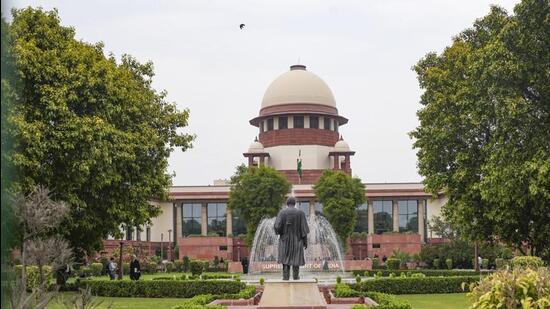
A bench of justices Surya Kant and N Kotiswar Singh underscored that courts must sharply distinguish between concealment of criminal antecedents, which it said goes to the root of electoral purity, and failure to disclose some details of assets or educational qualifications. The former, the court said, must be scrutinised “more scrupulously and dealt with more strictly” since criminalisation of politics was the “bane of the electoral system” and the reason behind Parliament’s insertion of Section 33A in the Representation of the People Act, 1951.
By contrast, disclosure of assets and educational qualifications, though mandatory through Form 26 affidavits, are “attending requirements” meant to enhance transparency and voter awareness, not grounds for automatic disqualification. “Merely because a returned candidate has not disclosed certain information related to assets, courts should not rush to invalidate the election by adopting a highly pedantic approach, unless such concealment was of such magnitude and substantial nature that it could have influenced the election result,” the bench said.
The ruling came while dismissing an appeal filed by Congress candidate Ajmera Shyam challenging the 2023 election of Bharat Rashtra Samithi (BRS) leader Kova Laxmi from the Asifabad assembly constituency in Telangana. Shyam alleged that Laxmi failed to disclose income from four financial years in her affidavit, as well as certain honorarium and pension receipts, rendering her nomination invalid and her election void.
Rejecting these arguments, the court endorsed the findings of the Telangana high court that such omissions were not “defects of a substantial character” under the Representation of the People Act. It added that there can be “no disqualification under the law based on a candidate’s wealth or financial status, unlike in the case of criminal antecedents, where conviction under specified offences leads to automatic disqualification.”
The bench emphasised that while voters’ right to know candidates’ backgrounds is vital, this must be balanced with respect for the will of the people expressed through the ballot. “To nullify the choice of the people on a minor technicality and insignificant non-disclosure of assets would have serious repercussions on the democratic process,” the bench said.
Courts, it said, must not become instruments to overturn election results through “cold, clinical legal analysis” unless the concealment is of such consequence that it materially affects the outcome or reveals corrupt practices.“Minor procedural errors or inconsequential non-disclosures should not be allowed to override the mandate of the electorate…A judicial victory based on technicalities rather than the electoral victory won in the electoral battlefield should be avoided, unless the mandate and the integrity of the electoral process are compromised by fraud or corrupt practices,” the court said.
The bench said the right to know the backgrounds of candidates, which corresponds to their obligation to disclose such information, must be balanced with the people’s mandate expressed through ballot boxes. “A fine balance must be struck between holding free and fair election, which involves the fundamental right of voters to have information about the candidates, and maintaining the sanctity of the mandate of the voters upon the declaration of the result. After all, the election result is the embodiment of the will of the people expressed through the exercise of the constitutional right of the people to vote.”
It added that courts must keep in mind that declaring an election void solely for non-disclosure of assets, if it lacks substantiality, could undermine the validity of the popular mandate. “To nullify the choice of the people on a minor technicality and insignificant non-disclosure of assets by the elected candidate would have serious repercussions on the democratic process.”
Courtroom interventions, it said, should only happen when there are clear and blatant violations of the law that threaten fairness, legality, and constitutional principles. “Minor procedural errors or purely technical objections of an inconsequential nature, thus, should not be allowed to override the mandate of the electorate. Courts must be careful not to become tools that undermine the popular mandate in the name of technical perfection.”


