E-Paper



Monsoon to arrive in Kerala around May 27, four days early: IMD
The Southwest Monsoon normally arrives in Kerala on June 1, with a standard deviation of about seven days.

 Prefer HTon Google


Monsoon this year is likely to arrive in Kerala on May 27, roughly four days earlier than normal, the India Meteorological Department (IMD) has said. Last year, monsoon hit Kerala on May 30.
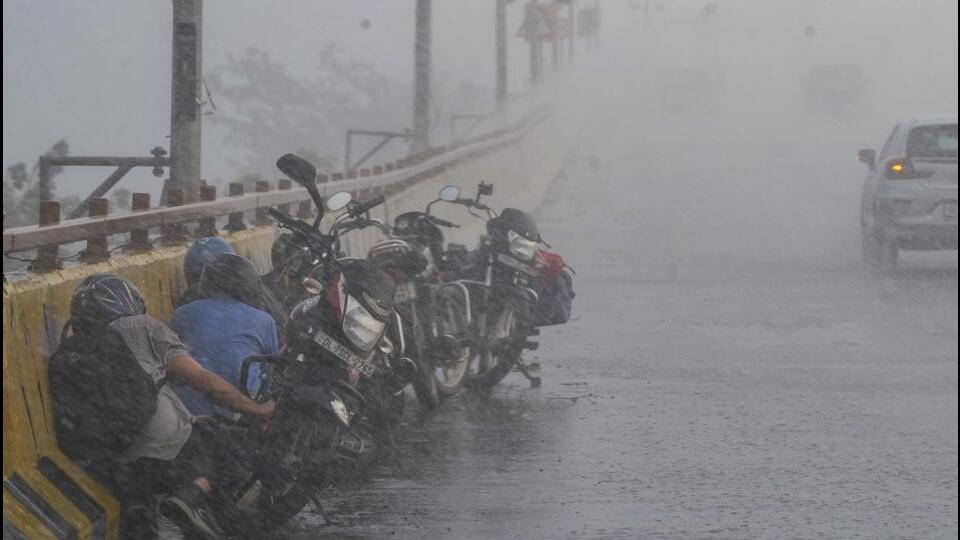
The advance of the Southwest Monsoon over the Indian mainland is marked by its onset over Kerala, which is an important indicator characterising the transition from the hot and dry season to the rainy season. It normally arrives in Kerala on June 1, with a standard deviation of about seven days.
In 2023, the IMD predicted ‘normal’ monsoon rains at 96% of the LPA (long period average). In reality, the season turned out to be below normal, with 94% rain recorded, which was, to be sure, within the agency’s error margin.
India received ‘below-average’ cumulative rainfall — 820 mm compared to the LPA of 868.6 mm — in 2023, an El Nino year. Before 2023, India recorded ‘normal’ and ‘above-normal’ rainfall for four years in a row.
This year, monsoon showers from June to September are likely to be ‘above normal’ at 105% of the LPA, with a model error of ± 5%, IMD has said in its long-range forecast.
Last year, monsoon was ‘above normal’ at 108% of its LPA. In 2023, an El Nino year, IMD had predicted ‘normal’ monsoon at 96% of LPA, but actual rainfall was below normal at 94% — still within the agency’s error margin.
Satellite images are already indicating dense cloud covers over the Andaman Sea and around Kerala regions.
Monsoon delivers nearly 70% of India’s rain and is the lifeblood of its economy. As much as 51% of India’s farmed area, accounting for 40% of production, is rain-fed and 47% of the population is dependent on agriculture for livelihood.
Consistent and moderate amounts of rain – as opposed to heavy or very heavy rainfall days – is thus crucial for the country’s agriculture and rural sectors. Good rains can help keep prices of staples such as sugar, pulses, rice and vegetables under control, in turn restraining the sticky inflation problem.
The six predictors used in IMD’s models for monsoon forecast are minimum temperatures over north-west India, pre-monsoon rainfall peak over southern peninsula, mean sea level pressure over subtropical northwest Pacific Ocean, outgoing long wave radiation over south China Sea, lower tropospheric zonal wind over northeast Indian Ocean, and upper tropospheric zonal wind over the Indonesia region.