At least 60% patients surveyed in 2019 believe that hospitals did not act in their best interests, as against 37% patients in 2016, shows the latest Ernst & Young (EY)- The Federation of Indian Chambers of Commerce and Industry (FICCI) report, ‘Re-engineering Indian Healthcare 2.0’.
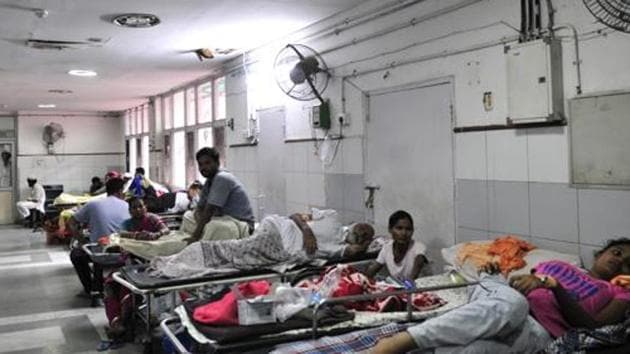
EY conducted an online survey with 1,000 patients across India. The survey findings also state that the key gaps in patient experience which have contributed trust deficit are – poor hospital responsiveness and waiting times as stated by 63% patients, and no concern for feedback as stated by 59% patients.
Even though India offers the lowest cost healthcare services globally, yet treatment is inaccessible and unaffordable for a majority of people, calling for a focus on rationalizing healthcare costs across the country.
“Rural primary health where 70% of the population resides is a key area for development. Engaging private players for innovative primary care provisioning in remote locations, enabling Make in India for frugal medical supplies, increasing the penetration of low cost domestically manufactured products are all steps in this direction,” recommend experts in the report.
Sangita Reddy, joint managing director, Apollo Hospitals and senior vice-president FICCI, says, “It is wonderful that a very timely and pertinent report has been put together to help all in rethinking and redesigning processes and steer the course towards requisite decision making.”
{{/usCountry}}Sangita Reddy, joint managing director, Apollo Hospitals and senior vice-president FICCI, says, “It is wonderful that a very timely and pertinent report has been put together to help all in rethinking and redesigning processes and steer the course towards requisite decision making.”
{{/usCountry}}“Healthcare is at the cusp of tremendous change and the need of the hour is for radical thinking and disruptive solutions to address the dynamic economic and social milieu. Above all, the extent of the impact is the best barometer and the journey towards it would need to accommodate current expectations for greater involvement, clarity, and convenience in the healthcare delivery process,” she added.
Dr Arvind Lal, chair, FICCI Healthservices Committee and chairman and managing director, Dr Lal PathLabs, says, “Although Indian government has launched several significant initiatives that will take us closer to achieving the Sustainable Development Goals, including Ayushman Bharat, we have a long way to go before we can call ourselves a healthy nation in entirety.”
“It is time we re-engineer our healthcare ecosystem with systemic and structural changes, keeping the ground realities in mind, through innovative and sustainable models of care delivery as well as business processes. But above all, there is an urgent need to bridge the trust deficit between the patient and the doctor; patient and the hospital; as well as government and the private healthcare provider for the health of the Indian healthcare,” he added.