
 E-Paper



Motegaonkar's ‘doctor factory’: Coaching centre owner 10th arrest in NEET-UG leak, calls self ‘visionary educator’
Central Bureau of Investigation arrested SR Motegaonkar, director of Renukai Chemistry Classes, from his residence in Shivnagar area of Latur

 Prefer HTon Google


Shivraj Raghunath Motegaonkar, founder of one of Maharashtra's most prominent medical and engineering entrance-test coaching chains, has been arrested by the CBI in connection with the NEET-UG 2026 paper leak.
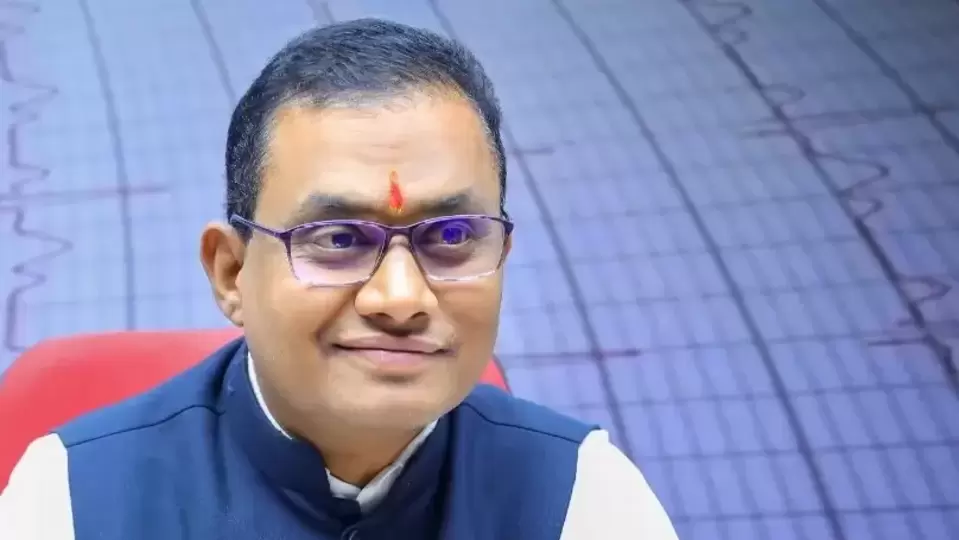
For two decades, students across Maharashtra have known the name Renukai Career Centre, more popularly called RCC, or simply 'Motegaonkar Sir's classes', as a ticket to a medical career. Reviews online have called it "India's brand and Maharashtra's No.1 NEET class" and a “Doctor's Factory”.
On Monday, the Central Bureau of Investigation said it arrested SR Motegaonkar, director of RCC, from his residence at Omkar Residency in the Shivnagar area of Latur, making him the 10th person arrested in the paper leak case in the National Eligibility-cum-Entrance Test (Undergraduate) or NEET-UG 2026, India's biggest entrance exam.
Arrests are spread across five states.
What CBI officials said
CBI officials told HT that Motegaonkar was “a member of an organised syndicate involved in the paper leak”.
Investigators claim to have found the NEET question paper on his phone.
He allegedly received it on April 23, a full 10 days before the examination was held on May 3. It has since been cancelled and is to be re-held on June 21.
According to the officials, who did not wish to be named as the probe is still ongoing, Motegaonkar distributed the questions and answers to several individuals. His phone has been sent for forensic examination, and his connections to previously arrested persons are being actively probed.
Man behind the brand
Born on February 2, 1980, Motegaonkar holds a gold medal in MSc (Chemistry) and founded RCC in Latur in 2003, say his websites.
What began as a single coaching centre grew into a multi-city operation spanning eight locations across Maharashtra, with Pune having three branches, apart from those in Nashik, Aurangabad, Nanded, Solapur, Kolhapur, and Akola, in addition to the main Latur campus. The institute offers NEET, JEE, and MHT-CET coaching for Classes 11 and 12, repeater batches, and a foundation programme from Class 6 onwards.
RCC's website claims to have produced over 15,000 doctors in 19 years, with an app-based platform trusted by 80,000 students and a library of 3,500 practice tests. Fees at branches like Pune range from ₹1.2 lakh to ₹2.4 lakh per year, with scholarships available through RCC's own entrance exam.
Beyond coaching, Motegaonkar was simultaneously building a broader educational empire, running two schools and planning a third CBSE institution under his name, with his websites describing him as a "visionary educator" committed to taking education to “the last child in the village”.
From ‘doctor’s factory' to controversy
On Google Reviews, where RCC Latur carries a 4.1-star rating from over 1,600 reviews accumulated over several years, there was a sign of a shift in public sentiment. One review, written before the allegations surfaced, described it as "India's brand... Maharashtra's No.1 NEET class — a Doctor's Factory," praising the teaching, faculty, study environment, and Motegaonkar's personal instruction.
Another, posted after the news broke, reads simply, “Leaked NEET chemistry paper word by word and call themselves best coaching. Shame on the owner and teachers. Destroying the future.”
How scandal unravelled
The leak first came to light not in Latur, but 800 kilometres away in Rajasthan's coaching hub of Sikar. On the evening of May 3, hours after the exam ended, a student showed his coaching teacher two PDFs of a “guess paper” that his landlord had forwarded, police have since said.
After three hours of cross-examination, the teacher and a colleague found that 45 chemistry questions and 90 biology questions in the documents matched the actual NEET paper — with the files reportedly received the night before the exam.
After an initial attempt to alert local police, the teacher chose to email the National Testing Agency (NTA) on May 7, triggering a formal investigation.
The trail then led to Latur.
A separate parent complaint in the city flagged that 42 questions from an RCC mock test were identical to the actual exam paper, pointing investigators squarely at the coaching ecosystem that partly defines the city's student-centric identity. Local police in Rajasthan had alreadu begun a probe, all of which was formally taken over by the CBI on May 12 after the Union education ministry filed a complaint. The government cancelled the NEET-UG 2026 examination the same day.
Network across states
According to investigators, two members of the NTA's paper-setting panel allegedly leaked separate sections of the exam. These are Manisha Gurunath Mandhare, a senior botany teacher from Pune with access to the biology paper, and PV Kulkarni, a retired chemistry teacher from Latur described by investigators as the “kingpin”, who is alleged to have set, and then leaked. the paper through secretly organised coaching sessions.
Motegaonkar is the second person arrested from Latur.
The nine previously arrested accused span five states and include, besides Mandhare and Kulkarni, Manisha Waghmare, a Pune-based beauty parlour owner identified as a key link in the distribution network. The others are Dhananjay Lokhanda, Shubham Khairnar. Mangilal Biwal alias Mangilal Khatik, Vikas Biwal, Dinesh Biwal, and Yash Yadav.
Over 22 lakh students appeared in the NEET-UG 2026 exam. Now admit cards for the June 21 retest are to be issued by June 14.


