E-Paper



Multilateralism key agenda for Cop30, says Lago
COP30 aims to strengthen multilateralism amid geopolitical tensions, focusing on real climate action rather than formal agreements, says President Lago.

 Prefer HTon Google


The UN Climate Conference (COP30) and its focus on rebuilding multilateralism is a counter to unilateral trade measures and ongoing tariff wars, geopolitical tensions, COP30 President, André Corrêa do Lago said in an interview to HT on Tuesday. He also indicated that COP30 may be very different from previous COPs with limited focus on a “deal” or a “cover text” but much more on real action.
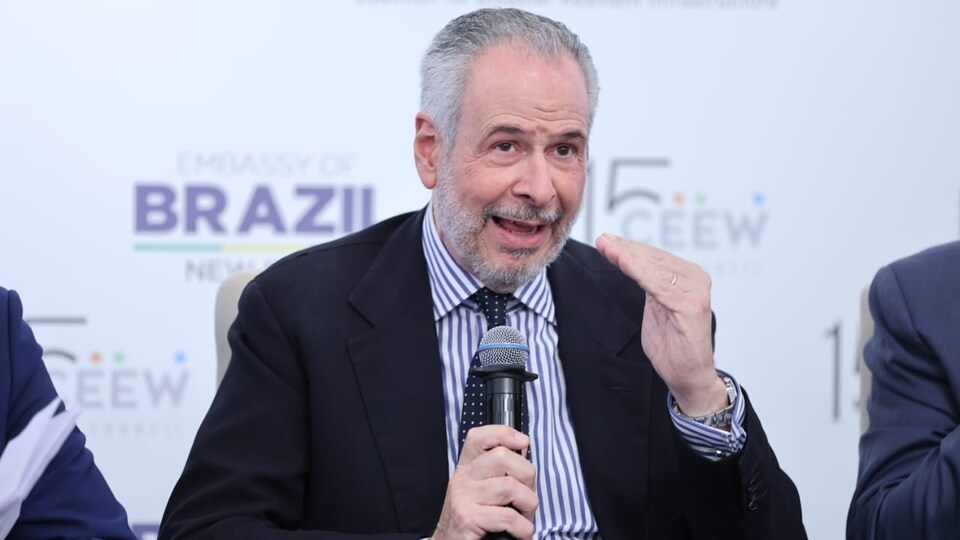
Responding to HT’s question on tariff war and the geopolitical situation impacting expectations ahead of COP30, Lago said “Well, I think it’s quite obvious that it has an impact but somehow, as someone told me and I tend to agree, is that all these unilateral measures confirm how important it is to strengthen multilateralism. So, we are trying to do something really positive in Belem and will have an impact much beyond climate. It will be like a reaction to a situation that I think most countries are uncomfortable with,” he said. He also spoke at an event titled “COP30 Conversations: The Alchemy of Solidarity” organised by The Council on Energy, Environment and Water (CEEW) and Embassy of Brazil.
Lago, a veteran climate negotiator and former Brazilian ambassador to India also said a “cover text” as such is not important for him and the push for such a decision will not come from him. What is more important is the implementation of the climate agreements made so far. Responding to a question on how important is a covered text? “No, look, I’m a climate change negotiator and so in principle, I don’t like covered decisions because there is an element of surprise and as I said today, I don’t like surprises. I think that we have to be transparent, we have to talk to the delegations and not have something in your pocket that you’re going to suddenly show at the end and try to impose.” He added: “So in principle, I don’t like covered decisions. Now, you may have a significant number of countries that may ask for a covered decision, but that’s completely different. But it will not come from the President.”
On India’s role at COP30, Lago said: “I think that, first of all, I think it’s very important that India wants to organize COP33. I think this is a very positive thing and we’re very excited about that.” “And I think that India, if we think of a couple of solutions as we want, India has many of the solutions that the world needs. And the other thing that is amazing is that India’s scale makes almost anything possible. The world needs India.”
The Brazilian COP30 Presidency has said on several forums that COP30 will be a COP where the trust in multilateralism is restored. Lago has a plan for COP30 to achieve that. “Look, President Lula is using a very nice expression that he started two weeks ago. He says he wants it to be a COP of truth. We have to talk the truth. So, I think this goes very well with the discussion of trust. And so, that’s what he wants. He says, come on, we’re talking about so many problems in the world, etc. But science is telling us that climate change is there. So, we have to tell the truth. So, he wants this, the COP, where everybody, every leader, delegates, we have to tell the truth.”
The Brazilian Presidency is also acutely conscious of the fact that COP30 will be taking place in a difficult year when there are multiple geopolitical rifts, tariff related disruption from US and US, the largest historical greenhouse gas emitter has withdrawn from the Paris Agreement. “We are conscious of so many obstacles already. And we are conscious that many other obstacles may still appear until November. So, let’s say that I think that, I don’t know, it’s difficult to answer that. I can only think of positive outcomes. So, we are designing a series of positive outcomes. And how can we work with countries towards that? So, we’re not thinking of... So, obviously, we’re thinking of plan A, B, C, whatever. But not starting from the negative side, starting from the positive side.”
Lago is expecting major economies to announce their NDCs this month. “Since we were going to organize the COP, we presented our NDCs well in advance in Baku. But as we have seen, it was a limited number of countries that did. But I believe that the key countries are going to present their NDCs by September. So, I firmly believe that we’re going to have an NDC synthesis report based on the significant number of NDCs, including the most important economies, which obviously is essential to have a synthesis report that really reflects the circumstances.”
Arunabha Ghosh who heads CEEW and is the South Asia envoy for COP30 said the world has possibly seen the worst that can happen to climate talks and is still holding the ground.
“I think the worst outcome has already happened. When the US withdrew, we expected the whole edifice to collapse. We thought other countries, including in the global south, might be using this as an excuse to withdraw. No one has withdrawn. It’s very clear then that we have to stop also giving credence to this narrative that climate action or climate agreements are happening because the Global North wanted it and the Global South were forced into it. That is, it’s a disservice to the sincerity of the Global South to deal with the challenge that they are facing,” he said responding to HT’s question about what may be the worst outcome of holding a climate conference in a difficult year.
“So, the fact that the edifice is still holding together demonstrates that even the worst kind of outcome, as they say in James Bond movies, is shaken but not stirred. Yes, yes. But if it’s shaken, it still means that you need to reinforce the foundations. You need to look at the cracks in the wall and ceiling and see what I need to do,” he said.
Ghosh also said the priority for COP30 is to showcase implementation of climate action. “The priority is very clear, both from the presidency, but also from me, as you say, watching this outside in, is really how do we not only talk about implementation, but showcase implementation. Even if I did not have the role that I currently have, my expectation from every COP has been, before we raise new ambition, before we raise new targets, are we identifying what is already happening, celebrating them, not in a sort of chest-thumping way or not in a aggrandizing way, but shining a spotlight on things that do not get attention. Because at the end of the day, if you do not know what is happening, then you will not know where to invest,” he said.
“It means showcasing how the energy transition is unfolding through many different pathways in the developing world. These are regions where the energy demand is on the up, and therefore each country will find its own pathway. Someone will go from the dirtiest of fossil fuels to maybe an intermediary fuel, and someone will go from an intermediary fuel to solar...but then we should be pathway agnostic of how that gets unfolded. The second thing that ought to get attention is resilience. And it is evidently clear that the climate crisis is very much upon us.”