New Delhi: A comprehensive new legislation planned by the Union government puts the onus on educational and medical institutions, including hospitals and universities, as well as owners of private residences to inform the authorities about foreigners staying in their facility.
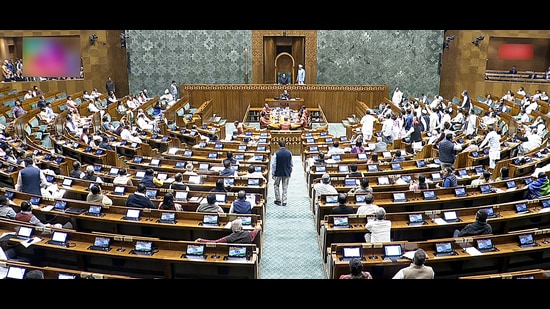
The Immigration and Foreigners Bill, 2025, which is likely to be introduced by Union home minister Amit Shah in the ongoing budget session of Parliament, obligates the carriers such as airlines and vessels to remove a passenger denied entry by the immigration officer and provide passenger and crew data to the authorities in advance. The bill carries a provision of up to ₹5 lakh in fine for violating carriers.
The proposed legislation seeks to abolish four existing laws — the Passport (Entry into India) Act, 1920, the Registration of Foreigners Act, 1939, the Foreigners Act, 1946 and the Immigration (Carriers’ Liability) Act, 2000 — which currently govern various aspects related to foreigners in India and define the powers of immigration authorities.
“The acts… are not only of pre-Constitution period, but also, they were brought into extraordinary times of first and second world wars. While there is an underlying continuity and commonality of objectives among the four Acts, there are some overlapping provisions among the said acts,” the statement of objects and reasons of the new bill, seen by HT, said, adding there “is a necessity to repeal all the aforesaid four Acts and to enact a new comprehensive legislation, namely the Immigration and Foreigners Bill, 2025.”
{{/usCountry}}“The acts… are not only of pre-Constitution period, but also, they were brought into extraordinary times of first and second world wars. While there is an underlying continuity and commonality of objectives among the four Acts, there are some overlapping provisions among the said acts,” the statement of objects and reasons of the new bill, seen by HT, said, adding there “is a necessity to repeal all the aforesaid four Acts and to enact a new comprehensive legislation, namely the Immigration and Foreigners Bill, 2025.”
{{/usCountry}}The proposed legislation is being enacted to avoid multiplicity and overlapping of laws on the same or related subject and to comply with the government of India’s policy of simplification of laws, it added.
Once implemented, the law will confer upon the Centre certain powers to provide for the requirement of passports or other travel documents in respect of people entering and exiting India and for regulating matters related to foreigners including requirement of visa and registration.
According to the latest government data, a total of 9,840,321 foreigners visited India between April 1, 2023 and March 31, 2024.
Sub-section 3 of clause 8 of the proposed bill specifies the role of “every person occupying or having under his control any residential premises” to submit to the registration officer information in respect to any foreigners accommodated in such premises.
For educational institutions, clause 9 mandates every university and educational institution admitting any foreigner to furnish information to the registration officer. Similarly, clause 10 specifies the role of “every hospital, nursing home or any other such medical institution providing medical, lodging or sleeping facility in their premises” to inform the authority (registration officer) about “any foreigner taking indoor medical treatment or their attendant for whom such lodging or sleeping facility has been provided”.
On the liability of carriers, the new bill has a separate chapter detailing additional provisions, which were not present in the 2000 existing immigration law.
Clause 17 of the proposed law mandates a carrier landing or embarking at a port or place in India to furnish advance information of passengers and crew on board of such aircraft, vessel or other mode of transport.
“If any foreigner whose entry has been refused, such foreigner shall be handed over to the carrier by the immigration officer and it shall be the responsibility of that carrier to ensure his removal from India without delay,” a provision in the new bill states.
It proposed to increase the penalty on carriers in violation from the existing ₹1 lakh to ₹2 lakh, which can be further extended up to ₹5 lakh.
For individuals who use a forged passport or other travel document or visa for entering or staying in India, the maximum punishment has been reduced from eight years (in the existing foreigners Act of 1946) to seven years in the proposed law.