
 E-Paper



May unravel dance of electrons, says ISRO on Chandrayaan 2 payload performance
One of the eight payloads on the orbiter of India’s second mission to moon -- Chandrayaan 2 Large Area Soft X-Ray Spectrometer (CLASS) – detected uneven density of charged particles while passing through the “geotail” or the part of the magnetosphere of the Earth extending away from the sun.


In the absence of data from physical observations of the lunar surface from the lander and rover of Chandrayaan 2, the Indian Space Research Organisation (ISRO) has said that the payload to detect elements such as Sodium, Calcium, Aluminium, Silicon, Titanium, and Iron is working as it should.
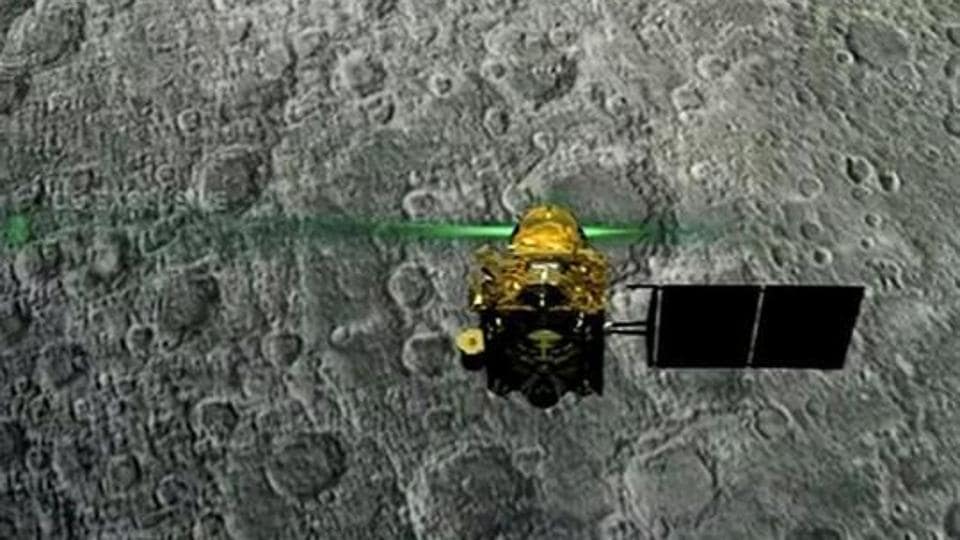
One of the eight payloads on the orbiter of India’s second mission to moon -- Chandrayaan 2 Large Area Soft X-Ray Spectrometer (CLASS) – detected uneven density of charged particles while passing through the “geotail” or the part of the magnetosphere of the Earth extending away from the sun. The orbiter passed through the region once every 29 days for about six days.
The magnetosphere is a region in space surrounding the Earth where the magnetic field of the Earth influences the charged particles released by the sun.
Also read: ‘Absolute surprise’, says scientist as Jupiter-like planet orbits little star
“While passing through the magnetosphere, the payload detected intensity variation in the charged particles. This is expected as the solar wind releases these particles unevenly and it is affected by the magnetic field. The observations that it is really supposed to make will happen when there is a solar flare directed towards the earth when the orbiter is passing through the region,” said Prof Nirupam Roy, assistant professor of Physics at the Indian Institute of Science (IISc), Bangalore.
Also Watch: NASA shares Chandrayaan 2 landing site images, says Vikram had hard landing
The x-rays emitted by the sun impact these elements on the lunar surface, which give out secondary x-rays that are detected by the CLASS.
“Although the payload will not be able to tell the complete composition of the lunar surface, the spectral signature will tell us about the presence of certain elements that give off the secondary x-rays,” said Prof Roy.
Although the number of times the CLASS will be able to make the observation is highly variable depending on the number of solar flares, the intensity, the direction of it, and the position of the obiter when it happens.
“Solar flares are very difficult to predict; when the sun is active it might happen a few times a day, when it is not it may happen once in a week or 10 days. But not all solar flares will be of the required intensity to make the observations, and not all will be in the direction of the Earth. The orbiter will also have to be in the geotail to make the observations. So during the life time of the payload it might be able to observe anywhere between 10 to 20 such events and that should be enough,” he said.
The data from lander and rover would have allowed the scientists to directly observe the lunar surface, the payloads aboard the orbiter will tell them about various components.
In a statement, ISRO said more detailed studies in the future along with observations from other space missions, will enable a multi-point study, essential to unravel the “dance of electrons to the music of magnetic fields” around Moon.
Two x-ray payloads will detect the presence of various elements, one infrared and one low frequency radar will be able to observe the presence of water and hydroxyl molecules. Another payload will be able to study the moon’s exosphere,” said Prof Roy.


