US pharmaceutical giants Pfizer and Moderna have told the Delhi government that they will deal only with the central government, and not sell Covid-19 vaccines individually to states, chief minister Arvind Kejriwal said on Monday, highlighting a major problem in scaling up vaccine stocks at a time when central supplies are much lower that the vaccination demands and capacities of most Indian states.
Government vaccination centres in the Capital have been shut for those below 45 years of age due to non-availability of doses, and the Delhi government is trying -- as are other state governments -- to place orders with foreign manufacturers. Centres for those above 45 have also been reduced from at least 650 to about 450.
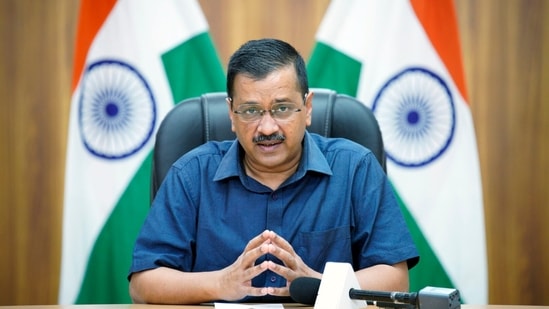
“We have spoken to Pfizer and Moderna for vaccines, and both the manufacturers have refused to sell directly to us. They have said they will deal with the central government. We appeal to the Centre to import vaccines and distribute to the states,” Kejriwal told reporters on Monday. His statement came a day after Punjab said Moderna refused to sell vaccines directly to the state.
“We need vaccines. The Centre talked to Moderna, and Pfizer, and completed negotiations within 2-3 days. Why can’t it talk again to [vaccine] companies and complete negotiations in 3-4 days? Why is it not being done urgently? Bharat Biotech, which is manufacturing Covaxin, is willing to share its formula with everyone. A national newspaper reported that 16 companies here can produce Covaxin. Out of them, Bharat Biotech has struck a deal with only two companies. The Centre should order, not request, these 16 companies to start production within the next few days,” he added.
{{/usCountry}}“We need vaccines. The Centre talked to Moderna, and Pfizer, and completed negotiations within 2-3 days. Why can’t it talk again to [vaccine] companies and complete negotiations in 3-4 days? Why is it not being done urgently? Bharat Biotech, which is manufacturing Covaxin, is willing to share its formula with everyone. A national newspaper reported that 16 companies here can produce Covaxin. Out of them, Bharat Biotech has struck a deal with only two companies. The Centre should order, not request, these 16 companies to start production within the next few days,” he added.
{{/usCountry}}Not long after Kejriwal’s comments, Pfizer issued a statement, saying “Pfizer will supply Covid-19 vaccine only to central govts & supra-national orgs for deployment in national immunization programs. Allocation of doses and implementation plan within a country is a decision for local governments based on relevant health authority guidance.”
Lav Agarwal, joint secretary, Union health ministry, during the Covid-19 media briefing on Monday, said, “We want to explain to you all whether it is Pfizer or Moderna, the Centre is coordinating with both companies at two levels: one is their regulatory facilitation in terms of approvals, and the other is procurement related facilitation. But most of the time for both, Pfizer and Moderna, their supply books are already full. They will come back to government of India, and we will coordinate and facilitate supplies,” he said.
Later n the afternoon, at a press briefing, deputy chief minister Manish Sisodia stressed that the Delhi government has reached out to Moderna, Pfizer and Johnson&Johnson for vaccines, of which the first two have refused.
“We asked the Centre for vaccines for the younger people, to which it replied that Delhi will only get 400,000 and the rest must be procured through a global tender. So, we reached out to foreign manufacturers and they have said they will only give to the Centre. The Centre is solely responsible for vaccine shortage in the country,” he said.
The deputy chief minister urged the central government to expedite approvals to foreign vaccines, and procure, and distribute them among states.
On April 13, India made a significant modification to its regulatory processes for foreign-made Covid vaccines to consider an emergency use application without a precondition of a clinical trial in local population. It said it would allow all vaccines that were granted approvals in the US, the UK, the EU, Japan, or by the World Health Organization (WHO) with only bridging trials that could go on simultaneously. Several weeks later, however, none of the eligible companies have received approvals.
Experts say that several of them have committed their stocks to countries that moved faster than India. “There is likely to be another surge in cases. Over the past one year, there has been two distinct surges in India and 3 for Delhi. This period has to be utilised to give at least the first dose of the vaccine to as many as possible. A solution has to be found immediately to expedite procurement. It looks like that the number of doses available will go up from July; after that there is a need for aggressive vaccination. That is the only hope for preventing another surge,” said Dr Amit Singh, associate professor at Indian Institute of Science, Bengaluru.
India’s Covid-19 vaccination rate peaked at over 4 million on April 10, but has since been gradually declining. In the week ending May 24, average daily vaccinations came to about 1.48 million, falling from 1.82 million in the week preceding it and 2.15 million in the week before that.
Sisodia highlighted some of the problems over India’s delay in granting approvals to foreign-made vaccines, and wrote a letter to Union heath minister Harsh Vardhan. “In spite of early advantages given by our scientific community and Indian manufacturers, we have squandered away the great opportunity of timely vaccination of our people. The missed opportunity by the Government of India has resulted in extraordinary loss of lives during the current wave of Covid pandemic... To prevent any further loss of life, it is our humble request to the Government of India to come out with a centralised vaccine procurement and allocation policy. Delhi is ready to pay for the cost of the vaccine,” Sisodia said in his letter.