Union finance minister Nirmala Sitharaman on Saturday said nuclear energy is expected to form a very significant part of the energy mix for developed India (Viksit Bharat) and that the government plans to amend Atomic Energy Act and the Civil Liability For Nuclear Damage Act to realise 100 GW atomic energy goal by 2047.
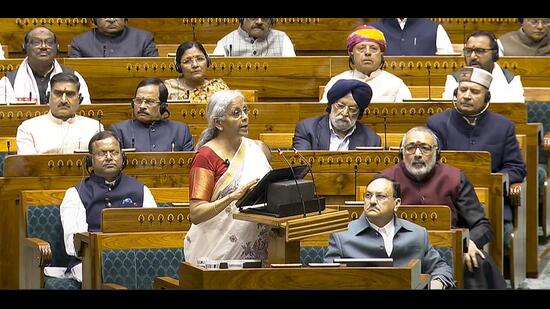
In her budget speech, Sitharaman announced the formation of a Nuclear Energy Mission. Sitharaman said the government will partner with the private sector for setting up Bharat Small Reactors, research and development (R&D) of Bharat Small Modular Reactor, and of newer technologies for nuclear energy. The R&D funding announced in the interim budget will be made available for this sector.
Sitharaman said minerals such as lithium, copper, cobalt, and rare earth elements are critical for sectors like nuclear energy, renewable energy, space, defence, telecommunications, and high-tech electronics. She proposed to fully exempt customs duties on 25 critical minerals and reduce basic customs duty on two of them. “This will provide a major fillip to the processing and refining of such minerals and help secure their availability for these strategic and important sectors,” she said.
She proposed to expand the list of exempted capital goods for use in the manufacture of solar cells and panels to boost renewable energy. “Energy transition is critical in the fight against climate change. To support [the] energy transition, I propose to expand the list of exempted capital goods for use in the manufacture of solar cells and panels in the country.”
{{/usCountry}}She proposed to expand the list of exempted capital goods for use in the manufacture of solar cells and panels to boost renewable energy. “Energy transition is critical in the fight against climate change. To support [the] energy transition, I propose to expand the list of exempted capital goods for use in the manufacture of solar cells and panels in the country.”
{{/usCountry}}She referred to sufficient domestic manufacturing capacity of solar glass and tinned copper interconnect and proposed not to extend the exemption of customs duties provided to them.
Sitharaman said the development of indigenous technology for Advanced Ultra Super Critical (AUSC) thermal power plants with much higher efficiency has been completed. She added a joint venture between National Thermal Power Corporation Limited and Bharat Heavy Electricals Limited will set up a full-scale 800 MW commercial plant using AUSC technology. “The government will provide the required fiscal support.”
She said the development of indigenous capacity for high-grade steel production and other advanced metallurgy materials for these plants will result in strong spin-off benefits for the economy.
The Economic Survey tabled in Parliament on Friday said India will prioritise climate adaptation efforts to safeguard its rapid economic expansion even as decreasing global financial commitments for climate action may force developing nations to rework their targets. The survey highlighted that India’s adaptation expenditure rose to 5.6% of GDP in FY22 from 3.7% in FY16, underscoring the growing focus on building resilience against climate impacts as the country pursues its goal of becoming a developed nation by 2047.
Climate activist and Satat Sampada Climate Foundation founding director Harjeet Singh said the government’s commitment to clean energy is a welcome step. “However, nuclear power comes with significant safety, waste management, and security risks. Instead of prioritising risky and expensive nuclear expansion, India should focus on rapidly scaling up safe, proven renewable energy sources like wind and solar—offering a more sustainable, cost-effective, and decentralised path to energy security.”
He said the budget falls short of delivering the bold and comprehensive climate action India urgently needs beyond brief mentions of boosting EV battery manufacturing, and climate resilience in agriculture. “It lacks a renewed commitment to scaling up renewable energy, tackling deadly air pollution, restoring ecosystems, and safeguarding communities on the frontlines of the climate crisis. With worsening environmental degradation and escalating climate threats, we need decisive, transformative action—not fragmented gestures.”