In a wake-up call to world leaders, an intergovernmental panel on climate change (IPCC) report has said since 1993 the rate of ocean warming has more than doubled, intense marine heat waves have also doubled in frequency since 1982, receding glaciers and ice sheets have increased the rate of sea level rise—rising twice as fast compared to the 20th century.
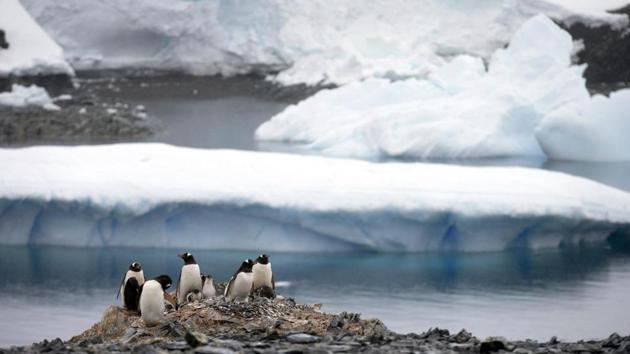
Underlining the urgency to act, the “Special Report on the Ocean and Cryosphere in a Changing Climate” by IPCC which has assessed research on the state of glaciers, oceans and marine ecosystems has projected that global glacier mass loss in the next few decades till 2050 will increase river runoff and related hazards like landslides, avalanches and floods.
Also read: It is time to act on the climate threat
Marine heat waves and extreme El Nino (when sea surface temperatures in the tropical Pacific Ocean rise to above normal levels) and La Nina (when sea surface temperatures in central Pacific Ocean drop to below normal) will become frequent. Extreme sea level events that are historically rare occurring once per century in the recent past are projected to occur at least once a year at many locations, particularly the tropical region by 2050.
Till now the oceans have absorbed about 20 to 30% of human induced carbon dioxide (CO2) emissions and 90% of excess heat in the climate system since the 1980s causing ocean acidification. Ocean heat and acidification has led to shifts in the distribution of fish populations and has already reduced the global catch potential. “In the future, some regions, notably tropical oceans, will see further decreases, but there will be increases in others, such as the Arctic. Communities that depend highly on seafood may face risks to nutritional health and food security,” the report states.
{{/usCountry}}Till now the oceans have absorbed about 20 to 30% of human induced carbon dioxide (CO2) emissions and 90% of excess heat in the climate system since the 1980s causing ocean acidification. Ocean heat and acidification has led to shifts in the distribution of fish populations and has already reduced the global catch potential. “In the future, some regions, notably tropical oceans, will see further decreases, but there will be increases in others, such as the Arctic. Communities that depend highly on seafood may face risks to nutritional health and food security,” the report states.
{{/usCountry}}Also read: Industry to go low-carbon path to fight climate change: Prakash Javadekar
The extent of Arctic sea ice is declining in every month of the year. If global warming is stabilized at 1.5 degree C above pre-industrial levels, the Arctic ocean would only be ice-free in September once in every hundred years. For global warming of 2 degree C, this would occur up to one year in three, the report warns.
About 670 million people in high mountain regions, 680 million people in low-lying coastal areas, four million people in the Arctic region, 65 million people in small islands are exposed to these extreme events. Without major investments in adaptation, they would be further exposed to escalating flood risks, the report shows.
Some island nations are likely to become uninhabitable due to climate change
but habitability thresholds remain extremely difficult to assess say authors.
“We will only be able to keep global warming to well below 2°C above pre-industrial levels if we effect unprecedented transitions in all aspects of society, including energy, land and ecosystems, urban and infrastructure as well as industry.
The ambitious climate policies and emissions reductions required to deliver the Paris Agreement will also protect the ocean and cryosphere and ultimately sustain all life on earth,” said Debra Roberts, Co-Chair of IPCC Working Group II.
The IPCC special report was approved on September 24 by 195 IPCC member governments. It will be a crucial scientific input at the 25th Conference of Parties at the United Nations Framework Convention on Climate Change (UNFCCC) at Chile in December.