Beginning next week, the BJD government in Odisha would start work on the design of a social registry that would enable it to monitor the well-being of beneficiaries of several state and central welfare schemes and weed out ghost and ineligible recipients.
Officials said the idea behind the social registry is to improve the coverage, adequacy, effectiveness and efficiency of government schemes in the state as the current mix of social protection schemes remain fragmented.
“There is a need for enhancing expenditure efficiency through monitoring, consolidation of programme processes and improving benefit delivery management to ensure social protection programmes across a range of departments,” said an official of the finance department.
A stakeholder consultation of 18 state departments with World Bank on the design of the registry would be held next week in Bhubaneswar.
Odisha runs around 60 social assistance programmes that account for a large share of its annual GDP. Programmes like Kalia, Madhubabu Pension Yojana, Mamata scheme, Biju Pucca Ghar Yojana, Biju Krushak Kalyan Yojana, Mukhya Mantri Swasthya Seva Mission, Barishtha Nagarika Tirtha Yatra Yojana and Kalinga Shiksha Sathi Yojana cover almost 70% of the 4.2 crore people of the state.
The plethora of social welfare schemes has proved to be a match-winner for chief minister Naveen Patnaik’s Biju Janata Dal in successive elections since 2000.
{{/usCountry}}The plethora of social welfare schemes has proved to be a match-winner for chief minister Naveen Patnaik’s Biju Janata Dal in successive elections since 2000.
{{/usCountry}}A year before the 2019 polls, Naveen Patnaik announced over a dozen social welfare schemes for tribals, youths, rural people, slum dwellers, women, farmers, weavers and artisans.
“The current mix of social protection schemes remain fragmented and there is a need for harnessing synergies and enhancing expenditure efficiency through monitoring, consolidation of programme processes and improve benefit delivery management,” said PK Biswal, special secretary of the finance department.
“Multiple programmes operate without proper policy or administrative co-ordination with fragmented beneficiary registers. This results in inconsistent linkage to unique identification system and incomplete linkages to payment systems,” Biswal said.
Biswal said once the social registry is ready the state can do better beneficiary identification by accessing the socio-economic data of citizen to strategise new scheme and target beneficiary.
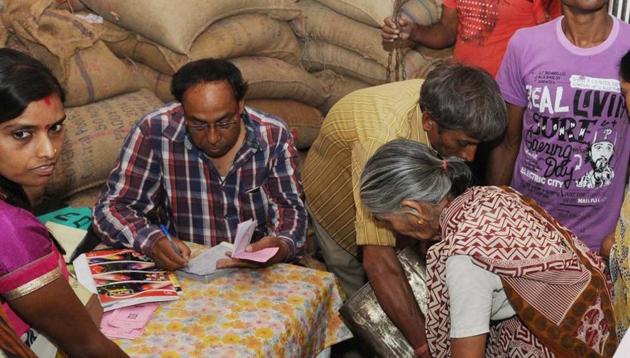
In September this year, the state government found that ration under the Public Distribution System was being distributed to nearly 19 lakh ghost or ineligible beneficiaries for years.
The data emerged after the completion of the deadline of Aadhaar seeding of ration cards in the state.
Last week, the BJP alleged that at least 10 lakh out of the 12.75 lakh beneficiaries of the Centre’s flagship Pradhan Mantri Awas Yojana in Odisha are not eligible.
Officials said the social registry would not only improve the management of state government schemes but also enable real-time scheme monitoring and incorporation of data-driven decision making.
As there is a lack of standardised data across schemes, data standardisation through the social registry will facilitate correct and authenticated family details and a single source of truth for all departments, they said.
The social registry would facilitate the exchange of data between different departments and analyse/evaluate beneficiary details. It would also have an auto-inclusion and exclusion of beneficiaries with defined criteria.