Odisha’s oldest irrigation project over Mahanadi River that fuelled a paddy revolution in the state since 1970s is set to get a major facelift with the state government deciding to spend ₹855 crore over next 4 years to renovate the dilapidiated canal system.
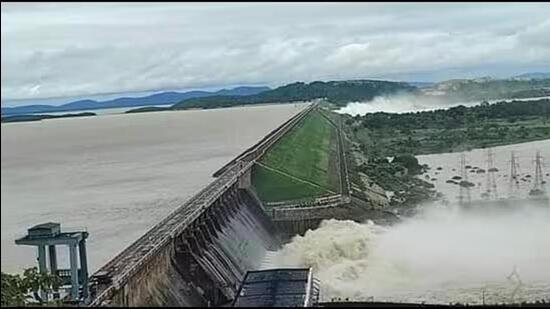
Mahanadi was dammed at Hirakud, at the confluence of the Mahanadi and Ib rivers, about 15 km upstream of Sambalpur town, making it India’s first post-independence major multi-purpose river valley project.
The Hirakud dam, the longest earthen dam in the country, was built in 1957 with an aim to control floods in the delta area, besides for power generation and irrigation.
The canal irrigation system that began in 1967, provides water to 1.59 lakh hectares land in Kharif season and 1.12 lakh hectares land in Rabi season over 3,406 km of canal network in the districts of Sambalpur, Bargarh, Bolangir and Sonepur. Water from the dam reaches the farmlands through a maze of main canals, distributaries, minors and sub-minors and it often takes 10-15 days for the canal water to reach the tail-end. The Hirakud canal network led to a rise in cropping intensity in the command area from 110 to 187% during the last 60 years.
But over the years, the canal system has turned out to be less efficient with the materials used during construction washed away due to poor quality. Besides, a large part of the irrigation water is lost in percolation and absorption as seepage loss and amid complaints of water not reaching tail-end of the canal network, the water resources department on Saturday announced that ₹855 crore would be spent on cement lining the watercourse to ensure proper water distribution and management between 2024-25 and 2027-28.
{{/usCountry}}But over the years, the canal system has turned out to be less efficient with the materials used during construction washed away due to poor quality. Besides, a large part of the irrigation water is lost in percolation and absorption as seepage loss and amid complaints of water not reaching tail-end of the canal network, the water resources department on Saturday announced that ₹855 crore would be spent on cement lining the watercourse to ensure proper water distribution and management between 2024-25 and 2027-28.
{{/usCountry}}“One of the main goal of the renovation scheme is recovering the waterlogged cultivable land caused by seepage from the canal network. The renovation project would stabilise the siphon and aqueduct in the canal system,” the resolution said. While the head-end of the Hirakud canal network suffers from drainage and waterlogging problems, the middle and tail end of the canal often don’t get enough water. According to the report on the Sason canal system in 1999, about 50% of the land was over-irrigated, 30% of the land normally irrigated and 20% of land at the tail end of the canal under-irrigated.
“The government is yet to deliver irrigation water to the promised 2.3 lakh hectare area, which is already 15 per cent less than the original target of 2.71 lakh hectare due to the deteriorating conditions of the canal network. The renovation was long overdue,” said Ashok Pradhan, Convenor of Paschim Odisha Krushak Suraksha Samanwaya Samiti.
With BJP focussing on strengthening its traditional base in western Odisha, it has chosen to redress the issues concerning Hirakud dam. In August this year, the Mohan Majhi government announced that each of the displaced persons due to the Hirakud dam project will get 10 decimals of land. Though more than 1 lakh families were displaced, so far 4400 have been rehabilitated.