
 E-Paper



Operation Sindoor: 5 first-time facts about India-Pakistan conflict revealed by IAF chief
India downed five Pakistani fighter jets and a military aircraft during Operation Sindoor, a response to Pahalgam terror attack, the IAF chief confirmed.

 Prefer HTon Google


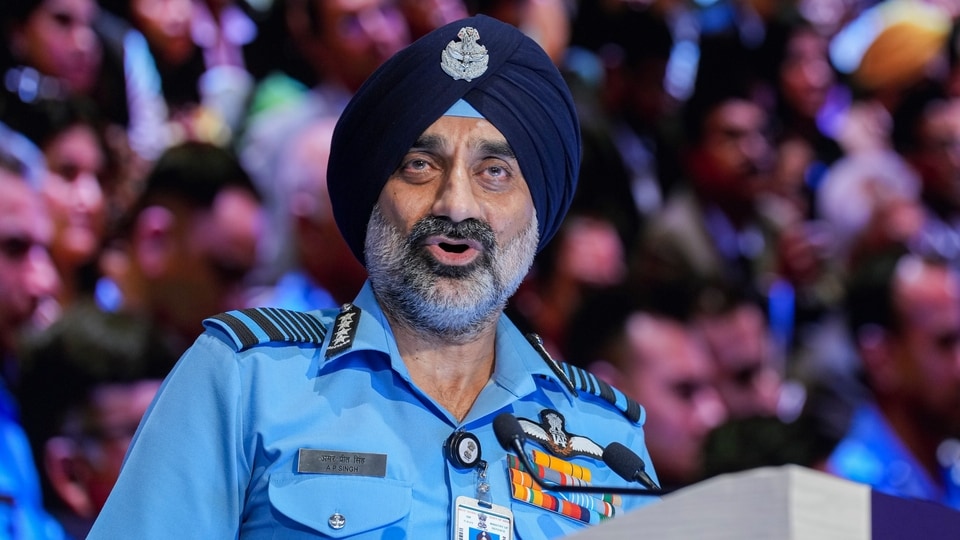
The Indian Air Force shot down at least five Pakistani fighter jets and one large military aircraft during Operation Sindoor in May, air chief marshal Amar Preet Singh said on Saturday, the first such statement by India months after its worst military conflict in decades with its neighbour.
India launched Operation Sindoor on May 7 as a decisive military response to the April 22 Pahalgam terror attack in which 26 people were killed. Indian armed forces targeted terror infrastructure in Pakistan and Pakistan-occupied Jammu and Kashmir, leading to the death of over 100 terrorists affiliated with terror outfits like the Jaish-e-Mohammed, Lashkar-e-Taiba and Hizbul Mujahideen.
Also Read | IAF's S-400 shot down 5 Pakistani fighter jets during Operation Sindoor: Air chief marshal AP Singh
After the attack, Pakistan retaliated with cross-border shelling across the Line of Control and Jammu and Kashmir as well as attempted drone attacks along the border regions, following which India launched a coordinated attack and damaged radar infrastructure, communication centres and airfields across 11 airbases, including Nur Khan air base in Pakistan.
Here are 5 key first-time revelations by IAF chief:
- Longest-ever surface-to-air kill: India shot down five Pakistani fighter jets and one large military aircraft, most of them with the Russian-made S-400 air defence system. The large aircraft, possibly a surveillance plane, was taken down from 300 km away, marking India’s biggest recorded surface-to-air kill.
"We have at least five fighters confirmed kill and one large aircraft which could be either aircraft or an AWC which was taken at a distance of about 300 kilometres. This is actually the largest ever recorded surface-to-air kill that we have achieved,” AP Singh said during the 16th edition of the Air Chief Marshal LM Katre Memorial Lecture in Bengaluru.
- Precision strikes on Pakistani air bases: The IAF attacked Sukkur and Sargodha airfields, destroying a UAB hangar, a radar site, and damaging an AWC hangar that housed aircraft, including some F-16s under maintenance.
"We have an indication of at least one AWC in that AWC hanger, and a few F-16s, which are under maintenance there… Based on specific intelligence. the IAF took the decision to attack the airfield. So the airfield was attacked, and the main building where the planning goes on, which was also used as the civil terminal building at times. As far as Sukoor airbase is concerned, we attacked the UAB hanger and radar site," he said.
"You have the visuals available here — this is the hanger which is flattened, this is the radar site before and after. AWC hanger was attacked again. Here we have very clearly an aircraft inside where the attack took place,” he said.
"In Balakot, we could not get anything from inside, and it became a big issue trying to tell our own people, unfortunately, as to what we have been able to achieve. We had intelligence (human kind of intelligence) on what had gone on inside, where we had a very clear picture of the inside in terms of there having been huge damage. There have been so many terrorists who have been neutralised, but we could not convince our own people that, look, we have achieved that," the air chief marshal said.
“People got down to their egos in the war, and that is what is continuously driving the ongoing conflicts. We set a very good example. Our objective was very clear: to teach terrorists a lesson. Once we achieved our objective, we should have looked for all windows of opportunity to stop that. Some people very close to me said, ‘Aur maarna tha’. But can we continue to be at war? The nation has taken a good decision,” Singh said.
(With inputs from PTI and ANI)


