
 E-Paper



India shot Pak plane from distance of 300 km, longest-ever recorded surface-to-air kill: Air chief marshal
Air Chief Marshal Amar Preet Singh confirmed that India shot down five Pakistani fighter jets during Operation Sindoor.

 Prefer HTon Google


Air Chief Marshal Amar Preet Singh on Saturday said that the one large Pakistani aircraft destroyed during Operation Sindoor was taken down from a distance of 300 kilometres, the longest-ever recorded surface-to-air kill.
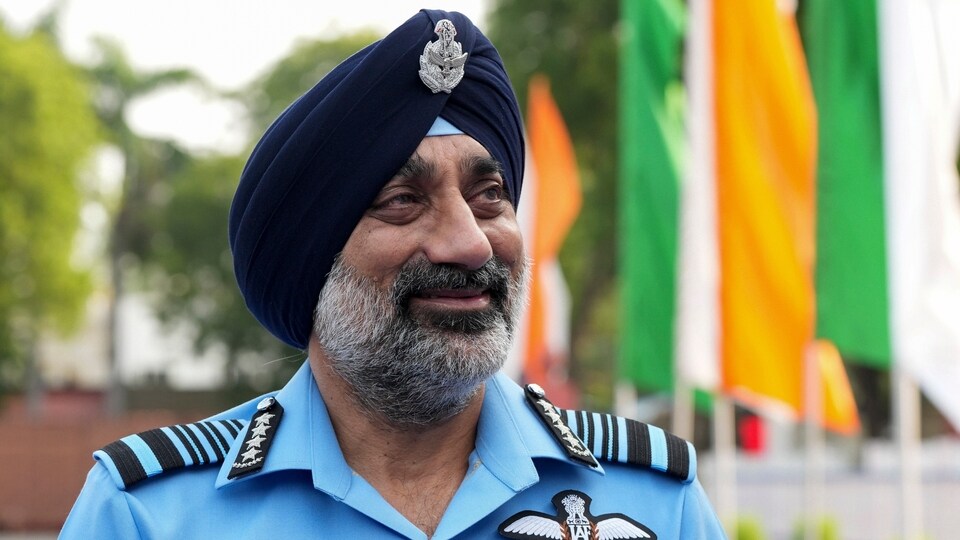
While addressing an event in Bengaluru, the Air Chief Marshal confirmed that India shot down five Pakistani fighter jets during Operation Sindoor – India's response to April 22 terror attack in Jammu and Kashmir's Pahalgam.
"We have at least five fighters confirmed kills and one large aircraft, which could be either an ELINT aircraft or an AEW &C aircraft, which was taken on at a distance of about 300 kilometres. This is actually the largest ever recorded surface-to-air kill that we can talk about," Singh said.
He also mentioned that half of the F-16 hangar at Shahbaz Jacobabad airfield in Pakistan was 'gone,” and some aircraft inside might have been damaged.
The Air Chief Marshal stated that India inflicted a significant blow to Pakistan's air defence systems, leading the neighbouring country to realise that its losses would increase if the conflict persisted.
"I can say that it was more of a high-tech war which was fought. In 80 to 90 hours of war, we were able to achieve so much of damage to air system that it was clear to them that if they continue, they are going to pay for it more and more," the Air Chief Marshal said.
Also Read | Balakot ‘ghost’ laid to rest with Operation Sindoor: IAF chief AP Singh
Singh also attributed one of the key reasons for success to the presence of political will as there were “very clear directions" given to the forces.
“A key reason for success was the presence of political will. There were very clear directions given to us. No restrictions were put on us... If there were any constraints, they were self-made... We decided how much to escalate... We had full freedom to plan and execute. Our attacks were calibrated because we wanted to be mature about it...” the Air Chief Marshal said.
Also Read | ‘Good decision’: Air chief backs govt's move to pause Operation Sindoor
"There was a synchronisation between the three forces... The post of CDS made a real difference. He was there to get us together... NSA also played a big role in getting all the agencies..." he added.
India's Operation Sindoor
India launched Operation Sindoor in the early hours of May 7 when the military hit nine terror camps inside Pakistan and Pakistan-occupied Kashmir (PoK), killing more than 100 terrorists.
It was New Delhi’s direct military response to the April 22 Pahalgam terror strike that killed 26 people. The operation triggered four days of strikes and counterstrikes with drones, missiles and long-range weapons before the two sides reached an understanding on stopping all military action on May 10.


