
 E-Paper



‘Operation Sindoor still on, shastra, shaastra both key’, says CDS Anil Chauhan
According to CDS Chauhan, we are standing at the cusp of what he described as the "third revolution in military warfare".

 Prefer HTon Google


Chief of Defence Staff General Anil Chauhan on Friday reiterated that Operation Sindoor is continuing, pressing that the armed forces' preparedness level "has to be very high, 24x7, 365 days". He emphasised that it is essential for the military to learn about both 'shastra' (warfare) and 'shaastra' (knowledge).
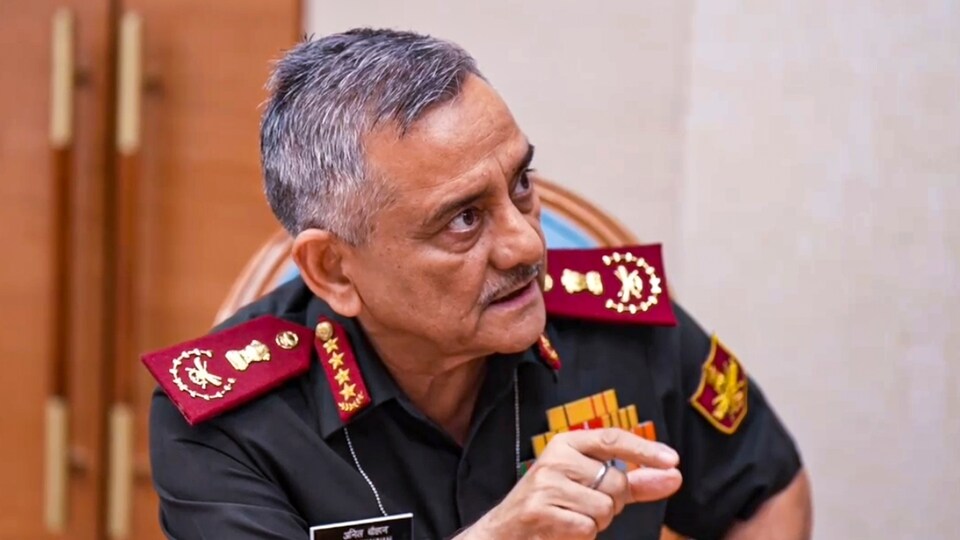
Addressing a defence seminar in Delhi, CDS Chauhan said, "The warrior today need to master all three levels of warfare - tactical, operational and strategic in all domains."
"We are seeing an unprecedented pace driven by a relentless march of technology," he added.
According to CDS Chauhan, we are standing at the cusp of what he described as the "third revolution in military warfare". He said he coined the term as convergence kind of warfare.
ALSO READ | Parliament to discuss Operation Sindoor next week
"This form of warfare merges kinetic and non-kinetic means, combining elements of first and second generation warfare with the third. It is converging tactical, operational, and strategic kind of domains," the CDS noted.
Earlier on Thursday, the central government told the Parliament that Operation Sindoor was launched in response to a "barbaric" attack by the "Pakistan-sponsored terrorists", adding that the armed forces' actions focused on dismantling terror infrastructure and neutralising terrorists.
Minister of State for External Affairs Kirti Vardhan Singh, in a written response to a query in the Rajya Sabha, said India's actions were "focussed, measured and non-escalatory".
The Ministry of External Affairs was asked whether Operation Sindoor was "announced under international pressure" and also about the "factual position" in this regard.
ALSO READ | After Operation Sindoor, preparing for the future
Singh noted how Pakistan tried to target Indian civilian areas, in addition to some military infrastructure.
"These provocations and escalatory actions by Pakistan were met with a strong and decisive response from the Indian armed forces, inflicting significant damage on the Pakistani military. Subsequently, on 10 May, 2025, the Director General of Military Operations of Pakistan approached his Indian counterpart to request cessation of firing and military activities, which was agreed to later that day," the MoS said.
Operation Sindoor
Following the April 22 Pahalgam terror attack, which left 26 people dead, the Indian armed forces launched Operation Sindoor on May 7. In the targeted precision strikes, India destroyed nine terror infrastructures, belonging to outfits like Jaish-e-Mohammad, Hizbul Mujahideen, and Lashkar-e-Taiba, located in Pakistan and Pakistan-occupied Kashmir.
More than 100 terrorists were neutralised in India's military operation.
ALSO READ | Satellite images suggest India struck Kirana Hills in Pakistan during Operation Sindoor
Though Pakistan attempted to launch retaliatory military strikes on Indian military bases and civilian areas, India's air defence systems and armed forces thwarted majority of these attacks.
Indian forces also launched strikes at Pakistani air and military bases after Islamabad's attempted hits at India's military and civilian infrastructure.
After four days of intense fighting, Pakistan's Director General of Military Operations approached his Indian counterpart and subsequently, a ceasefire understanding was reached on May 10.


