
 E-Paper



After Operation Sindoor, preparing for the future
It is impossible for Pak-based terror outfits to act unilaterally. While the possibility of jihadi lone wolves cannot be ruled out, that has grave repercussions

 Prefer HTon Google


National Security Advisor (NSA) Ajit Doval, while addressing graduates at the convocation ceremony at the Indian Institute of Technology, Madras, challenged the international media to show a photograph of even one window pane in an Indian facility broken by Pakistan’s armed forces after it launched Operation Bunyan al Marsoos as a counter to Operation Sindoor against Pakistan-based jihadists who were behind the Pahalgam massacre of 26 civilians on April 22.
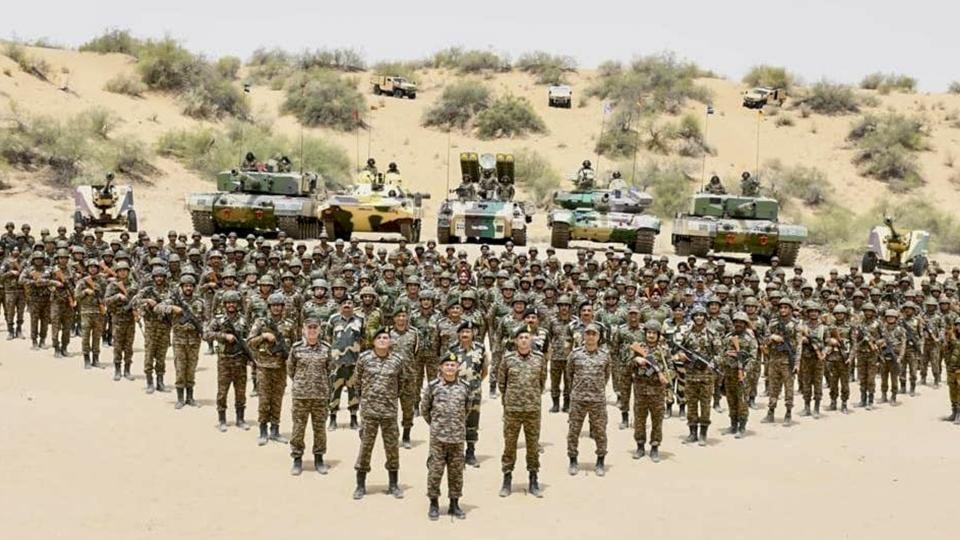
The NSA’s comment has to be read in the backdrop of evidence that indicates Pakistan fired not less than 840 missiles at India after nine terror factories were targeted by the Indian armed forces.
While Indian experts are in the process of examining the missile debris and recovered unexploded Chinese missiles fired by Pakistan, not a single military target — brigade headquarters, air defence batteries, air bases or even an observation balloon — in India was hit by enemy missiles between May 7 and May 10.
Also, not one Scalp, Rampage or Crystal Maze missile launched by India at Lashkar-e-Taiba (LeT) headquarters in Muridke and Jaish-e-Mohammed (JeM) headquarters in Bahawalpur, Pakistan, was intercepted by Pakistan’s anti-missile batteries. This was despite Pakistan’s radars, air defence batteries and surface-to-air missile units being on red alert after Prime Minister (PM) Narendra Modi signalled military retaliation against terrorists and their supporters in Pakistan at a rally in Madhubani, Bihar, on April 24, two days after the Pahalgam massacre.
It is not that the Pakistani air defences and radars were not working, but it was India’s strategic deception that fooled Rawalpindi on May 7. Also, the Pakistani armed forces had no answer to the Indian BrahMos missile attack on May 10: None of the 18 missiles fired by India at 13 air bases in a span of 12 hours, were intercepted by Pakistan’s anti-missile batteries. The BrahMos struck Bholari air base that housed Pakistan’s airborne early warning aircraft. All the five hangars were destroyed in the attack. Aircraft hangars and runways were also targeted at other air bases including Chaklala in Rawalpindi and Nur Khan.
While Pakistan and its supporters may take solace in the claims that Indian fighter planes, at least one Rafale, were shot down on May 7, India has managed to send a clear message that it will respond conventionally to terror attacks, and that no spot in Pakistan is safe from Indian missiles. The big question is: Will the Pakistan army allow its home-bred jihadists to strike terror in Kashmir or Indian hinterland in the future?
There are multiple factors that Rawalpindi will have to take into account. First, the population of Kashmir Valley will oppose any further disruption of the tourist season as any terror strike is a blow to their livelihood. Second, terror groups such as LeT and JeM function under the protection of Pakistan’s spy agency, ISI.
It is impossible for LeT and JeM to act unilaterally. Of course, the possibility of jihadists playing solo cannot be ruled out, but that may have serious repercussions. Third, since India has suspended the Indus Waters Treaty and linked it to cross-border terrorism, Pakistan will have to think hard before approving any covert terror strike in India: Water scarcity will cause havoc in Punjab and Sindh and may lead to political unrest. Fourth, Pakistan knows that Indian retaliation to any future terror attack can be more deadly than Operation Sindoor as PM Modi has given a free hand to the Indian armed forces.
So, will Pakistan stop the jihadists from launching cross-border attacks on India in future? Unlikely. The Punjab-based jihadists have been religiously, ideologically and personally humiliated by Operation Sindoor and would want to avenge the destruction of Muridke and Bahawalpur in the near future. The country’s army chief Asim Munir has been accusing India for orchestrating attacks in Balochistan and Khyber-Pakhtunkhwa and could use any major incident in these insurgency prone areas to target India. The chances of Pakistan resorting to another Bunyan al Marsoos is unlikely due to India’s conventional dominance, but Delhi must stay alert.
The views expressed are personal.


