
 E-Paper



Out of public eye: 4 grisly crimes and a long wait for justice
On August 9, four women in India faced horrific crimes, igniting protests and highlighting a national crisis of violence against women and systemic injustices.


The first fell victim to the perversion of a stranger. The second to her own father’s twisted sense of honour. The third to a fellow villager. And the fourth to a deranged stalker.
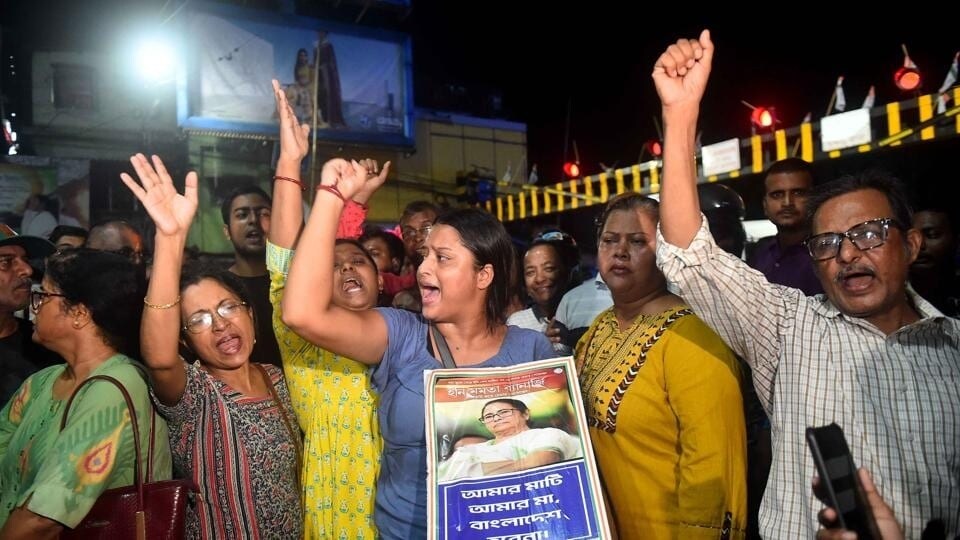
These four women – two adults and two minors – were raped or killed the same day, August 9, that a junior doctor in Kolkata’s RG Kar Hospital was brutally raped and murdered allegedly by a civic police volunteer. Since that ill-fated day, the grisly crime in Bengal has galvanised women across the country , stoked a nationwide movement against crimes against women, and caused a stand-off between doctors in Kolkata protesting the crime and the state. But the sweeping protests have had only limited impact on the lives of these four families as they struggle with the usual predicament that followed a sexual crime – protracted investigation, a judgmental public, taunts and uncertain justice.
Read more: Kolkata rape-murder case: RG Kar senior doctors allege ‘tampering of evidence’
The National Crime Records Bureau (NCRB) noted that a crime against a woman was registered, on average, every 72 seconds in 2022, the last year for which data is publicly available. A rape case was filed every 17 minutes, on average, that year. On August 9, 2024, across 20 states and Union Territories, HT tracked down 42 cases of rape registered by the respective state police, and focussed on these four cases to understand the grim but diverse contours of crimes against women.
An infant lives in fear
She is three.
The daughter of a sanitation worker in Rajasthan’s Pali town who was condemned to the profession of drudgery by dint of his caste background, she was the youngest of four siblings. That day, the father left home at sunrise as usual. “When I left, she had just woken up and my wife was trying to feed her. She was playing with a piece of paper. I patted her on the head before leaving,” he said.
He had just emerged from the putrid depths of a tank in a residential colony when he heard the screams of his nine-year-old son. The searing heat was baking the concrete, and the father was disoriented. “My son could only tell me that she is crying badly. I wanted to go back home immediately but was unable to leave work,” he said.
When he got back that evening, his youngest was burning up and his wife was sitting next to her, her face pale, head in her hands. “My wife broke the silence with only two words – sab khatm (everything is over),” he said.
The child had veered out of their cramped chawl around noon to play, and vanished. As her mother frantically searched the area, knocking on every neighbour’s door, she saw the child doddering towards her – her steps unstable, her face streaming with tears. She was walking away from the direction of a 32-year-old man’s house. “She complained of abdominal ache. It took no time for my wife to understand what had happened,” he said.
The infant was among 24 rape victims whose cases were registered that day in Rajasthan. Of the 47 people accused, only three have been arrested so far.
Police later said a 32-year-old local labourer lured the infant with toys, took her to his own residence, and raped her for two hours. “He came to the area six to seven months ago and started staying in a rented accommodation in our opposite lane with his mother. My wife sometimes visited his mother,” said the victim’s father.
The victim’s family, along with neighbours, confronted the accused, only for him and his mother to issue threats. The mother said that her elder daughter was a government official and would bribe the police.
At 7 pm, the victim’s family lodged a first information report under sections 65 (2) (minor rape) of the Bharatiya Nyaya Sanhita and also under the Pocso Act.
“I was scared of what the accused’s mother said. Police asked me a few questions about the incident and why the girl was allowed to play outside alone,” the victim’s father said.
Two days later, the accused was held at the local railway station. “He was constantly changing locations to avoid arrest. On August 11 morning, he was held at a local railway station in Pali. He was probably trying to flee Udaipur or Rajsamand. But, we still have no idea about his mother,” said investigating officer Raju Ram.
But normalcy has not returned to the victim’s family. The girl is still afraid. She would earlier nag her mother to let her play outside, but hasn’t left the house in a month. She has not been presented before the district child welfare committee, which would have ensured counselling and psychological help, and the family cannot afford a private psychiatrist. “She is very quiet now, and only keeps asking me one question.” the father said. “Papa woh wapas toh nahi aa raha? (he isn’t coming back, right)?”
(Senjuti Sengupta in Jaipur)
Hate crime horror
She was 17.
Her chaotic village was sandwiched between Bareilly and Pilibhit in northwestern Uttar Pradesh. During the day, it was a stinging mesh of sights and sounds. Bulging auto-rickshaws and screeching motorbikes vied for space on its narrow alleys. But at night, a hush descended on the flat land. It was during one such desolate night in the early hours of August 9 that her father sneaked into her room, and strangled her till she stopped breathing. He then walked to the local police station, confessed to his crime and surrendered. The girl’s body was still lying on the bed when he was arrested.
Why was she killed?
At first, the following sequence of events seemed likely. The girl, the youngest in the family, had been gang-raped by three men who had lured her out to the fields. Her father had filed a case of gang rape against the three men – also from the village - on August 7. In the complaint, which HT saw, the father said that the girl was getting threats for three months after the gang rape and that the accused were threatening to leak videos of the incident, “This was causing infamy in the village, especially after the family of the accused first offered marriage, only to withdraw later,” he wrote in the complaint.
“He wrote that his daughter was three months pregnant at the time, and that while she was ready to marry the main accused, the latter had refused her hand in marriage,” said circle officer Sandeep Singh.
Based on his written complaint on August 7, the police arrested the main accused – also another resident of the village – and sent him to jail on August 8.
But after her death, the story began to unravel.
It emerged that the man that was behind bars was not the rapist of the young girl, but someone she was in love with and wanted a relationship with. The father was against the match because the two came from different communities, and had instead decided to get her married to a man of her choice six months ago. “The victim was not happy with the match, she wanted to marry the accused. The father and daughter would regularly fight over this issue,” Singh said.
To force her to toe the line, the father filed a false case of gang-rape against her partner, and got him jailed. He was furious that his daughter was rebelling against his diktat, said her brother who returned home that morning, only to find her lifeless body slumped on the bed. “She was in love with that man and had left the house with him previously,” he said.
He said he had nothing to do with his father’s decision to kill her sister, but understood why. “He’d say that she had insulted our whole family by going into the house of a different caste,” the brother said. “How could we let that happen?”
A life in trauma
She is 22.
The disabled woman spent most of her time at home. Her impoverished parents had withdrawn her from the local school after Class 6. The only child in a Dalit family, she would be left alone while her parents spent the day tilling their small plot of land for paddy. That afternoon, she was alone in her two-room hut in Odisha’s Boudh district when a 45-year-old man, also a resident of the same village and known to the family, sneaked in and raped her. The woman, who had difficulty walking , tried to scream but he gagged her. Before leaving, he threatened that if she complained, she would be killed. Bleeding and helpless, the victim waited for her parents to arrive in the evening when she told her mother about her ordeal.
The next day, the victim’s father went to Boudh police station to lodge a complaint under sections 332B (house trespass), 351(2)(criminal intimidation), 351(3)(threat be to cause death or grievous hurt) and 64(2)(k) (rape by person in authority/trust, or rape causing grievous harm) of the the Bharatiya Nyay Sanhita.
Boudh superintendent of police Raj Prasad said the accused was arrested two days later. “Now our next duty is submitting the charge sheet within a month so that trial can start quickly,” he said.
The same day, two more cases were reported across the state. The accused have been arrested in all cases.
Back at the village, located about 10 km from the block headquarters and dominated by small farmers, the mood is sombre. Around a third of the village are Dalits. The father of the victim said his daughter was yet to recover from the trauma. He’s also worried about their social standing. “Who will marry her now?” he asked. “Her future is ruined.”
(By Debabrata Mohanty in Bhubaneswar)
Ordeal of a long trial
She is 18.
Busy in her household chores that morning, the young woman in Madhya Pradesh’s Shivpuri district didn’t notice when her stalker, a 21-year-old man, broke into her house. The man, a labourer, was a resident of the same village and had seen her on the road four months ago. Since then, he was stalking her but she was afraid to tell her family because of the stigma attached to stalking victims, said the police.
Startled, she shouted at him and asked him to leave her house, but the man locked the door from the inside, before raping her. The girl was shouting for help, but he threatened the girl with dire consequences. It was around 1.30pm in the afternoon, said the police.
The brother returned from his work around 1.45pm. His footsteps caused the perpetrator to flee. Wounded and traumatised, the girl told her brother and mother what had happened. They took her to the local police station, where she filed a first information report under section 332 (house-trespassing) and 64 (punishment of rape) of the Bharatiya Nyaya Sanhita (BNS).
The man was arrested the next day. But her ordeal is far from over. “She is scared of staying alone even in a room,” said her brother.
“The accused has been arrested. The counselling of the girl was done and the family members were also counselled for not treating the matter as stigma,” said investigating officer Anjali Singh.
The 18-year-old is one of eight women who were raped – four of them minors – on August 9 in Madhya Pradesh. For her, the long trial ahead is also intimidating. “We belong to a very poor family. Now, she is afraid of facing trouble for this whole life,” said her brother.
(By Shruti Tomar in Bhopal)


