Dehradun: The Kosi river, which runs on the eastern periphery of the Jim Corbett National Park, overflowed its banks due to extreme rainfall in its catchment areas, endangering iconic wildlife and stranding tourists in forest resorts.
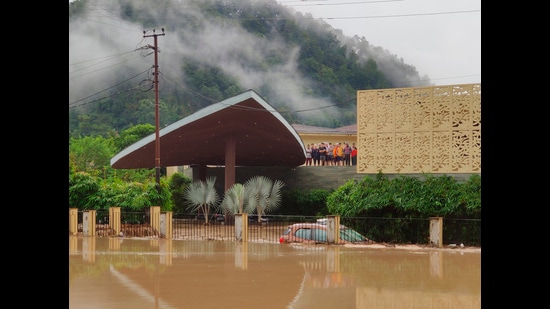
An elephant almost drowned in the Gola river that runs through the park but managed to wade to safety, foresters said. Stranded tourists around the Kosi were rescued on trackers and buses. There were no reports of rising water in the Ramganga river and its tributaries that flow through the heart of India’s most famous wildlife sanctuary.
Forest staff in the national park were on high alert. “We are keeping a close watch,” said Rajiv Bhartari, principal chief conservator of forests. “As of now, there is no report of major loss of wildlife in Corbett.” The ground situation will be known once the rains ease up and water subsides in local water bodies and streams, he said.
A cloudburst triggered flash floods at Ramgarh in Uttarakhand’s Nainital district on Tuesday, upstream of the national park. The catchment areas of Kosi river received 227mm to 530mm rainfall in the past 24 hours, official data show.
The Jim Corbett National Park, spread across 1,288 square km, is known for its large number of tigers, 231 at the last count on 2018, many herds of elephants and numerous leopards and other animals. As many as 2,026 elephants were counted in Uttarakhand in 2020, almost all of them in Jim Corbett and Rajaji national parks.
{{/usCountry}}The Jim Corbett National Park, spread across 1,288 square km, is known for its large number of tigers, 231 at the last count on 2018, many herds of elephants and numerous leopards and other animals. As many as 2,026 elephants were counted in Uttarakhand in 2020, almost all of them in Jim Corbett and Rajaji national parks.
{{/usCountry}}A video of an elephant stuck on an island in Gola river who managed to swim ashore went viral. The Gola river originates in the Sattal area of Nainital district and flows south past Kathgodam and Haldwani, joining the Ramganga river, a tributary of the Ganga, about 15km northwest of Bareilly in Uttar Pradesh.
Forest officials rushed to spot where the elephant was struggling. “The water was flowing very fast but the elephant managed to swim back to the shore,” said JS Suhag, chief wildlife warden of Uttarakhand. “We have alerted our staff in Nainital and surrounding areas, including the Corbett landscape, to remain alert and initiate rescue operations wherever they find wild animals trapped or stuck.”
An initial assessment showed there have been many landslides in forested areas because of the heavy rains, said Biju Lal, divisional forest officer of Nainital. “Our teams are working to clear roads and streams,” he said, adding that an assessment of possible loss of fauna will be done once the sky clears.
The forest department has shifted people from close to 20 villages in Corbett near the Kosi river to safety. People staying in some hotels and resorts near Kosi were also shifted. The national park has been closed for tourists since Monday.
The meandering Kosi has flooded like this after many years, according to Ramnagar-based wildlife activist AG Ansari. “Fast moving animals like tigers have the ability to move to safer locations if it rains heavily. Animals like elephants usually get trapped in swirling water,” he said. “Many villagers have voluntarily shifted to safer areas.”
It will be clear whether any wild animals were washed away, as their bodies will surely be found downstream after the flood subsides, he said.