
 E-Paper



Quick commerce platforms to drop ‘10-minute delivery’ vow
The move follows discussions steered by the labour ministry last week.

 Prefer HTon Google


Quick-commerce platforms have assured the Union government they will drop standard 10-minute delivery promises to customers after a series of meetings with Union labour minister Mansukh Mandaviya, two people aware of the development said on Tuesday.
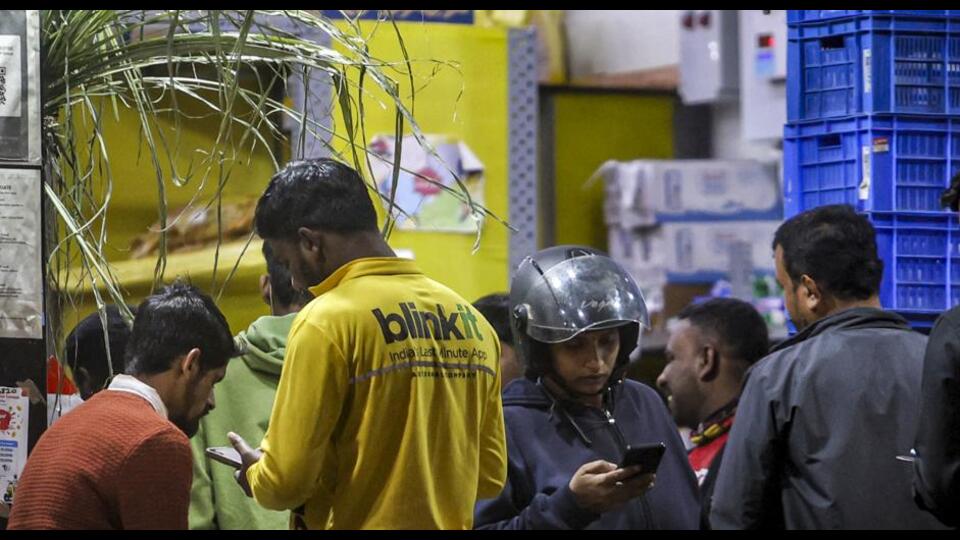
Such service providers employ gig workers, who held strikes on Christmas and New Year’s eve in 2025 to draw attention what they say are unsafe delivery demands made of them and the lack of adequate health, safety and income protections in the event of accidents.
The move follows discussions steered by the labour ministry last week. Minister Mansukh Mandaviya raised the issues flagged by gig worker unions and asked platforms to refrain from “branding” tight deadlines.
Blinkit, one of the largest such companies, revised its tag-line from “10,000+ products delivered in 10 minutes” to “30,000+ products delivered at your doorstep” on Tuesday, and its competitors Swiggy and Zepto were expected to follow suit, the people cited above added.
Quick commerce has boomed. Revenues from quick-commerce operations for Eternal, the parent company of Blinkit, surged to ₹7,100 crore from ₹4,200 crore a year earlier, according to a Careedge Ratings.
Zepto, a platform owned by KiranaKart Technologies with over 250 dark stores, on Tuesday increased its standard delivery time to 16 minutes or more. A spokesperson for Zomato, a food-delivery app, said the company “would not like to comment on this at this time”. Eternal and Zepto too declined to comment on the matter.
Meanwhile, gig workers said that that the development has no bearing on their operations and they have not received any formal communication regarding the same.
“There is no time limit within which we have to deliver an order but the volume of orders and the time within they are delivered are directly related to our incentives and rating,” said Ajay Singh, 25, a delivery agent working for Zepto in Delhi’s Civil Lines area.“No formal communication about the 10-minute branding being removed has been communicated to us yet, but even if it is, that changes very little on the ground for us. We are happy that something positive is coming out from us raising our voices but this is not nearly enough.”
To be sure, there is no ban on 10-minute delivery. Many dark stores are located in close proximity to consumers’ doorsteps, and “in these cases, 10-minute delivery will continue as it is feasible to deliver quickly without any pressure on gig workers,” one of the people cited above said.
“There is no formal order banning 10-minute delivery. The development comes after an intervention by the Union labour minister in which he met representatives of leading platforms, including Blinkit, Zepto, Zomato and Swiggy to address concerns related to delivery timelines,” the second person reiterated.
Apps like Swiggy Instamart, Zepto and Blinkit have invested massive sums into so-called dark stores, which are neighbourhood warehouses designed to fulfil quick online orders amid growing consumer demand.
While the new moves are expected to ease pressure, at least from the perspective of consumer expectations, gig workers said their principal problems remain unresolved.
Delivery worker Shivam Shankar Sharma, 30, rued that companies are “simply changing what they advertise to the customers”. “As long as these companies do not create a secured payment structure for us, our struggle will not end.”
Instant delivery services first began around the pandemic lockdown, growing rapidly and reshaping consumer behaviour and India’s retail ecosystem. “As a direct consequence of the pandemic, there has been an unprecedented increase in the number of customers demanding rapid delivery of supermarket supplies,” said Gauri Rajnekar of the Indian Institute of Management, Ahmedabad, who published a recent study on quick commerce along with co-author Debjit Roy. Platforms were posed to increase dark stores by 30% as the demand for instant delivery has spilled on to smaller towns and large revenue villages, according to a recent report by logistics firm Shiprocket.
Gig workers’ unions have resisted tight delivery deadlines with protests, pressuring the quick-commerce ecosystem and putting delivery platforms on notice, triggering a public debate on whether rapid delivery is desirable. The issue gained prominence when delivery partners – or riders who ferry goods to a consumer’s doorstep for a km-based fee – launched a flash strike on New Year’s Eve, demanding an end to 10-minute delivery, better pay and work conditions.
The strikes triggered a debate over the economics of the gig work model and the practices of specific companies. Eternal founder and chief executive Deepinder Goyal disclosed remuneration that his platforms offer to contend that these were fair and comparable to organised sector work, while activists said such platforms deploy opaque algorithmic decision-making that is often unfair and put excessive pressure on deliverpersons.
More aggregators are expected to scrap 10-minute delivery promises amid the labour minister’s intervention, which was aimed at “ensuring greater safety, security and improved working conditions for gig works”, the second person cited above added.
Under new labour laws implemented by the Modi government in November last year, firms in India’s gig economy, known as aggregators and platforms, will have to contribute up to 5%, and varying between 1-2%, of the wages payable to workers as contribution towards a National Social Security Fund, the labour ministry’s draft rules to operationalise a new social security law show.
According to the draft, gig and platform workers will have to be employed for 90 days with an aggregator in the last financial year to qualify for social security benefits under the Code on Social Security 2020. Workers who take up employment with multiple aggregators will need to be employed for 120 days to avail of the allowances.
A prominent gig workers’ union said the cut-offs for receiving social benefits in the draft rules don’t match actual work patterns and could mean very little benefit. “Most gig workers would miss the threshold for social security payouts,” said Shaik Salauddin, founder president of the Telangana Gig and Platform Workers’ Union, while welcoming the labour ministry’s intervention.


