At 3.35pm on April 16, 1853 amid a 21-gun salute, three locomotives - Sahib, Sindh and Sultan - chugged off on their maiden trip pulling 14 carriages and ferrying 400 guests from Bori Bunder (now Mumbai) to Thane becoming the first passenger train run by the Central Railways, then known as the Great Indian Peninsula Railway.
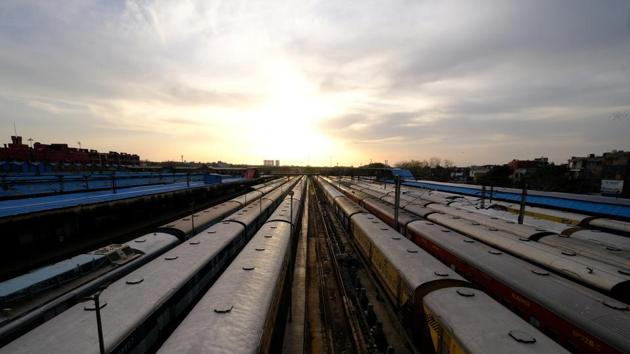
The three locomotives covered 34 km scripting history on the day that the Indian Railways celebrates its anniversary. One hundred sixty seven years later, the national carrier has come to a standstill with no passenger trains plying on its network since 25 days for the first time in its history, thanks to the lockdown to check the spread of coronavirus.
“Today, 167 years ago with the zeal of ‘never to stop’, the wheels of the first passenger train from Mumbai to Thane started rolling. For the first time, passenger services are stopped for your safety stay indoor and make the nation victorious,” the ministry of railways tweeted.
The mammoth rail network of India that runs nearly 14, 000 passenger trains ferrying 23 million passengers daily is not celebrating its ‘rail day’ as it would, perhaps, the first time in its history.
“Back in 2002, to celebrate its 150th year we had run a steam engine along the same track from Victoria Terminus station to Thane with all the political stalwarts including the then railway minister Nitish Kumar and chief minister Vilasrao Deshmukh. We had recreated that journey, I was the Division Railway Manager then. It has been a great journey,” former railway board chairman Vivek Sahai recalled.
{{/usCountry}}“Back in 2002, to celebrate its 150th year we had run a steam engine along the same track from Victoria Terminus station to Thane with all the political stalwarts including the then railway minister Nitish Kumar and chief minister Vilasrao Deshmukh. We had recreated that journey, I was the Division Railway Manager then. It has been a great journey,” former railway board chairman Vivek Sahai recalled.
{{/usCountry}}Presently the Chhatrapati Shivaji Maharaj Terminus (CSMT) heritage building stands in place of the old Bori Bunder railway station and was completed in 1888. There remains no documented photograph of the day, according to the railways.
Sahib, Sindh and Sultan were not preserved and their fate remains unknown. Many believe they were scrapped by the British, as was common practice then. The life of a steam locomotive would be 35 years after which they were usually scrapped.
“We too tried looking for them but found no record, we believe they may have been scrapped sometime in the early 1900s perhaps during the First World War,” Sahai said.
India’s oldest preserved steam locomotive is the 165-year-old Fairy Queen that is kept at the Rewari Locomotive Shed. To commemorate India’s 73rd Independence Day, a heritage special service was hauled by the oldest locomotive in the world from Chennai Egmore to Kodambakkam last year.
Since the lockdown, the railways have operated only freight and parcel trains for supplying essential cargo.
“It is an important and a momentous day for us. Indian railways has been synonymous with the growth and development and the emergence of modern India. Railways evolved from chugging its first train covering a distance of just 34 km to becoming the fourth largest network in the world. The day the railways doesn’t operate it seems like the world has come to a standstill. Even so, while these are extraordinary times railwaymen have shown exemplary strength in ensuring more than 8 lakh wagons have been deployed across the country since the lockdown operating on just one third of our staff strength,” railway ministry spokesperson said.
“Railways’ resolution must be to increase its daily cargo capacity after the pandemic, Sahai said.
“Railways are ferrying nearly 1.1 billion tonnes of cargo along with 23 million passengers per day. After this pandemic is over the resolution should be to reach 1.5 billion tonnes load per day. Looking at the journey, railways has played such a major role in Indian history and even after independence. This is the same rail network that is there in Pakistan, Bangladesh and Myanmar. See where they are now and where we are. We can certainly do better though. With high speed rail coming India will be the third Asian country joining Japan and China,” Sahai added.
For now, the national carrier has suspended all train operations till May 3, nor is it taking advance bookings anymore. Passengers will have to wait a while to board a train again and transport, when it resumes, might not be the same anymore.