The Rajasthan government on Sunday imposed restrictions on unauthorised entry of outsiders in the state-run schools. The circular laid down strict guidelines on entry of strangers, photography and live streaming of school premises or collection of personal information of students or teachers.
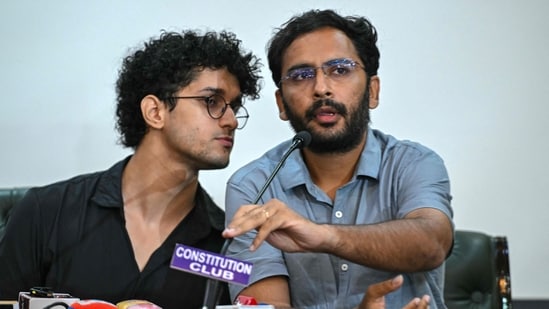
The new rules came on the same day when Cockroach Janta Party’s Ashutosh Ranka announced that he would be visiting schools across Rajasthan as part of the CJP's 'School Thik Karo' campaign to conduct an audit of the school amenities and quality of education being provided. Ranka said he had received requests to inspect schools in Jaipur, Kota, Jodhpur, Ajmer, Udaipur, Bharatpur, Dholpur, Barmer and Hanumangarh. The schools in these cities were allegedly in dilapidated conditions and demands for repair were being ignored by the administration.
The government directive drew criticism from the Opposition as Rajasthan Congress chief Govind Singh Dostara hit out at the BJP government for trying to cover up its alleged failure. "Instead of improving the condition of government schools, the BJP government has found a way to cover up its failure and hide the poor condition of the education system," he said.
ALSO READ: NTA paper-setting process: From question bank to sealed sets, how exam papers are prepared
To secure privacy and dignity of students: govt
{{/usCountry}}ALSO READ: NTA paper-setting process: From question bank to sealed sets, how exam papers are prepared
To secure privacy and dignity of students: govt
{{/usCountry}}The Rajasthan government circular cited the principle of "in loco parentis", which means "in place of parents", to justify the move which it said was aimed at securing the safety, dignity, well-being and welfare of all children.
The Secondary Education department said the measures were being taken to safeguard the children's Right to Privacy and comply with the school safety policy and guidelines of the National Commission for Protection of Child Rights (NCPCR).
Rajasthan govt guidelines for schools
- No outsider, except authorised government officials, will be allowed entry without prior permission from the principal/head.
- Visitors must make their entry in the register before entering the school premises
- No outsider shall enter the classroom, laboratory, library, hostel, playground, toilet or any area where students are engaged in any activity unless accompanied by the principal, a teacher or an authorised school official.
- Photography, videography, interviews, audio recording or live streaming of students, teachers or school activities will not be done without the prior written permission of the principal and will be permitted only for lawful purposes.
- Photographs, videos or personal information of students should not collected, published or disseminated in ways which violate their privacy, dignity or safety.
- If anyone makes an unauthorised entry and refuses to leave, attempts unauthorised photography or videography, or disrupts school operations, will be liable for legal action. The principal must inform the local police and the District Education Officer in such cases.
- The principal is allowed to refuse entry to any visitor "whose presence is likely to affect security, privacy, discipline or the academic environment".
- All supervisory officers must ensure “strict compliance of the instructions as mentioned”.
- The principal or the head of the school may direct an outsider to leave the school premises and initiate proceedings under the Bharatiya Nyaya Sanhita, 2023, the Protection of Children from Sexual Offences Act (POCSO), 2012, the Juvenile Justice (Care and Protection of Children) Act, 2015, the Information Technology Act, 2000 or other existing laws with the help of the local police.