E-Paper



Six years later, ₹2,000 notes to be withdrawn
The Reserve Bank of India (RBI) on Friday announced the withdrawal of the ₹2,000 denomination notes from circulation.

 Prefer HTon Google


The Reserve Bank of India (RBI) on Friday announced the withdrawal of the ₹2,000 denomination notes from circulation, advised people to exchange or deposit the notes by September 30, but assured that they would remain legal tender.
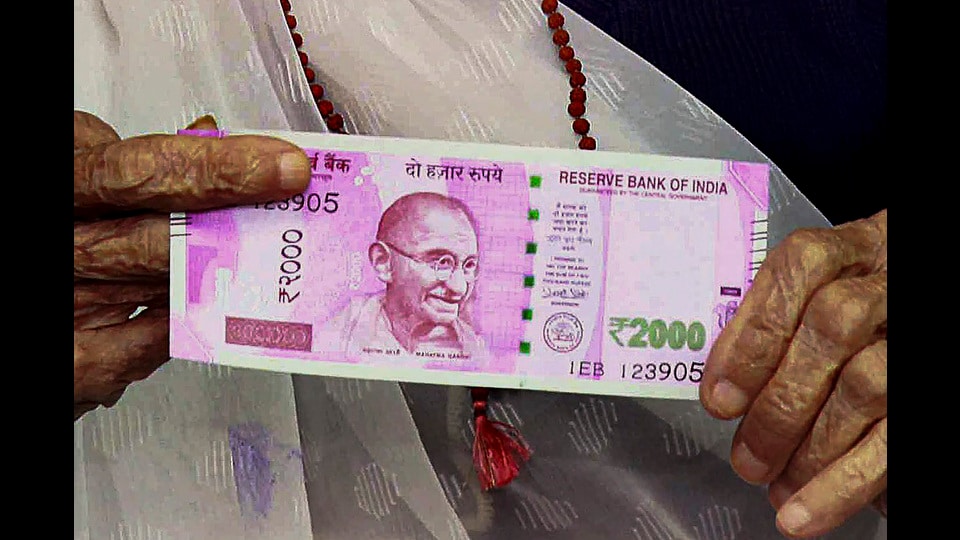
The announcement and the deadline, which is at odds with the assurance that the notes would remain legal tender, caused a stir and evoked memories of demonetisation, when the government scrapped high value currency notes with a few hours notice in November 2016, although the Reserve Bank of India was at pains to reiterate that the move was prompted by its so-called “Clean Notes” policy.
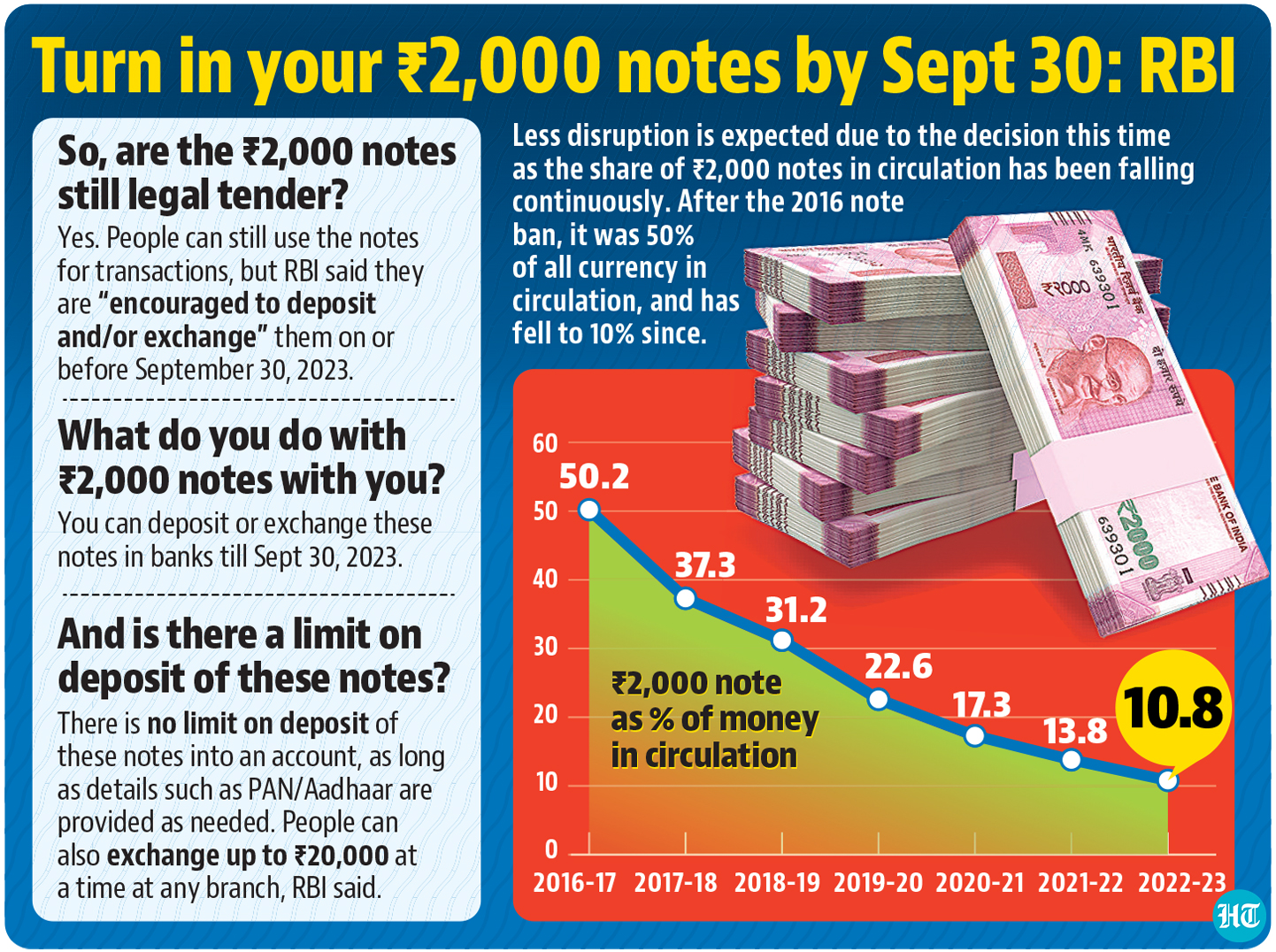
Banks will start exchanging notes from May 23 and people can exchange ₹2,000 banknotes up to a limit of ₹20,000 at a time. In remote locations, an account holder can get it exchanged through business correspondents (BCs) up to a limit of ₹4,000 per day, RBI said.
Also read: Why RBI decided to withdraw ₹2000 notes within 7 years
While an FAQ issued by RBI on Friday said that “members of the public can continue to use ₹2,000 banknotes for their transactions and also receive them in payment”, it added that “they are encouraged to deposit and/or exchange these banknotes on or before September 30, 2023”, It is likely that RBI will announce a mechanism to deposit or exchange the notes past the deadline.
RBI also said that there is no limit on deposit of ₹2,000 banknotes into a bank account, but that may require details such as PAN and Aadhaar or other documents. “Deposit into bank accounts can be made without restrictions subject to compliance with extant Know Your Customer (KYC) norms and other applicable statutory/regulatory requirements,” it said. Experts said some deposits may require Aadhaar and PAN authentication.
RBI stopped printing ₹2,000 notes about four years ago. Both the central bank and the government have maintained that currency of this denomination was a transitory arrangement to restock the economy with cash after demonetisation.
“The objective of introducing ₹2,000 banknotes was met once banknotes in other denominations became available in adequate quantities. Therefore, printing of ₹2,000 banknotes was stopped in 2018-19,” RBI said in a statement.
According to the central bank, about 89% of the ₹2,000 denomination banknotes, issued prior to March 2017, are at the end of their estimated life-span of four to five years, and in pursuance of its “Clean Notes Policy” , it has decided to withdraw the high denomination banknotes from circulation. “The Reserve Bank of India has advised banks to stop issuing ₹2000 denomination banknotes with immediate effect,” it added in a statement.
The Opposition criticised the decision. Congress leader P Chidambaram said: “Demonetisation has come full circle!”
“The ₹2000 note was a band-aid to cover up the foolish decision of demonetising ₹500 and ₹1,000 notes which were popular and widely exchanged currencies. A few weeks after demonetisation, the government/RBI were forced to reintroduce the ₹500 note. I shall not be surprised if the government/RBI reintroduced the ₹1,000 note as well,” he added in a tweet.
To be sure, the share of ₹2,000 notes in India’s total currency in circulation has been falling continuously since the day of its inception. Soon after the 2016 note ban, the ₹2,000 note constituted a little over half (50.2%) of all currency in circulation, according to CMIE data. This share fell to under a quarter (22.6%) by 2019-20 and the latest RBI release said the note constitutes only 10.8% of all currency in circulation. That works out to ₹3.62 lakh crore.
The share of banknotes in circulation with respect to India’s GDP (so as to account for factors like inflation), meanwhile, largely appears to have been steady in the near past. A look at banknote in circulation as share of India’s GDP shows that barring demonetisation and the two waves of the Covid-19 pandemic, the currency in circulation has largely hovered around the 45% mark since at least 2008.
Also read: ‘Opposition spreading fear’: Amit Malviya after RBI scraps ₹2,000 notes
RBI also added in its statement that it had similarly withdrawn bank notes from circulation in 2013-14. That move was aimed at withdrawing banknotes with fewer security features that were printed before 2005. However, there was no deadline at the time and the banknotes remained legal tender.
Rachit Sharma, DGM at Taxmann, a tax research and advisory firm, said: “The ₹2,000 currency note will remain legal tender until 30th September. It is not yet clear whether the Bank will ask for the Aadhaar and PAN to exchange the currency note.”
“As witnessed during demonetisation, we expect the deposit accretion of banks could improve marginally in near term. This will ease the pressure on deposit rate hikes and could also result in moderation in short-term interest rates,” said Karthik Srinivasan, Senior Vice President Financial Sector Ratings, ICRA.