Amid widespread destruction caused by flash floods in Nepal, a 36-member group of Malayalis who were caught in the disaster narrowly escaped and returned to Nedumbassery.
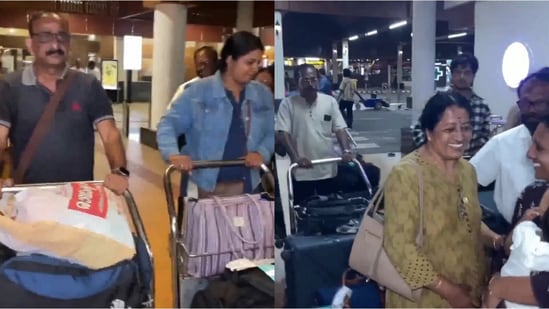
The group travelled around 100 kilometres from the Nepal border and crossed the border before reaching Gorakhpur Airport in Uttar Pradesh. From there, they returned home on two separate flights.
Among them, five people from Kasaragod landed in Bengaluru and then returned home by train. Rajan, a teacher at Periya Polytechnic and a native of Cheruvathur, teacher Anil Neelambari, former SI Pradeep Kumar, former KSEB official Karunakaran, and Rajeevan, a native of Muzhakkoy, were part of the Kasaragod group.
Deep Dive
What caused the flash floods in Nepal that affected the group from Kerala?
How did the Malayali group manage to escape from the Nepal floods?
Why did the group feel fortunate during their ordeal in Nepal?
The remaining 31 members arrived at Nedumbassery Airport at 2:30 am on Sunday.
{{/usCountry}}The remaining 31 members arrived at Nedumbassery Airport at 2:30 am on Sunday.
{{/usCountry}}Recounting the horror, they said water surged in like a tsunami. Although they changed their route to escape, they got trapped in the forest in the darkness after a landslide occurred.
"It was an adventurous trip and we were lucky. We were moving to Galtimunj for our next visit, but suddenly the roads were closed. Later, we realised about the disaster that had happened about 500 metres away from us. The disaster was a horrifying view. We stopped for a temple visit before moving to the next destination. This stop saved our lives; that was the golden hour. We thank god for our lives," Rajini told ANI.
Another resident, Vinaya Kumar, added that, "The disaster happened on the Onam days. We were in the middle of the trip. It was a horrendous experience. We were lucky to escape this disaster. The travel agency got us back to India securely. We faced some difficulties in finding food at first. But the agency people helped us to move to a safe place later that day. By 3 am in the morning, we got a safe accommodation."
Pradeep Kumar said the group initially did not realise the seriousness of the situation.
"At first, we didn't realise what was happening. The vehicles were stopped and local residents started to run towards the curve ahead of us. Later we went to look the scene and disaster reminded me of tsunami. Water level was so high and it sweeped all the trees and buildings. We stayed at the bus for hours and later at night we started to walk through woods. By midnight, we got food and accommodation. Anyway, we thank god for our lives," he said.
Renjitha said the group had never expected such a disaster during the festive season.
"Nobody expected such a disaster in the middle of a festive season like Onam. I can still picture the scene of disaster. God saved us all from this. I thank god for my life," he told ANI.
Meanwhile, Nepal's National Disaster Risk Reduction and Management Authority (NDRRMA) today issued an urgent public safety warning following reports of a sudden increase in the roar and water flow of the Bhote Koshi River.
Authorities have urged residents and relief teams along downstream settlements to exercise extreme caution and remain vigilant.
In an official update posted on X, the NDRRMA cited alerts received from local authorities on the ground. The fresh warning affects three major downstream districts that were severely impacted by the catastrophic August 26 flash floods.
Communities near the Rasuwa riverbank, including areas near the Nepal-China border, have been instructed to monitor water levels closely. Emergency services and local administration units along the river basin have been placed on standby in Nuwakot & Dhading.
"The District Administration Office, Rasuwa, has received information that the sound of increased flood flow in the Bhote Koshi River has been heard. Therefore, we request that caution be exercised in the areas around the river up to Rasuwa, Nuwakot, and Dhading. We will provide further updates as soon as additional information is received," posted NDRRMA, Nepal.