Around one out of every five persons in rural India, who do not have access to clean drinking water, is from West Bengal.
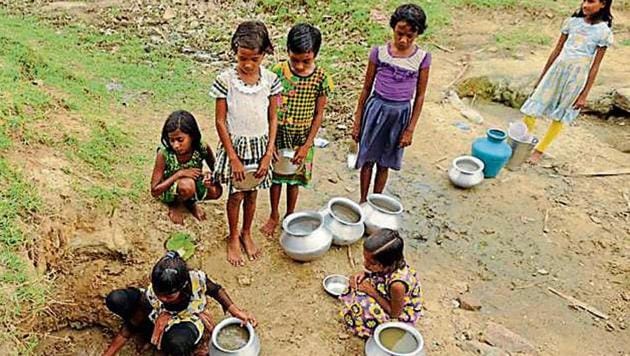
According to estimates available with the Union ministry of drinking water and sanitation, around 411 lakh villagers in India, which is around 4.5% of the country’s rural population, do not have access to safe and clean drinking water.
India is listed by WaterAid – an international NGO - among the top 10 countries in the world with the largest number of people living without access to clean water.
“Out of this 411 lakh population around 19% or 78 lakh villagers are from West Bengal. West Bengal has the second highest number of villagers who do not have access to safe drinking water in India, second only to Rajasthan. In Rajasthan around 82 lakh villagers do have access to safe drinking water,” said a ministry official.
Read: Indian towns fare poorly on basic infra, socio-economic indicators
State public health engineering (PHE) minister Subrata Mukherjee pleaded helplessness stating that there were several natural causes, including arsenic and fluoride in ground water and rising salinity in drinking water sources in coastal areas, which were adding to the problem.
“Around 84% of the rural population in Bengal has to depend on ground water sources. But in nearly 83 blocks are affected with arsenic problem in the state, around 43 blocks have fluoride in drinking water above the permissible limit. Apart from this, there are several other problems such as high doses of iron and salinity in several other blocks,” said Arunabha Majumdar a public health expert formerly associated with the All India Institute of Hygiene and Public Health.
{{/usCountry}}“Around 84% of the rural population in Bengal has to depend on ground water sources. But in nearly 83 blocks are affected with arsenic problem in the state, around 43 blocks have fluoride in drinking water above the permissible limit. Apart from this, there are several other problems such as high doses of iron and salinity in several other blocks,” said Arunabha Majumdar a public health expert formerly associated with the All India Institute of Hygiene and Public Health.
{{/usCountry}}The data also reveals that only around 56% families living in urban areas in West Bengal have access to safe drinking water, which is far less than the national average of 70.6%.
Read: Drought fear stalks Bengal as water crisis hits four districts
An annual per-capita water availability of less than 17 lakh cubic metres is considered a water stressed condition, whereas annual per-capita water availability below 1000 cubic metres is considered as a water scarcity condition.
“The average annual per capita water availability in 2001 was around 18.2 lakh litres. This dropped to 15.4 lakh litres in the year 2011, suggesting that we are already reeling under a water stressed condition. It may further drop to 13.4 lakh litres in 2025 and to 11.4 lakh litres by 2050,” said a PHE official on the condition of anonymity.