New Delhi: Russia has independent relations with India and Pakistan, and Moscow’s military cooperation with Islamabad is limited to the supply of equipment meant to bolster the fight against terrorism, the two top Russian diplomats in New Delhi said on Wednesday.
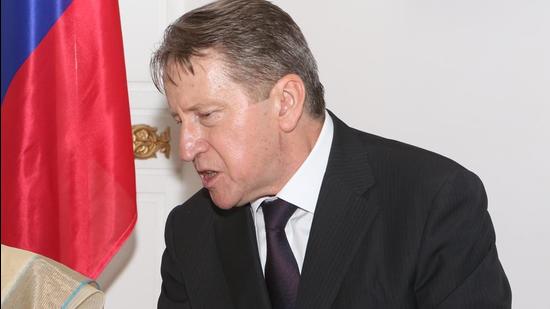
Moscow is also committed to fulfilling all arms deals with India, including the contract for S-400 air defence systems, despite the threat of US sanctions, Russian ambassador Nikolay Kudashev and deputy chief of mission Roman Babushkin told a news briefing.
The diplomats reiterated Russia’s concerns about the Indo-Pacific concept and the Quadrilateral Security Dialogue, or Quad, with Kudashev saying the West’s Indo-Pacific strategy is aimed at reviving Cold War-era structures.
The diplomats briefed the media in the aftermath of Russian foreign minister Sergey Lavrov’s recent visit to New Delhi to prepare the grounds for the annual India-Russia Summit to be held in the second half of the year. Unlike most visits by top Russian leaders, Lavrov did not meet the Indian Prime Minister, and he travelled to Pakistan from India.
Babushkin said there is “no reason to think there are divergences or misunderstandings between Russia and India as far as Pakistan is concerned”. He added: “We have independent relations with India and Pakistan and other countries, while ties with both are based on their own merits.”
{{/usCountry}}Babushkin said there is “no reason to think there are divergences or misunderstandings between Russia and India as far as Pakistan is concerned”. He added: “We have independent relations with India and Pakistan and other countries, while ties with both are based on their own merits.”
{{/usCountry}}All three countries are members of the Shanghai Cooperation Organisation (SCO), and cooperate in areas such as such regional security and the fight against terror, which envisages capacity building and exercises, he said.
“Russia is following its commitments, and there is a limited cooperation with Pakistan as compared to India. However, the fight against terrorism is our common agenda. So we also help Pakistan [by] providing anti-terrorism equipment and holding dedicated exercises,” Babushkin said.
Russia also respects the Simla Agreement of 1972 and Lahore Declaration of 1999 that leave no scope for third party mediation in India-Pakistan affairs and “has no intention to interfere or take sides”, he added. He described the decision by India and Pakistan to adhere to the 2003 ceasefire on the Line of Control as “a very important step in terms of ensuring regional stability”.
During a media interaction in Islamabad, Lavrov had said that Russia was ready to provide special military equipment to Pakistan to bolster the fight against terror. India has for long opposed sales of Russian military hardware to its rival Pakistan.
Kudashev described military cooperation as one of the most important tracks of the India-Russia relationship, and said all arms deals were on track despite the threat of US sanctions under the Countering America’s Adversaries Through Sanctions Act (Caatsa).
“Together with India, we don’t recognise bilateral sanctions as they are illegal tools of unlawful and unfair competition, pressure and even blackmail. It was clearly stated by the two foreign ministers in the course of their exchange,” Kudashev said.
“With regard to the S-400 and other agreements, both sides are committed to the agreed timelines and other obligations. This contract is being successfully fulfilled,” he said, referring to the $5.4-billion deal for five S-400 systems.
Kudashev said that while India is Russia’s “closest friend and trusted partner”, and both sides have convergence on a majority of global and regional issues including Afghanistan, Moscow continues to have concerns about the Indo-Pacific concept.
“We just want to call the attention of our Indian partners and friends to the dangers emanating from the Western Indo-Pacific strategy aimed at revival of the Cold War-era thinking and structures,” he said.
Both Kudashev and Babushkin described India as a key partner in efforts to ensure security and stability in Afghanistan, and said New Delhi will be part of discussions under the Moscow Format and eventually the “extended troika”. They said India can help in building regional consensus in efforts to find a solution in the war-torn country.
In response to a question on India-China tensions linked to the standoff on the Line of Actual Control (LAC), Babushkin said: “We are following the developments at the LAC, and we would encourage India and China to continue disengagement efforts in order to promote constructive and forward-looking dialogue.
“This is a very important precondition for regional stability and certainly we would encourage both sides to take advantage of our common multilateral platforms. They are very much scheduled at the highest level in the course of the year, including the Brics Summit, SCO Summit and RIC Summit.”