States need to abandon populism and be wary of indiscriminately disbursing freebies, the Supreme Court said on Tuesday, advising the Kerala government to exercise prudence in fiscal matters, while hearing the state’s suit against the Centre’s borrowing cap restrictions.
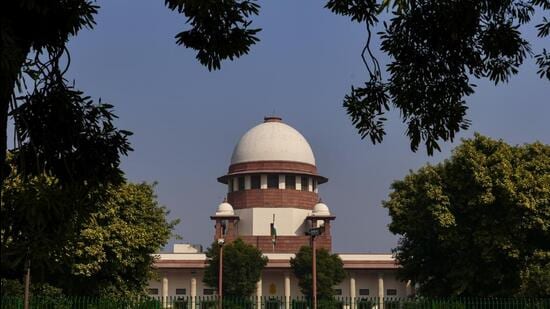
“States are under so much pressure of populism... there is an additional pressure of freebies,” a bench of justices Surya Kant and KV Viswanathan told the Kerala government, which agreed to accept the Centre’s proposal to borrow an additional ₹13,608 crore for the time being, subject to meeting certain stipulations.
Even as the state claimed that it needs at least ₹15,000 crore more to tide over a looming financial crisis, the court said that the Centre and state should have another round of meetings to find a way forward.
At the same time, the bench implored the Centre to have a meaningful dialogue with the Kerala government, observing that a state is an integral part of the Union and that the Centre should “cure the ailing part of its body” while ensuring that “the infection does not spread”.
It added that the Centre should not put the withdrawal of the suit by Kerala as a precondition for allowing additional borrowing. “The Supreme Court is engaged in this kind of litigation for the first time... these are interesting propositions on the principles of borrowing and fiscal prudence in a federal structure. By putting a condition of withdrawal on them, you are also pre-empting an adjudication by this court,” the bench told attorney general (AG) R Venkataramani and additional solicitor general (ASG) N Venkatraman.
{{/usCountry}}It added that the Centre should not put the withdrawal of the suit by Kerala as a precondition for allowing additional borrowing. “The Supreme Court is engaged in this kind of litigation for the first time... these are interesting propositions on the principles of borrowing and fiscal prudence in a federal structure. By putting a condition of withdrawal on them, you are also pre-empting an adjudication by this court,” the bench told attorney general (AG) R Venkataramani and additional solicitor general (ASG) N Venkatraman.
{{/usCountry}}“We are only facilitating the talks. The dialogue must continue. That’s the strength of the relationship between the Centre and states...when you agreed to give them an additional ₹13,600 crore, you put twin conditions. We don’t have any quarrel with the first set of conditions in so far as they stipulate certain terms. But asking them to withdraw the suit also pre-empts the court from going into the question of whether the suit is justiciable or not...We would like to adjudicate this controversy whether it happens to state A or state B,” the court said.
The bench, however, agreed with the Centre’s submissions that fiscal prudence by states ought to be looked into and that one state cannot be an exception.
“We acknowledge the fact that the entire world is recognising us as a booming and vibrant economy. Whenever we (judges) also go out, we get the same feeling and it’s based on correct facts and figures. There are strong pillars on which our economy is thriving,” the bench commented after the two law officers submitted that the Centre’s borrowings have been on a consistent decline over the last few years and that the economy has remained stable.
The bench said it will not pass any judicial order regarding the allocation, nor fix any next date of hearing in the matter because it wants the Centre and state to resolve the impending crisis through talks.
Turning to senior counsel Kapil Sibal, who represented the Kerala government, the bench said that state’s political leaders should refrain from issuing statements on the subject when the court has taken up the matter at the instance of the state government.
Sibal assured the bench of this, but claimed that Kerala was entitled to ₹13,608 crore under its own policy for this year and that this amount would allow the state to tide over only for a week. To this, the court said: “You said you are desperate for additional funds. But you are not even taking what’s being offered to you. You should rather accept it and then ask for more.” Sibal accepted the court’s suggestion.
The bench was hearing a plea filed by the Kerala government, claiming it has no money to clear outstanding arrears of salaries, pension, provident fund for state employees and for other beneficiaries in the state under various welfare schemes of the government.
The Pinarayi Vijayan government has challenged two letters issued by the Union finance ministry last year and certain amendments made to the Fiscal Responsibility and Budget Management Act in 2018 for “imposing a net borrowing ceiling (NBC) on the state by limiting borrowings from all sources, including open market borrowings.”
The Centre, on its part, has argued that the financial edifice of the state has several cracks. It has given statistics to showing the revenue deficit in Kerala as percentage of gross state domestic product (GSDP) to be 3.17% for 2021-22, higher than the all-states average of 0.46%, and the fiscal deficit rate for Kerala to be 4.94% compared to an all-state average of 2.80%.
The suit filed by Kerala also raised a fundamental issue of fiscal federalism. “The orders and amendment create unconstitutional limits and impediments on the state to borrow and regulate its own finances, therefore violating the provisions and principles of fiscal federalism under the Constitution,” it argued.