E-Paper



SC asks petitioner challenging Muslim gift law exemptions to approach law panel
The court underlined that the expert body is tasked with studying laws and recommending changes where necessary

 Prefer HTon Google


The Supreme Court on Thursday asked a petitioner challenging a Transfer of Property Act (TPA) provision that exempts Muslim gifts (hiba) from registration requirements to first approach the Law Commission of India. The petitioner argued that the exemption is discriminatory and results in loss to the public exchequer.
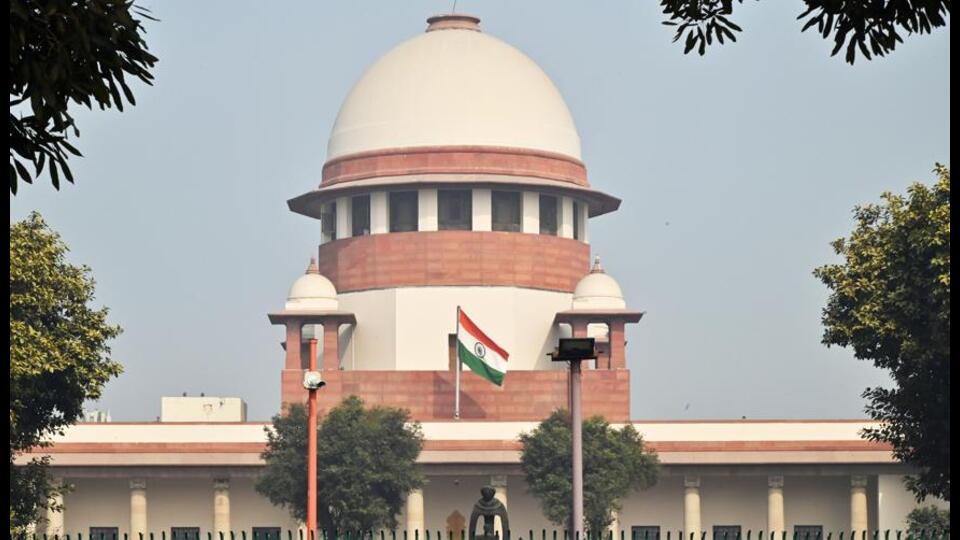
A bench comprising Chief Justice of India (CJI) Surya Kant and justices Joymalya Bagchi and Vipul M Pancholi underlined that the expert body is tasked with studying laws and recommending changes where necessary. It disposed of lawyer Hari Shankar Jain’s plea, granting him liberty to approach the commission.
“In our considered opinion, the correct approach for the petitioner would be to approach the Law Commission of India, which is entrusted with making recommendations on amending or changing the law or framing new laws,” the bench said. “We see no reason to entertain this petition when such an expert body exists and is functional.”
The petition challenged the constitutional validity of Section 129 of the TPA, which saves or protects the application of Muslim law relating to gifts.
Advocate Parth Yadav, appearing for Jain, argued that the provision results in discrimination because gifts made under Muslim personal law are exempt from the formal requirements that apply to gifts of people following other religions. “We are challenging the validity of Section 129 of the TPA, which exempts Muslim gifts [hiba] from the strict formal requirements of the Act. It is discriminatory and causing loss to the public exchequer,” Yadav said.
He argued that when Section 129 of the TPA is read together with Section 3 of the Indian Stamp Act and Section 17 of the Registration Act, the exemption effectively allows Muslim gifts of immovable property to be made without paying stamp duty or undergoing compulsory registration, allegedly resulting in revenue loss to the state. “This falls afoul of Article 14 [the right to equality] since they are not liable to pay stamp duty,” he said.
The bench questioned the petitioner’s locus and the manner in which the issue had been brought before the court. “What is your problem? How are you affected? If there is a loss to the public exchequer, what prevents Parliament from amending the law or suitably modifying it? They are the competent authority, and they can change it,” it said.
The court pointed out that the law in question dates back to 1882, and questioned why the petitioner had approached the court directly without first raising the issue before lawmakers or expert bodies. “It is an 1882 law, and you are challenging it in 2026 without even approaching the people or the government, which can examine your grievances.”
The bench suggested that the petitioner should raise the issue with Parliament or parliamentarians if he believed the law required amendment. It pointed out that the concept of hiba under Muslim personal law could not be examined only from the perspective of the donor’s religion. “You have to examine it both from the end of the donor and the done…You are raising the issue of discrimination from the point of view of the donor, but a donee can be a non-Muslim.”
The court said the concept of hiba must be examined through the legal principle of “intelligible differentia”, a key test used in constitutional law to determine whether differential treatment under a law violates the equality guarantee under Article 14 of the Constitution.
Section 129 of the Transfer of Property Act, 1882, acts as a savings clause for certain categories of gifts. It ensures that the provisions of Chapter VII of the TPA, which deal with gifts, do not override the rules of Muslim law governing gifts (hiba).
Under the TPA, Section 123 ordinarily requires that a gift of immovable property must be made through a registered instrument signed by the donor and attested by witnesses. Because of Section 129, this requirement does not apply to gifts governed by Muslim personal law. Under Muslim law, a valid gift can be made orally, even for immovable property, provided some essential conditions are satisfied. If these conditions are fulfilled, courts have recognised such gifts as valid even without registration.