The Supreme Court on Tuesday disapproved of repeated doubts raised over Electronic Voting Machines (EVMs), berating the tendency of political leaders to question the credibility of EVMs when they lose elections while conveniently accepting the system when they win.
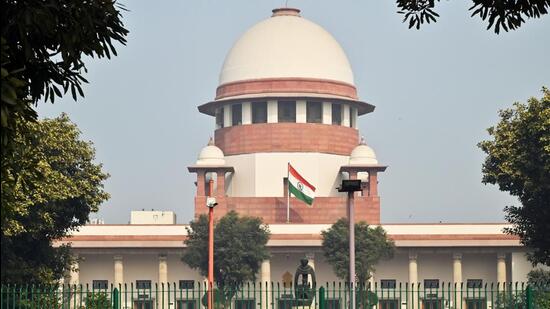
“When you lose, EVMs are tampered with; when you win, EVMs are fine,” a bench of justices Vikram Nath and PB Varale remarked while dismissing a public interest litigation (PIL) seeking a return to ballot papers and other electoral reforms including the disqualification of candidates accused of electoral corruption.
After petitioner KA Paul referred to statements by Andhra Pradesh chief minister Chandrababu Naidu and his predecessor Jagan Mohan Reddy casting doubts on the credibility of EVMs, the bench highlighted instances where leaders who questioned EVMs after defeats remained silent on their alleged flaws after securing electoral victories.
“When Chandrababu Naidu won this time, he didn’t say EVMs could be tampered with. This time, Jagan Mohan Reddy lost, he said EVMs can be tampered with,” commented the bench, referencing claims made by the Andhra Pradesh CM and his predecessor in previous years.
During the hearing, Paul argued that India’s democracy was at risk due to the alleged manipulability of EVMs and sought a return to paper ballots to ensure transparency and fairness. Representing himself, Paul claimed that democracy would “die” unless corrective measures were taken and raised concerns over the large sums of money confiscated during elections as evidence of malpractice.
{{/usCountry}}During the hearing, Paul argued that India’s democracy was at risk due to the alleged manipulability of EVMs and sought a return to paper ballots to ensure transparency and fairness. Representing himself, Paul claimed that democracy would “die” unless corrective measures were taken and raised concerns over the large sums of money confiscated during elections as evidence of malpractice.
{{/usCountry}}However, the court questioned the logic of linking the ballot system to these issues, asking: “How will going back to the ballot system help curb this?”
Paul argued that only 32% of the population cast votes and called for measures to increase awareness. He also alleged financial impropriety involving industrialists and political parties, claiming an unnamed industrialist had spent ₹1,200 crore across six states to secure contracts worth ₹48,000 crore. He even cited Tesla CEO Elon Musk’s purported comments on the possibility of tampering with EVMs.
The bench was unconvinced. “We have not seen or offered any money for casting votes. We don’t know how this money is given,” it said.
Ultimately, the court deemed the PIL an inappropriate avenue for such arguments. “This is not the platform to argue such matters,” said the bench, dismissing the plea and advising Paul to pursue his grievances through proper forum.
Tuesday’s order aligns with the Supreme Court’s earlier endorsement of EVMs. On April 26, a bench comprising justices Sanjiv Khanna (now the Chief Justice of India) and Dipankar Datta dismissed a series of petitions seeking 100% cross-verification of EVM votes with Voter Verifiable Paper Audit Trails (VVPATs). The judges, in their concurrent opinions, reiterated EVMs’ credibility, simplicity, and security, emphasising that the machines have been instrumental in ensuring free and fair elections.
Justice Khanna pointed out the stringent safeguards implemented by the Election Commission of India (ECI) to prevent tampering, while Justice Datta noted the technology’s reliability in instilling voter confidence. The judgment added that while skepticism over EVMs persists in some quarters, no concrete evidence of tampering has ever been produced, and the ECI’s protocols remain robust and transparent.
While the political discourse around EVMs and the scrutiny of ECI are likely to continue despite the Supreme Court’s rulings, the top court on Tuesday reinforced its position that electoral integrity rests on established safeguards and evidence-based approaches, not political rhetoric.