The Supreme Court has issued contempt notices to chief secretaries of 8 states for appointing ad-hoc director general of police (DGP) in violation of the top court’s 2006 ruling which requires the police chiefs to be selected from among the top three senior most police officers in the state for a minimum tenure of at least two years.
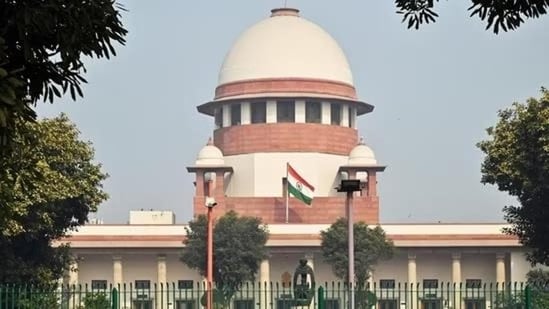
The order was passed on Monday by a bench headed by Chief Justice of India (CJI) Dhananjaya Y Chandrachud on a contempt petition filed by a Haryana-based petitioner, Vinod Kumar, challenging the ad-hoc appointment of DGPs in the states of Punjab, Rajasthan, Uttar Pradesh, Andhra Pradesh, Telangana, West Bengal, Jharkhand, and Bihar.
Though, as a norm, alleged contemnors are supposed to personally appear in court, the bench, also comprising justices JB Pardiwala and Manoj Misra, made an exception by directing that their personal presence will not be required. However, the chief secretaries of the 8 states along with the acting DGPs have to file their response before October 21, the next date of hearing.
Appearing for the petitioner, senior advocate Gopal Sankaranarayanan pointed out that the ad-hoc appointments carried out by the 8 states flies in the face of the 2006 judgment of the top court in Prakash Singh v Union of India. This judgment clearly required the states to consult the Union Public Service Commission (UPSC) by sending names of eligible officers, at least three months before the incumbent DGP is to retire. The UPSC would then prepare a panel of three officers based on seniority, service record and range of experience. The list will be sent to the state for it to pick one of the shortlisted officers as DGP.
“We have given the details of the officers who have been appointed in the 8 states. The most gross case is in Uttar Pradesh, where the acting DGP Prashant Kumar is ranked 19th in the state seniority list and does not fall in the zone of consideration,” Sankaranarayanan said.
{{/usCountry}}“We have given the details of the officers who have been appointed in the 8 states. The most gross case is in Uttar Pradesh, where the acting DGP Prashant Kumar is ranked 19th in the state seniority list and does not fall in the zone of consideration,” Sankaranarayanan said.
{{/usCountry}}His petition was heard along with another contempt petition by one Naresh Makani, challenging the appointment of Jharkhand acting DGP Anurag Gupta, a 1990 cadre IPS officer on July 25, 2024. On this plea, the top court had already issued contempt notices on September 6 to Jharkhand chief secretary Lalbiaktluanga Khiangte, besides UPSC chairperson Preeti Sudan, Ministry of Home Affairs (MHA) additional secretary Piyush Goyal and Gupta.
Appearing for Makani, senior advocate Madhavi Divan said that the issue needs to be heard urgently as the illegal appointment cannot be allowed to sustain. With Jharkhand going to polls, the role of the DGP would be instrumental.
The court agreed to hear both the contempt petitions together while noting that in some of the states, the acting DGPs were continuing for a long time. In Punjab, the ad-hoc DGP Gaurav Yadav was appointed in July 2022, in Rajasthan Utkal Ranjan Sahoo became acting DGP in December 2023 and in UP, Prashant Kumar was made ad-hoc DGP in January this year.
The petition by Vinod Kumar said that the notifications appointing acting DGPs was contempt of the 2006 ruling that was later clarified by another bench of the top court in July 2018 where the issue of acting DGP appointments by some states was challenged in court. The bench had then stated, “None of the states shall ever conceive of the idea of appointing any person on the post of DGP on acting basis for there is no concept of acting DGP as per the decision in Prakash Singh case.”
The court had reiterated that all states were required to send the list of eligible officers to UPSC at least three months before the post is to fall vacant.
Incidentally, the top court on September 30 issued notice on a writ petition filed by a lawyer Savitri Pandey to the Centre and eight states for complying with the Prakash Singh principles and not to further delay the appointment of a regular DGP. The list of states included in the petition is similar to the list provided in the contempt petition except for Rajasthan. In its place, Pandey’s petition included Odisha where a regular DGP was appointed in August.
As the Prakash Singh judgment also spoke of a minimum tenure for DGPs in order to provide stability and continuity in the police leadership, the contempt petitions highlighted that most appointments by states involved IPS officers who were to demit office within a year, thus giving them a reduced tenure at the top post.
Prakash Singh, himself a decorated police officer having served as former DGP of UP and Assam and chief of Border Security Force prior to his retirement in 1994, had approached the top court in 1996 seeking a slew of reforms in police administration. He intended to segregate the law and order and investigative roles of police and to secure a fixed tenure for police chiefs to secure them against arbitrary transfers by their political masters.
The order of the court passed in September 2006 helped achieve this end by establishing police establishment boards to deal with transfers, posting and promotion, and a police complaints authority to examine complaints against police officers.