
 E-Paper



Supreme Court junks Zakia plea on riots ‘conspiracy’
Zakia Jafri filed her complaint to the Gujarat DGP on June 8, 2006, alleging a larger conspiracy behind the riots.

 Prefer HTon Google


Ruling out a larger conspiracy behind the 2002 Gujarat riots, the Supreme Court on Friday upheld the clean chit given by the Court-appointed special investigation team (SIT) in February 2012 to then chief minister Narendra Modi and 62 others.
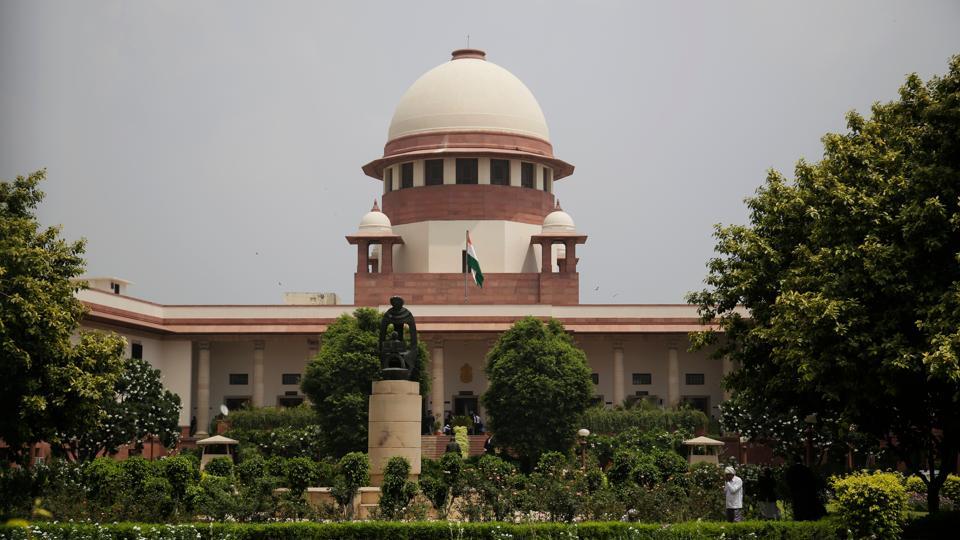
Apart from concluding that there is no tangible material to prove that the riots were state-sponsored, pre-planned, and a conspiracy hatched at the highest level in the state to target the minority community following the Godhra train burning incident in February 2002, the court was also scathing in its criticism of the “sensation creating” statements of “disgruntled officials” that claimed this.
The SIT undertook the investigation on an order passed by the top court in April 2009 to examine a June 2006 complaint alleging that there was a larger conspiracy behind the riots, by Zakia Jafri, the widow of Congress Member of Parliament (MP) Ehsan Jafri who died during the riots. It filed its report on February 8, 2012.
Zakia Jafri filed her complaint to the Gujarat DGP on June 8, 2006, alleging a larger conspiracy behind the riots. The Gujarat high court in November 2007 refused to order an FIR on Zakia’s complaint. In April 2009, the Supreme Court appointed a special investigation team and ordered it to examine Zakia’s allegations. In its closure report filed before a magistrate in the Gulberg Society trial in February 2012, the SIT gave a clean chit to Modi and 62 others, saying there was “no prosecutable evidence” against them. A year later, on April 15, 2013, Zakia filed a protest petition in a local court seeking rejection of the SIT report. The local court, however, rejected Zakia’s petition in December that year. Zakia’s appeal against the local court order was also rejected by the Gujarat HC in 2017. In 2018, the former Congress leader’s wife moved the Supreme Court.
After going through Jafri’s 67-page complaint filed on June 8, 2006, and the SIT response, filed on February 8, 2012, on each of the 32 allegations contained in it, the bench of justices AM Khanwilkar, Dinesh Maheshwari and CT Ravikumar found the appeal to be devoid of merit and upheld the report by SIT that found the evidence produced by Jafri was false, lacking corroboration, or not sufficient to show that there was a criminal conspiracy.
The bench named people cited in Jafri’s complaint, suspended IPS officer Sanjiv Bhatt, former Gujarat DGP RB Sreekumar and former Gujarat minister Haren Pandya, and agreed with SIT that their claims were false. Pandya and Bhatt claimed that the instructions for a state-sponsored riot emanated from the then Chief Minister at a law and order meeting convened on February 27, 2002. The SIT found that their statements could not be relied upon as they were not present at the meeting as claimed by them.
The bench said, “The allegation in the present case, if at all relevant, was founded on falsehood of the claim of Sanjiv Bhatt and Haren Pandya regarding the utterances of the then Chief Minister in review meeting chaired by him – which stood completely exposed after the investigation by SIT.”
The order further stated, “At the end of the day, it appears to us that a coalesced effort of the disgruntled officials of the state of Gujarat along with others was to create sensation by making revelations which were false to their own knowledge. The falsity of their claims had been fully exposed by SIT after a thorough investigation.”
Writing the 307-page judgment for the bench, justice Khanwilkar said, “We find force in the argument of the state government that the testimony of Sanjiv Bhatt, Haren Pandya and also of RB Sreekumar was only to sensationalize and politicize the matters in issue, although, replete with falsehood.”
Taking strong exception to the conduct of the above persons, the bench said, “All those involved in such abuse of process, need to be in the dock and proceeded with in accordance with law.”
Standing on such false claims, the bench found the entire allegation of larger conspiracy shaky as it said, “On such false claim, the structure of larger criminal conspiracy at the highest level has been erected. The same stands collapsed like a house of cards, aftermath thorough investigation by the SIT.”
The material brought on record, the Court said, was not worth to even create a suspicion “indicative of the meeting of the minds of all concerned at some level” and in particular, the bureaucrats, politicians, public prosecutors, VHP, RSS, Bajrang Dal or the members of the state political establishment for hatching a larger criminal conspiracy at the highest level to “cause and precipitate mass violence against the minority community” across the state.
The present proceedings, the judges held, “have been pursued for last 16 years (from submission of complaint dated June 8, 2006) and then by filing protest petition dated April 15, 2013 (running into 514 pages) including with the audacity to question the integrity of every functionary involved in the process of exposing the devious stratagem adopted to keep the pot boiling, obviously, for ulterior design.”
Finding no fault with the SIT’s final report, the Court found it to be backed by “firm logic, expositing analytical mind and dealing with all aspects objectively” to discard the allegations of a larger conspiracy.
Pointing a finger at the petitioners, the bench observed, “The protagonists of quest for justice sitting in a comfortable environment in their air-conditioned office may succeed in connecting failures of the State administration at different levels during such horrendous situation, little knowing or even referring to the ground realities and the continual effort put in by the duty holders in controlling the spontaneous evolving situation unfolding aftermath mass violence across the State.”


