E-Paper



SC lays down 4-factor test to avoid undue sympathy in sentencing
Handing out lesser punishment or substituting imprisonment with monetary compensation risks undermining the administration of justice, the Supreme Court held


Handing out lesser punishment or substituting imprisonment with monetary compensation risks undermining the administration of justice, the Supreme Court held on Tuesday, cautioning courts against displaying “undue sympathy” towards convicts.
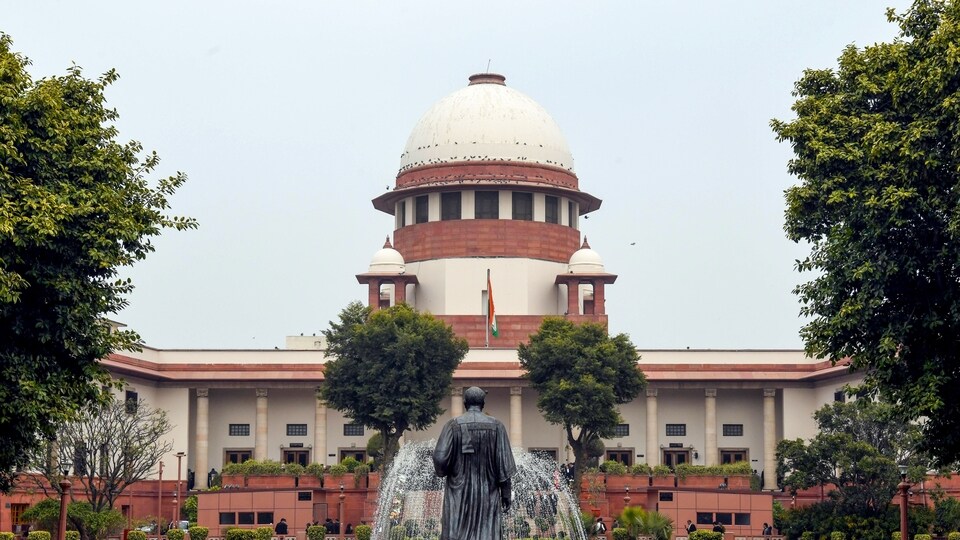
A bench of justices Rajesh Bindal and Vijay Bishnoi laid down four basic factors that courts must keep in mind while deciding on sentencing -- proportionality between the gravity of the offence and the punishment awarded; due consideration of the facts and circumstances of the case; impact of the crime on society while remaining unswayed by public outrage; and a balanced assessment of aggravating and mitigating factors.
“The objective of punishment is not to seek vengeance for the crime, rather, it is an attempt to reconstruct the damaged social fabric of society in order to pull back its wheel on the track…The objective of punishment is to create an effective deterrence so that the same crime/actions are prevented and mitigated in future,” the judgment, authored by Justice Bishnoi, emphasised.
The court stressed that while retribution is not the ultimate aim of the criminal justice system, undue leniency can erode public confidence. “Such displays of overt sentiments risk undermining the administration of justice, as it is imperative that justice is not merely done but also seen to be done,” it said.
The ruling came as the top court set aside a 2020 Madras High Court judgment that had reduced the sentence of two men convicted of attempt to murder from three years’ rigorous imprisonment to the period already undergone -- about two months, while enhancing the fine to ₹50,000 each.
The case arose out of a 2009 incident in which the accused, armed with knives and sticks, attacked the victim, inflicting stab wounds on the chest, ribs, abdomen and hand. The trial court convicted them for attempt to murder and sentenced them to three years in jail. The conviction and sentence were upheld in appeal.
However, in revision, the high court maintained the conviction but reduced the sentence to the period already undergone, noting that more than 10 years had elapsed since the incident and that the victim had later been murdered by others.
The Supreme Court found this approach legally unsustainable. “We are constrained to observe that the High Court acted in complete defiance of the law and created a travesty of the established criminal jurisprudence,” noted the bench, adding that the high court failed to properly reason why such a reduction was warranted in a case involving life-threatening injuries.
The judgment underscored that victim compensation under Section 395 of the Bhartiya Nagarik Suraksha Sanhita, 2023 (corresponding to the previous Section 357 of the CrPC) is restitutory in nature and cannot substitute a sentence.
“Compensation payable to the victim is only restitutory in nature, and it cannot be considered as equivalent to or a substitute for punishment,” said the court, warning that the growing trend of reducing sentences while enhancing compensation is “dangerous” and may send a message that offenders can “purchase” their liberty.
Punishment, the bench observed, is punitive and intended to create adequate deterrence and convey that violations of societal norms carry consequences “which cannot merely be ‘purchased by money’.”
The court expressed concern over what it described as a misplaced understanding among some courts in treating compensation as an alternative to imprisonment, calling the practice one that “should be condemned.”
Allowing the appeal, the court restored the original sentence imposed by the trial court and directed the convicts to surrender before the trial court within four weeks to serve the remainder of their three-year term, after adjusting the period already undergone.