E-Paper



SC okays UPSC plan for provisional answer keys
The Supreme Court approved UPSC's new policy to publish provisional answer keys after prelims, enhancing transparency and addressing candidates' grievances.

 Prefer HTon Google


The Supreme Court on Tuesday approved the Union Public Service Commission’s (UPSC) proposal to publish provisional answer keys immediately after the civil services preliminary examination and invite objections from candidates before finalising results -- a landmark shift in policy that ends years of resistance and is expected to bring greater transparency to India’s most competitive recruitment process.
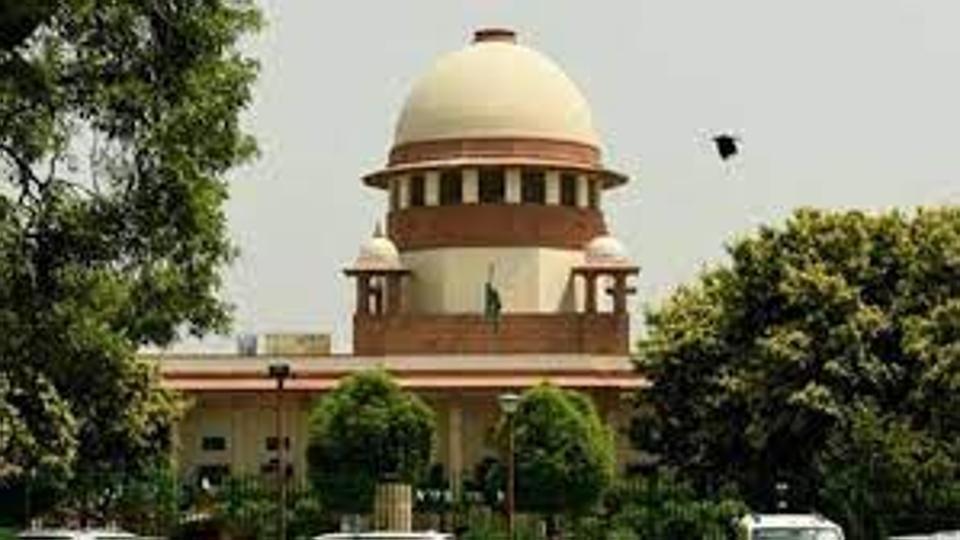
A bench of justices PS Narasimha and AS Chandurkar, while disposing of a batch of petitions challenging the UPSC’s earlier policy, noted that the Commission’s recent affidavit marked a “conscious and well-considered decision” following comprehensive deliberation. The new mechanism, it said, adequately addressed candidates’ grievances while aligning the UPSC’s functioning with the principles of fairness and accountability.
Under the new framework, the Commission will publish provisional answer keys soon after the prelims and invite representations supported by at least three authoritative sources. These objections will then be vetted by subject experts before final keys are finalised and results declared. The final answer key will, as before, be published after the entire examination cycle concludes.
The top court’s endorsement follows UPSC’s affidavit filed earlier this month in response to petitions by civil service aspirants from the 2024 and 2025 exam cycles, who sought immediate disclosure of answer keys. The petitioners, represented by senior counsel Kapil Sibal, Devadatt Kamat and advocates Rajeev Kumar Dubey, Rajesh G Inamdar and Shashwat Anand, contended that the old practice of releasing keys only after the entire process, including interviews, ended left no scope to challenge errors that could determine one’s elimination at the preliminary stage.
During the hearing, the bench recorded its appreciation for amicus curiae and senior advocate Jaideep Gupta and advocate-on-record Pranjal Kishore, whose detailed note recommending the release of provisional answer keys soon after the exam was “instrumental” in prompting UPSC to change its stand.
The court also granted liberty to the petitioners to pursue past grievances before jurisdictional high courts, directing that such matters be heard expeditiously. “We have allowed the petitions in light of UPSC’s new policy framework,” said the bench, while clarifying that high courts may examine retrospective reliefs such as re-evaluation, compensatory attempt or objection windows for past exam cycles.
The shift represents a major departure from UPSC’s long-held position. As recently as May 2024, the Commission told the Supreme Court that early disclosure of keys could be “counterproductive” and risk delaying the exam calendar. However, the bench’s continuous scrutiny, along with recommendations from the amicus, prompted the Commission to reconsider its stance.
In its affidavit, UPSC said the decision was taken to “enhance transparency” after “comprehensive deliberation,” balancing fairness with the practical realities of large-scale examination management. The court accepted this as an effective redressal of aspirants’ concerns.
Every year, over five lakh candidates appear for the civil services prelims, while barely 12,0000-15,000 qualify for the next stage. The preliminary examination thus serves as a high-stakes elimination round, and any error in answer keys can directly affect thousands of candidates.
UPSC Chairman Dr Ajay Kumar, who had previously reiterated the Commission’s commitment to judicial directions in a public interaction, is expected to oversee the rollout of the new mechanism.
Aspirants and legal experts welcomed Tuesday’s verdict as a “victory for transparency”, although questions remain over whether high courts will allow retrospective relief for candidates from the 2024 and 2025 cycles. “This could finally make the process more predictable and fair,” said a Delhi-based aspirant, adding it will help candidates know where they stand early and plan whether to focus on Mains or prepare again.