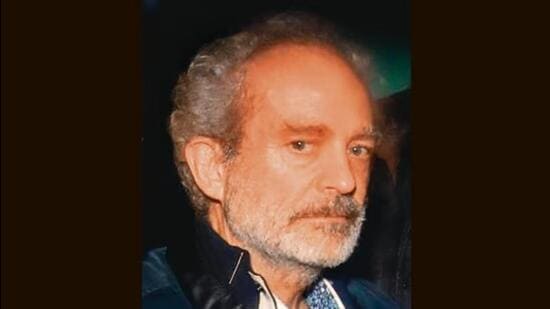
The Supreme Court on Monday sought the Centre’s response on a petition filed by Christian Michel James, the alleged middleman in the ₹3,600-crore AgustaWestland VVIP chopper case, seeking his release from jail on the ground that he has already served the maximum sentence for the offences for which he was extradited.
A bench of Justices Vikram Nath and Sandeep Mehta issued notice to the Centre and the investigating agencies, the Central Bureau of Investigation (CBI) and the Enforcement Directorate (ED), and posted the matter for July.
He had earlier approached the Delhi high court for similar relief, which was dismissed on April 8.
Advocate Aljo K Joseph, who appeared for Michel, told the top court that the petitioner has already undergone more than seven years of incarceration following his extradition from Dubai in 2018 in connection with the case. He argued that the charge against Michel under the Prevention of Corruption Act carries a maximum punishment of five years, and he has remained in jail for a period exceeding the maximum sentence for the alleged offence.
The petition challenged Article 17 of the India-UAE extradition treaty, which allows prosecution for “connected offences”. James’ appeal said that under the ‘Doctrine of Speciality’ provided under Section 21 of the Extradition Act, an accused cannot be convicted for any offence other than that for which he was extradited.
{{/usCountry}}The petition challenged Article 17 of the India-UAE extradition treaty, which allows prosecution for “connected offences”. James’ appeal said that under the ‘Doctrine of Speciality’ provided under Section 21 of the Extradition Act, an accused cannot be convicted for any offence other than that for which he was extradited.
{{/usCountry}}“The high court has gone to the extent to say that the Indo-UAE treaty will prevail over the law made by Parliament,” Advocate Joseph said, pointing out that the bench headed by Justice Nath in February last year had granted him bail in the CBI case. Later, he was also granted bail in the ED case, but he continues to remain in jail.
Citing an order of the UK High Court of March 2026, where a categorical statement was made by the Government of India recognising the Doctrine of Speciality for extraditing Nirav Modi, the petition said, “In accordance with the Rule of Specialty, Mr Nirav Modi will not be subjected to any trial concerning offences beyond the scope of the extradition offences without obtaining consent of the Government of the UK.”
The bench said, “Issue notice returnable in four weeks.”
Advocate Joseph pointed out that the maximum sentence for the case under the Prevention of Corruption Act, for which he was extradited, has already been undergone. The court replied, “Now the section invoked carries life term.”
The bench was referring to the Delhi High Court order, which records the supplementary charge sheet filed by the CBI in 2020, adding Section 467 of the Indian Penal Code (IPC), relating to forgery, to the offences of cheating, criminal conspiracy, and bribery. Section 467 provides for life imprisonment. Citing this provision, the Centre claimed that James is yet to complete the maximum sentence.