All constitution bench hearings in the Supreme Court will be live-streamed from September 27.
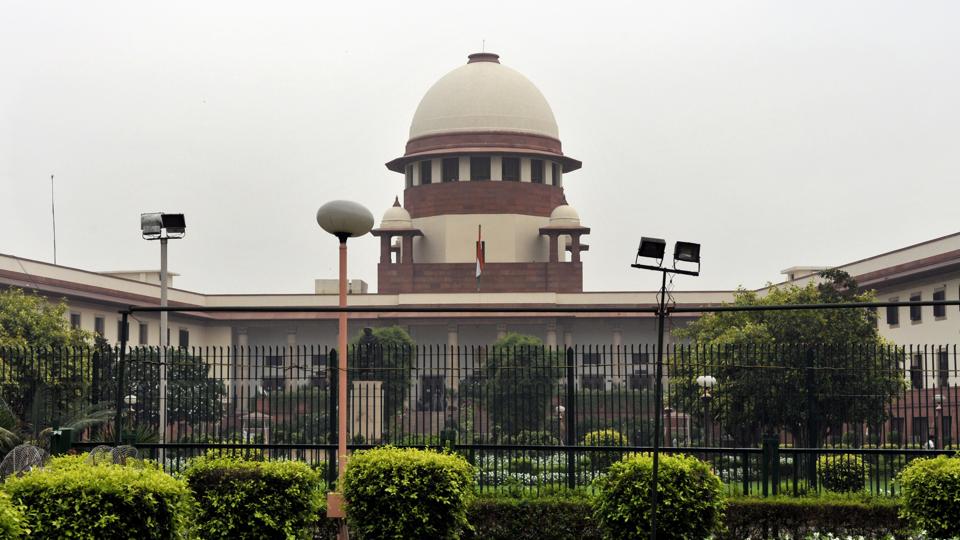
A full court, comprising all judges of the top court, deliberated upon the matter on Tuesday and decided to live-stream constitutional bench proceedings from next week.
At the meeting, which was presided over by Chief Justice of India (CJI) Uday Umesh Lalit, all the judges were unanimous in their decision that live-streaming, on a regular basis, should commence with broadcasting constitutional cases.
The constitutional bench cases which are likely to be live-streamed includes challenges to the EWS quota law, religious practice of excommunication in the Dawoodi Bohra community, Supreme Court’s power to dissolve marriages on the ground of irretrievable breakdown and the Centre’s petition on enhanced compensation for victims of 1984 Bhopal gas tragedy.
Last week, senior advocate Indira Jaising had written to the CJI and his companion judges requesting the Supreme Court to begin live streaming of proceedings of matters of public and constitutional importance. She was one of the petitioners in 2018 requesting declaration of live-streaming as part of the right to freedom of information and the right of access to justice for every citizen.
It was in August last week when the Supreme Court had telecast its first proceedings, more than three years after a top court ruling recommended live-streaming its hearings. The move was, however, confined to the proceedings of a ceremonial bench that had to bid adieu to then CJI NV Ramana.
{{/usCountry}}It was in August last week when the Supreme Court had telecast its first proceedings, more than three years after a top court ruling recommended live-streaming its hearings. The move was, however, confined to the proceedings of a ceremonial bench that had to bid adieu to then CJI NV Ramana.
{{/usCountry}}By a judgment in September 2018, the Supreme Court had declared live telecast of court proceedings part of the right to access justice under Article 21 of the Constitution.
Subsequently, Supreme Court’s e-Committee, headed by Justice Dhananjaya Y Chandrachud,
came out with model guidelines to regulate live-streaming of court proceedings in India.
Currently, six high courts in the country, namely Gujarat, Orissa, Karnataka, Jharkhand, Patna, and Madhya Pradesh, live-stream their proceedings through their own channels on YouTube.
The top court’s e-Committee has been working on a proposal to launch an exclusive platform for live-streaming court proceedings, HT has learnt.
The proposition to have an exclusive platform to live-stream apex court proceedings was part of the third phase of the e-courts project, which is an ambitious initiative to implement the use of information and technology in India’s judiciary.
Meanwhile, at the meeting on Tuesday, the judges also deliberated upon a more effective system of listing cases so as to allot sufficient time on concluding a matter once it starts being heard. Through a judicial order, a Supreme Court bench had recently highlighted the difficulty of finally deciding a matter owing to the new listing system.
After CJI Lalit has taken the helm, a new system of listing has been put in vogue, aimed at faster disposal of cases, particularly the ones pending in the top court for long. In his first 13 days, the Supreme Court saw more than 5,000 cases getting wrapped up.