
 E-Paper



Schools, colleges reopen in New Delhi for all from Nov 1, online option to stay
Schools in Delhi have been shut since March last year when Covid-19 cases first started rising in the country.


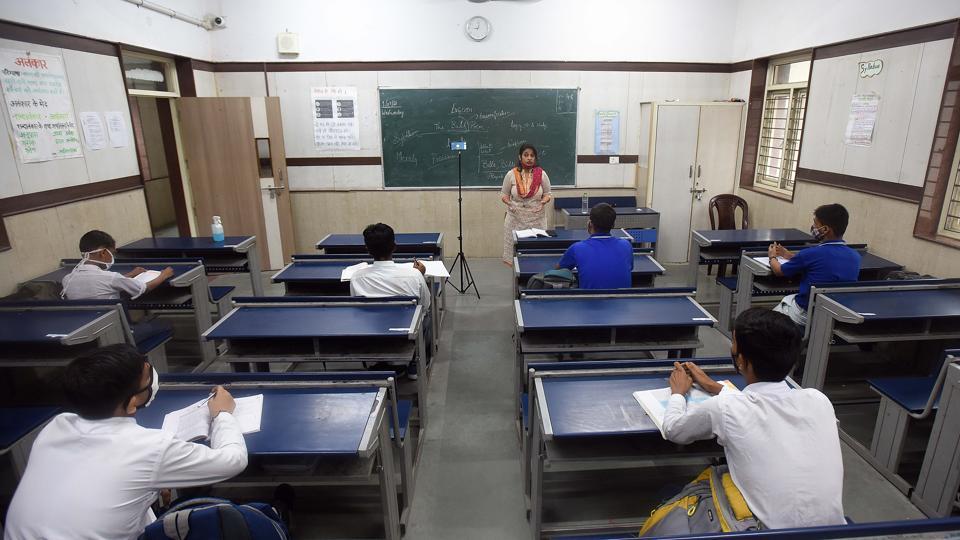
Schools in the Capital can resume physical classes for all standards from November 1, Delhi deputy chief minister Manish Sisodia said on Wednesday, after a decision by the Delhi Disaster Management Authority (DDMA) that was based on the marked improvement in the Covid-19 situation in the city.
Delhi added 38 new Covid-19 cases and there were no additional deaths on Wednesday, according to data from the state government’s daily health bulletin. The positivity rate of samples tested was 0.06 %, a level where it has remained for months now.
Sisodia, who is also the Delhi education minister, said that suspension of in-person classes is “affecting the overall growth of the children”.
“The government, the officials in the DDMA and experts are of the opinion that suspension or in-person classes in schools are tremendously affecting overall growth in children. The Authority feels it is now safe to restart schools fully. From November 1, all public and private schools will be allowed to open all classes for in-person attendance,” Sisodia said at a news briefing after the DDMA meeting.
Chief minister Arvind Kejriwal, the vice chairperson of DDMA, and experts including Niti Ayog member (health), VK Paul, and National Centre for Disease Control director, Dr SK Singh, were also present at the DDMA meeting chaired by Delhi lieutenant governor Anil Baijal.
Sisodia said parents will not be forced to send their children to school and classes will continue in a hybrid mode. “No parent will be forced to send their children to schools. Online classes will continue,” Sisodia said, adding that all other educational institutions can also reopen from Monday.
Schools in Delhi have been shut since March last year when Covid-19 cases first started rising in the country. Classes resumed for a brief period in January and February this year, but were suspended as the brutal second wave (fourth for the Capital) of Covid-19 took hold in March-April.
The government allowed the resumption of physical classes for students of standards 9 to 12 and colleges from September 1, with strict Covid-19 protocols.
Sisodia noted that while the Covid-19 situation in the Capital is under control, people should not become complacent during the upcoming festive season.
“COVID situation is under control but considering the situation in few countries at present and the upcoming festivals, there is need to be cautious and not let our guard down,” he said.
The government has directed schools to ensure there is not more than 50% attendance once physical classes resume.
“Schools will have to ensure that not more than 50 percent of the students in a class should be called to schools and all the staff is required to be fully vaccinated as soon as possible,” Sisodia said.
Citing figures shared in the DDMA meeting, Sisodia said that around 98% of the teaching and non-teaching staff has received at least of one dose of the Covid-19 vaccine.
“Almost all schools staff in the city have taken at least one dose of the vaccine by now. We are trying to achieve 100% vaccination in this regard at the earliest,” he said.
At present, India’s vaccination drive only covers adults, with just one vaccine – Zydus Cadila’s ZyCoV-D -- getting an approval for use in children above 12 years of age. Once the vaccination drive opens for children, those with comorbidities will be given priority, the National Technical Advisory Group on Immunization (NTAGI) had said earlier.
On the concerns about a possible third wave, Sisodia said, “If the situation turns bad, schools can always be asked to go back to online mode. It will depend on the situation.”
At a DDMA meeting on September 29, a panel tasked with chalking out a detailed plan and standard operating procedures (SOPs) for reopening schools had noted that there has been no reported instance of any increased local transmission of Covid-19 in Delhi due to the reopening of schools for Classes 9 to 12.
The panel had also suggested reopening schools from October 1 noting that the attendance of students from senior classes has increased up to 80 percent.
However, in line with the suggestions of experts, DDMA decided not to reopen schools at that time in view of the upcoming festivals. Allowing only 50 percent students per classroom, mandatory thermal screening, staggered lunch breaks, an alternate seating arrangement and avoiding routine guest visits were among the guidelines announced by the DDMA for the reopening of schools and colleges from September 1.
The decision to reopen schools drew mixed reactions from parents and teachers. Administrations of many schools said that it was unlikely schools will reopen next week.
Madhulika Sen, senior adviser at Tagore International School, said arranging transport facilities will be a major problem. “If we are to call back students of all grades, arranging transport will be a major factor. We have to maintain physical distancing in buses as well and with 50% seating capacity in buses as well as classrooms, the expenses will go up. We have to see if parents can manage those expenses or not. If we have staggered timings for other classes, it will be challenging to run bus services. Logistically it will be quite difficult. Planning this will take time and reopening on November 1 is out of the question,” she said.
“Primary classes could be started from December based on our experience of calling students of classes 6 to 8 from November. Many schools are also functioning as vaccination centres and that too should be phased out of school premises so that schools can function completely just as educational institutes. Due to reduced seating capacity, we cannot call all students together so we will have to call classes on alternate days. This way, students can attend classes at least thrice a week,” said Sukhbir Singh Yadav, president of the government school principals’ association.
(With agency inputs)


